Tuesday, November 15, 2016

Tracking Trump

Contents
Updated Daily
Introduction: Why Track Trump?

Issues (an outline of categories in weekly compilations)

Week 1 -- November 9-15, 2016

Week 2 -- November 16-22, 2016

Week 3 -- November 23-29, 2016
Highlights and Trends
Week 4 -- November 30-December 6, 2016

Week 5 -- December 7-December 13, 2016

Week 6 -- December 14-December 20, 2016

Week 7 -- December 21-December 27, 2016

Week 8 -- December 28-January 3, 2017

Week 9 -- January 4-January 10, 2017

Week 10 -- January 11-January 17, 2017

[Note: Because of the physical volume of entries, beginning with Week 3 the blog post you are now on will remain the opening post for this series, and the links in its "Contents" section at the top of this post will take you to the new blog pages for subsequent weeks.]

Introduction: Why Track Trump?

Of the 1200 or so blog essays in FromDC2Iowa, most stand alone -- they treat a single subject, or event.

Occasionally a thread emerges, as a single, ongoing subject is dealt with over a period of months. For example, the Board of Regents' selection of University of Iowa president Bruce Harreld (someone with as little experience with higher education administration as Trump has had with the administration of government), was an ongoing subject of blog essays over a period of months.
See, e.g., "Business Background: Enough for University President?" September 2-October 31, 2015 (with links to 20 collections of material and comments); "UI President Harreld - Nov. 2015," November 1-30, 2015 (with links to 10 collections); "UI President Harreld - Dec. 2015," December 1-31, 2015 (with links to 10 collections); "UI President Harreld - Jan. 2016," January 1-31, 2016 (with links to 10 collections); "UI President Harreld - Feb. 2016," February 1-29, 2016 (with links to 11 collections).
The election of Donald J. Trump cries out even louder for such ongoing attention.

Every new U.S. president brings some measure of uncertainty as to what he will say and do. However, most have arrived with a package of clues as to what that might be, based on some sort of track record in the public sector.

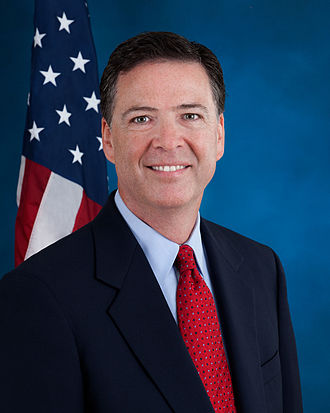
President-elect Donald Trump brings no such record. Moreover, his unprecedented refusal to reveal his tax returns, and the sketchy, largely unproven assertions about his business record -- whether praise or criticism -- means we have even less solid information about his behavior in the private sector. [President-Elect Donald J. Trump; photo credit: Wikipedia]

In this, and succeeding, blog posts we will attempt to identify the issues requiring attention, and begin the process of finding and revealing the clues that may emerge regarding how a Trump Administration might deal with them. Where available, we will provide media reports with more detail. Our principal sources will be The New York Times and The Washington Post. For a full collection of New York Times' stories, see generally, "The Trump White House; Stories on the Presidential Transition and the Forthcoming Trump Administration," New York Times undated/updated.

____________________

The Issues

Transition. Regardless of agendas and intentions, a functioning executive branch of our federal government requires some 4,000 presidential appointees, and supporting civil service staff, who are experienced and knowledgeable. Those resources are now in place. Most of those folks will be gone by, or soon after, the inauguration of Donald Trump, January 20, 2017. Have their replacements been found? Are they being brought up to speed by their predecessors?

Leaders. One of the most significant subsets of an administration's staffing are those chosen by a president as his closest advisers. This is particularly significant for a president, like Trump, who has no experience and very little knowledge of what is required of a president. Who are those individuals? What do their experience, knowledge, ties to special interests, and ideological orientation tell us about the advice they'll be providing?

International. The president of the United States wears many hats, among them CEO of the executive branch, commander-in-chief of the military, leader of his or her political party, cheerleader in chief for the American people in times of trouble. But none is more important than the president's role as America's face for the 7 billion people living elsewhere (sometimes referred to as "leader of the free world"). Every one of these roles can benefit from a depth of knowledge and a breadth of experience -- for which Trump has neither. Will he reach out to America's (and the world's) "best and the brightest"? Or will he continue to rely on his questionable confidence that he "knows more than the generals" -- and the diplomatic corps?

Conflicts. For the last 40 years, every president coming into the office with investments has put them in a "blind trust" -- a separate legal entity, managed by an independent wealth manager during the president's term in office, during which time the president has neither control nor even knowledge of how the assets are being managed. During the campaign Trump did not agree to do this, saying that his business interests would be managed by his children. If that turns out to be the arrangement it would be an unprecedented conflict of interest.

Temperament. During the campaign, Donald Trump often engaged in behavior and speech that many, perhaps most, Americans (including many of his supporters) found unacceptably divisive, hateful, disrespectful of others -- and potentially dangerous in international relations. Will this continue from time to time, or was Trump's campaign performance merely that: a "performance"? Will he successfully transition into a new role as a responsible president?

Media. During the campaign Trump was unrestrained in his attacks on both individual journalists and "the media" in general. Since winning the election this seems to have toned down a little. An intimidated media cannot well serve a self-governing democracy, and there are many ways a president can intimidate -- especially when the media is a part of a much larger conglomerate with a diverse range of relationships with the federal government (e.g., proposed mergers, defense contracts).

Divisions. As the exit polls on election day confirmed, rarely have Americans been as deeply divided as they are now -- the economic 1% and the rest of us, urban and rural, old and young, college educated and high school, professionals and working class, whites and minorities, male and female, American-born and immigrants, religious and not so much, fact-driven and ideologues. Tragically, this has carried over into increases in everything from offensive speech to physical attacks. Regardless of the extent to which it is a consequence of the campaign Trump conducted, it seems to be a reality. He can choose to help with the healing, or simply pour more salt in the wounds.

Policy. There will be, potentially, a very long list of law and public policy areas to watch. There are many things he advocated during the campaign that he has already backed off from somewhat, may never have intended to do, or may discover he can't do. Meanwhile, those who would be adversely affected by the execution of his campaign rhetoric are understandably anxious. Here are some obvious matters with which to begin, starting with what Trump has identified as his top three. There will be more to come.
Immigration. Millions of individuals now living in America, Hispanics and Muslims immediately come to mind, will be impacted by whatever a Trump Administration decides to do.

Healthcare. "Repealing Obamacare" has been a Republican mantra since it was introduced. It never was a universal single-payer healthcare plan (like Medicare or Veterans' healthcare), it was a health insurance plan. But it was better than what many Americans had previously. Will it be replaced before it is repealed or afterwards? If it's only modified, how will Americans then be better or worse off?

Infrastructure. A central question -- aside from how much will be spent, and over what period of time -- is who will most benefit? Will the projects, and jobs, go to the most vulnerable Americans -- a rising tide to benefit those who don't yet even have a boat? Or will it go to upgrading the luxurious airline lounges and other airport facilities for the one-third of Americans who fly at least once each year? Will the money go to wealthy contractors and those with the skills to earn the median American wage (or more)? Or will it (like FDR's WPA and CCC) help those living in neighborhoods with 50 percent unemployment?

Energy. During the campaign Trump aligned himself with the climate change deniers, urged maximum development of U.S. oil, and indicated support for a return to coal as a source of energy and jobs for those in coal country. Whatever these policies prove to be will also have an impact on America's participation and cooperation with global efforts to reduce carbon emissions. Clues to policy will come from Trump's appointments in the executive branch agencies and his White House staff.

Education. Many education policy proposals were put forward during the campaign -- including a nod from Trump in favor of the general idea of making college "more affordable." Others' proposals have included tuition-free community college, our following the European policy of tuition-free higher education (either for all, or for those below a set income cap), tying payback on student loans to a percentage of income, and ideas regarding an expanded opportunity for pre-K education.
Week 1 -- November 9-15, 2016

Transition. Transitions are always difficult -- 60 plus days to put an executive branch federal government together. Trump's meeting with President Obama was a good sign, as was what was reported about what both of them said during and after the meeting. Somewhat troubling is that the designated leader of the transition, Vice President-elect Mike Pence, has indicated he'd like to go on being governor of Indiana until a week or so before the inauguration. There have been questions about the formal role of Trump's children (discussed under "conflicts"). Governor Chris Christie has already been replaced as Chief of Staff-designate by Republican National Committee Chair Reince Priebus. And apparently whoever is in charge has been somewhat slow in responding to offers of assistance from current office holders (including those in the CIA, Departments of State and Defense). Ben Carson has indicated he is not interested in a cabinet appointment because he lacks the experience and knowledge to do the job. The designated security adviser, former House Intelligence Committee Chairman Mike Rogers, has announced he will not be serving. But this is only one week in; there will be changes to come -- whether more stabilizing or chaotic.

See the detailed report in Julie Hirschfeld Davis, Mark Mazzetti and Maggie Habermannov, "Firings and Discord Put Trump Transition Team in a State of Disarray," The New York Times, November 16, 2016, p. A1 ("President-elect Donald J. Trump’s transition was in disarray on Tuesday, marked by firings, infighting and revelations that American allies were blindly dialing in to Trump Tower to try to reach the soon-to-be-leader of the free world."); and Karen DeYoung and Greg Miller, "Key figures purged from Trump transition team," Washington Post, November 15, 2016 ("'“It became clear to me that they view jobs as lollipops, things you give out to good boys and girls, instead of the sense that actually what you’re trying to do is recruit the best possible talent to fill the most important, demanding, lowest-paying executive jobs in the world,' [Eliot] Cohen ["a leading voice of opposition to Trump during the campaign who had advised those interested in administration jobs to take them, abruptly changed his mind, saying the transition 'will be ugly.'] said.").

Leaders. During the campaign Trump and his followers shouted out that he would "drain the swamp" -- meaning that he would rid Washington of special interests and their lobbyists. What he found when he drained the swamp were the creatures that lived there: lobbyists looking for jobs and contacts in a new administration. The Trump team was willing to take them on board. The Times detailed the process and named the individuals and their conflicts: Eric Lipton, "With Trump's Election, a Bonanza for Washington Lobbyists," New York Times, November 11, 2016, p. P1 (an inside look into who they are and how they do what they do); and Eric Lipton, "Trump Campaigned Against Lobbyists, but Now They're on His Transition Team," New York Times, November 12, 2016, p. A1 ("President-elect Donald J. Trump, who campaigned against the corrupt power of special interests, is filling his transition team with some of the very sort of people who he has complained have too much clout in Washington: corporate consultants and lobbyists.")

Later into the first week the headlines involved Trump's appointment of Steve Bannon as Chief Strategist and Senior Counselor to the President, a position he's characterized as equal to that of Chief of Staff Reince Priebus. The controversy involves Bannon's prior role as CEO of Breitbart. (You can examine for yourself its Web site here and its Facebook page here.)

See David Weigel, "Is Trump’s new chief strategist a racist? Critics say so," Washington Post, November 14, 2016 ("some of the highest praise for Bannon’s appointment came from white nationalists and white supremacists. . . . [C]omments celebrating the news have posted on Stormfront, a website for the 'White Nationalist Community,' including this one from a reader called Pheonix1993: 'Stephen Bannon: racist, anti-homo, anti-immigrant, anti-jewish, anti-establishment. Declared war on (((Paul Ryan))) Sounds perfect. The man who will have Trump’s ear more than anyone else. Being anti-jewish is not illegal.'”); and David A. Fahrenthold and Frances Stead Sellers, "How Bannon flattered and coaxed Trump on policies key to the alt-right," Washington Post, September 15, 2016 ("[W]hat policies Bannon may try to push can be gleaned from a series of one-on-one interviews on Bannon’s radio show between November 2015 and June of this year. In those exchanges, a dynamic emerged, with Bannon often coaxing Trump to agree to his viewpoint, whether on climate change, foreign policy or the need to take on Republican leaders in Congress.") Michael D. Shear, Maggie Haberman and Michael S. Schmidt, "Critics See Stephen Bannon, Trump's Pick for Strategist, as Voice of Racism," New York Times, November 15, 2016, p. A1 ("A fierce chorus of critics denounced President-elect Donald J. Trump on Monday for appointing Stephen K. Bannon, a nationalist media mogul, to a top White House position . . ..")

Katie Zezima, "Trump pits establishment against populism at the top of his White House team," Washington Post, November 14, 2016 (" Trump named his top two advisers [Steve Bannon and Reince Priebus] on Sunday [Nov. 13] . . . setting up what could be a battle within the White House between the populist, outsider forces that propelled his winning campaign and the party establishment that dominates Washington."); Michael D. Shear, Maggie Haberman and Alan Rappeport, "Donald Trump Picks Reince Priebus as Chief of Staff and Stephen Bannon as Strategist," New York Times, November 14, 2016, p. A1.

International.

Conflicts. The Trump children hold formal positions in the transition, as well as responsibility for running the Trump companies. The request (it's not known from whom) that they all receive top security clearances was apparently blocked by someone. But here's a story of one specific example of private profit from public position, along with ethics advisers general concerns: Drew Harwell, "With Ivanka’s jewelry ad, Trump companies begin to seek profit off election result," Washington Post, November 15, 2016 (Ivanka Trump's company using her family's appearance on "60 Minutes," with Ivanka wearing her company's $8800 bracelet, "marked one of the first moments since the election during which the Trump companies have sought to use Trump's presidential prominence to boost their private fortunes. But it may not be the last. Ethics advisers have increasingly voiced concerns over the unprecedented conflicts of interest that could arise from the soon-to-be first family's empire of real estate, luxury goods and licensing deals.").

Eric Lipton and Susanne Craig, "Donald Trump’s Far-Flung Holdings Raise Potential for Conflicts of Interest," New York Times, November 15, 2016, p. A1 ("The layers of potential conflicts he faces are in many ways as complex as his far-flung business empire, adding a heightened degree of difficulty for Mr. Trump — one of the wealthiest men to ever occupy the White House — in separating his official duties from his private business affairs.").

Temperament. After his election it was like someone threw a switch on Donald Trump -- he had kind words praising Hillary Clinton in his acceptance speech, and was deferential and praising of President Obama in the Oval Office. Julie Hirschfeld Davis, "Trump and Obama Hold Cordial 90-Minute Meeting in Oval Office," New York Times, November 11, 2016, p. A1.

For one of the more detailed descriptions of Trump's executive "style" by those who have worked with him and know him best, see Marc Fisher, "Trump’s huge transition will start with his tight inner circle," Washington Post, November 10, 2016 (e.g., "He reads little and rules by his gut. He picks people by first impressions, sometimes without even talking to them. He is laser-focused on how he is perceived and what people say about him.")

Media. Given the importance of an independent, First Amendment-protected media, it is unsettling when Trump says he wants to dilute the First Amendment. Marc Fisher, "Trump’s huge transition will start with his tight inner circle," Washington Post, November 10, 2016 ("Trump has also used the threat of lawsuits as a cudgel against those who block his way or criticize him in public; that’s an avenue he won’t have as president, though he has said he wants to dilute First Amendment protections of free speech.")

Divisions. Many commentators seem to believe what is intuitive: that Trump's hateful campaign rhetoric has in fact contributed to a deepening divide in America. Abigail Hauslohner, Sandhya Somashekhar and Susan Svrluga, "Vitriol only intensifies after bitter election," Washington Post, November 11, 2016 ("Three days since businessman Donald Trump won the presidency, it is clear that the animosity wrought by a historically divisive election did not simply die in its wake, but may have intensified. U.S. cities have been convulsed by anti-Trump protests. Swastikas, racial slurs and personal threats have appeared on public buildings and dorm room doors. And online, the vicious word-slinging between supporters of the two candidates has escalated to include videotaped accounts of personal confrontation and retribution."); Matt Zkapotosky, "Hate crimes against Muslims hit highest mark since 2001," Washington Post, November 14, 2016 ("Hate crimes against Muslims spiked last year to their highest level in more than a decade — an increase that experts and advocates say was fueled by anger over terrorist attacks and anti-Islam rhetoric on the campaign trail.") Eric Lichtblau, "U.S. Hate Crimes Surge 6%, Fueled by Attacks on Muslims," New York Times, November 15, 2016, p. A13 ("[A]ttacks against American Muslims surged last year . . .. The data . . . is the most comprehensive look at hate crime . . . by researchers and outside monitors, who have noted an alarming rise in some types of crimes tied to the vitriol of this year's presidential campaign . . ..")

Immigration. Julie Hirschfeld Davis, "Donald Trump Appears to Soften Stance on Immigration, but Not on Abortion," New York Times, November 14, 2016, p. A1 ("On immigration, he [Trump] said the wall that he has been promising to build on the nation’s southern border might end up being a fence in places. But he said his priority was to deport two million to three million immigrants he characterized as dangerous or as having criminal records . . . [not] all of the estimated 11 million undocumented immigrants in the country.")

Policy. There is a variation in many political campaigns between what the candidate says before and after election, once in office. Because so many of Trump's campaign assertions were frightening to many Americans, there's more interest than usual in what he's actually going to do. Some are inclined to give him the benefit of the doubt, that "of course, he'd never really do that." Others warn, "Don't be so sure. He's told you what he's going to do." So far it appears that he is backing off on some of his promises. There are other promises it will be hard to keep even if he'd like to: Sean Sullivan and Dana Priest, "Many of Trump's sweeping promises will be hard, if not impossible, to fulfill," Washington Post, November 10, 2016 ("Some of Trump’s most dramatic undertakings — such as canceling Obama’s “illegal” executive actions — can be done in his first hours as president. Other priorities, such as repealing and replacing the Affordable Care Act or building a wall on the U.S.-Mexico border, will require the approval of Congress, which will be controlled by Republicans but could still squabble over details. Others still could run into political or legal obstacles that may be difficult to overcome." The story includes a detailed run-through of many categories and detailed examples.)
Immigration. Jose A. DelReal, "Trump and advisers hedge on major pledges, including Obamacare and the wall," Washington Post, November 11, 2016 ("Trump built his campaign message around bold vows to, among other things, force Mexico to pay for a massive border wall, fully repeal the Affordable Care Act and ban Muslims from entering the United States. But in the days since his upset election victory, he or his advisers have suggested that those proposals and others may be subject to revision. . . . 'I want to solve health care, jobs, border control, tax reform,' he [Trump] said.")

Healthcare. After meeting with President Obama, Trump backed away from total repeal of the Affordable Care Act. Reed Abelson, "Donald Trump Says He May Keep Parts of Obama Health Care Act," New York Times, November 12, 2016, p. A1 ("Just days after a national campaign in which he vowed repeatedly to repeal President Obama’s signature health care law . . . Mr. Trump even indicated that he would like to keep two of the most popular benefits of the Affordable Care Act [preexisting conditions; children on parents' plans].")

Infrastructure.

Energy.

Education.

Week 2 -- November 16-22, 2016

Transition. Michael D. Shear, "Trump Says Transition's Going 'Smoothly,' Disputing Disarray Reports," New York Times, November 17, 2016, p. A14

Leaders. Here's a useful description from the Washington Post of "who's on first" during this second week -- the players and the plays inside the transition team: Philip Rucker and Robert Costa, "In Trump's Washington, rival powers and whispers in the president's ear," Washington Post, November 17, 2016; Karen DeYoung, "Trump defends pace of transition work as process remains opaque," Washington Post, November 17, 2016 ("The 'landing teams' for the State Department, the Justice Department, the Pentagon and the National Security Council will be announced and begin interacting with the Obama administration Thursday [Nov. 17], Republican National Committee communications director Sean Spicer said late Wednesday. Economic policy landing teams will be announced next week, followed by teams devoted to domestic policy and independent federal agencies.").

The role of Trump's children and their partners continues to be an issue. Julie Hirschfeld Davis and Maggie Haberman, "Donald Trump's Son-in-Law, Jared Kushner, Tests Legal Path to White House Job," New York Times, November 18, 2016, p. A1 (This thorough review of the legal, ethical and conflict of interest issues surrounding Trump's son-in-law's involvement begins, "Jared Kushner, the son-in-law of President-elect Donald J. Trump, has spoken to a lawyer about the possibility of joining the new administration, a move that could violate federal anti-nepotism law and risk legal challenges and political backlash.") And let us not overlook Jared's wife: Monica Hesse, "To understand the Trump presidency, we must decipher Ivanka," Washington Post, November 17, 2016.

National Security Adviser: Matthew Rosenberg and Maggie Haberman, "Trump Is Said to Offer National Security Post to Michael Flynn, Retired General," New York Times, November 18, 2016, p. A1 (this detailed critique of Flynn leads with, "President-elect Donald J. Trump has offered the post of national security adviser to Lt. Gen. Michael T. Flynn, . . . who believes Islamist militancy poses an existential threat [and who] will be a critical gatekeeper for a president with little experience in military or foreign policy issues. . . . [T]hey [Trump and Flynn] have both at times crossed the line into outright Islamophobia [and] exhibit a loose relationship with facts: General Flynn['s] . . . subordinates . . . called them “Flynn facts.”) Editorial, "Michael Flynn: An Alarming Pick for National Security Adviser," New York Times, November 19, 2016, p. A22 ("It's likely, given his record, that he will encourage Mr. Trump’s worst impulses, fuel suspicions of Muslims and bring to the job conflicts of interest from his international consulting work.")

Attorney General: Eric Lichtblau, Maggie Haberman and Ashley Parker, "Donald Trump Selects Senator Jeff Sessions for Attorney General," New York Times (online edition), September 18, 2016 ("Mr. Sessions, a former prosecutor . . . has opposed immigration reform as well as . . . proposals to cut mandatory minimum prison sentences. . . . [H]is nomination [to judgeship, by President Reagan] was rejected by the Republican-controlled Senate Judiciary Committee because of racially charged comments and actions. . . . Mr. Sessions had referred to the N.A.A.C.P. . . . as 'un-American' and 'Communist inspired.' . . . [He's] also accused of speaking disparagingly of the Voting Rights Act . . ..") Editorial, "Jeff Sessions as Attorney General: An Insult to Justice," New York Times, November 19, 2016, p. A22 ("Donald Trump ran a presidential campaign that stoked white racial resentment. His choice for attorney general — which, like his other early choices, has been praised by white supremacists — embodies that worldview. We expect today’s senators, like their predecessors in 1986 [who rejected President Reagan's appointment of Sessions to a federal judgeship], to examine Mr. Sessions’s views and record with bipartisan rigor. If they do, it is hard to imagine that they will endorse a man once rejected for a low-level judgeship to safeguard justice for all Americans as attorney general.") Thomas J. Sugrue, "Jeff Sessions' Other Civil Rights Problem," New York Times (online edition), September 21, 2016 ("Mr. Sessions [as] Alabama’s attorney general . . . left an indelible mark. He used the power of his office to fight to preserve Alabama’s long history of separate and unequal education.")

C.I.A. Director: Mark Mazzetti and Julie Hirschfeld Davis, "Mike Pompeo Is Trump's Choice as C.I.A. Director," New York Times (online edition), November 18, 2016 (Pompeo is a graduate of West Point (first in class) and Harvard Law School with three Congressional terms, and a member of the House Intelligence Committee who was especially critical of Hillary Clinton during the investigation of the 2012 Benghazi attack).

Secretary of Treasury: Ylan Q. Mui and Renae Merle, "With Treasury candidate come possible conflicts," Washington Post, November 18, 2016 (Steven T. Mnuchin, formerly with Goldman Sachs, is "A leading candidate to be ­President-elect Donald Trump’s treasury secretary [who] was deeply involved in running a bank that has received $900 million in federal bailout money and that has been accused of discrimination — examples of the potentially thorny conflicts of interest that could plague Trump’s nascent administration.")

Secretary of State: Phillip Rucker, "Trump mulls a secretary of state: Clone, crusader, statesman or clean slate?" Washington Post, November 19, 2016 (no indication of choice when this story ran, but South Carolina Governor Nikki Haley and former Governor (and Republican presidential candidate) Mitt Romney are in the running for Secretary of State, along with those who bring ideological baggage and other concerns). Michael S. Schmidt and Julie Hirschfeld Davis, "Trump Meets With Romney as He Starts to Look Outside His Inner Circle," New York Times, November 20, 2016, p. A1.

Editorial, "Donald Trump's Swamp Gets Murkier," New York Times, November 21, 2016, p. A 22 ("Now that he is president-elect, Donald Trump’s anti-corruption promise to “drain the swamp” of Washington lobbyists and powerful insiders seems to be rapidly dissolving in the swamp itself. An untold number of lobbyists and special interest players have been helping the Trump team’s transition to the White House, their path made easier, according to news reports, by vague and porous ethical standards. The most mischievous of these is a rule by which applicants merely have to de-register as government lobbyists one day to be ready the next for transition and administration jobs.")

Not only does the Trump team seem to be favoring lobbyists and other corporate representatives to head agencies that are supposed to regulate the appointees' former employers, but some of their investments, like Trump's, raise potential conflict of interest problems both here and abroad. Matthew Goldstein and Alexandra Stevenson, "Trump Adviser Takes Stake in China Ride-Sharing Company," November 19, 2016, p. B2 ("A hedge fund billionaire ["John Paulson, who made $15 billion betting against the housing market before the financial crisis"] who was an economic adviser to [Trump] . . . has taken a position in a fast-growing Chinese ride-sharing company that recently signed a deal to acquire Uber Technologies’ operations in China.")

International. Among many concerns one might have about Trump's first two weeks, his and the Transition Team's handling of international relations for our next president rank near the top. It can only be described as "reckless." They have rebuffed the Department of State's willingness to help. Global leaders have been left on their own to figure out how to reach Trump, or know who they should contact. The first face-to-face meeting is to be with the Japanese prime minister -- seemingly without thought to how this "decision" (to the extent there was one) might be received by those nations with which we are said to have "a special relationship." Here is a little lengthier excerpt than usual from the Times' take:
It has been noticed at the State Department that since his victory Mr. Trump has been talking with foreign leaders without any consultation on the often complex protocol involved. “We stand ready to support him and his team with any information that they might require,” said John Kirby, the State Department spokesman. “We are ready and able to provide context if it is desired.” “There has been no outreach to date,” Mr. Kirby added. Japan has been scrambling to find Republican foreign policy experts to advise Tokyo on Mr. Abe’s meeting with Mr. Trump, but have had little luck, according to Japanese officials. Nor, the officials said, have they been able to find anyone in Mr. Trump’s transition team to discuss talking points for the meeting. One official said that the planning for the meeting had been largely limited to logistics, and that was primarily handled by Matthew Freedman, the lobbyist and transition team member who was working on national security issues. But Mr. Freedman was fired on Monday.
Carl Hulse and Helene Cooper, "Donald Trump and Japan's Leader to Meet, With Plenty to Sort Out," New York Times, November 17, 2016, 4:00 a.m. update version.

Conflicts. Donald Trump's seeming refusal to follow the usual presidential protocol of selling his properties and putting the assets in a blind trust, managed in his interest by independent wealth managers who do not report to him, creates uncounted and uncountable conflicts of interest both at home and abroad. Numerous U.S. state and federal agencies, and foreign governments, impact his 500 LLC corporations, other interests, their operations and profits. The New York Times' Editorial Board provides some examples: Editorial, "Donald Trump's Tangled Web," New York Times, November 17, 2016, p. A30 ("Donald Trump refused to release his income tax returns during the campaign and now seems determined to lug every piece of financial baggage connected to his hotels, golf courses and other businesses into the White House.") Jonathan O'Connell and Mary Jordan, "For foreign diplomats, Trump hotel is place to be," Washington Post, November 18, 2016 ("About 100 foreign diplomats, from Brazil to Turkey, gathered at the Trump International Hotel this week to sip Trump-branded champagne, dine on sliders and hear a sales pitch about the U.S. president-elect’s newest hotel. . . . Now, those venues offer the prospect of something else: a chance to curry favor or access with the next president. Perhaps nowhere is that possibility more obvious than Trump’s newly renovated hotel a few blocks from the White House, on Pennsylvania Avenue. Rooms sold out quickly for the inauguration, many for five-night minimums priced at five times the normal rate, according to the hotel’s manager.")

Like gravity ("it's not just a good idea, it's the law"), Trump's global businesses may pose serious constitutional challenges as well as violating ethical norms regarding a president's conflict of interests. Adam Liptak, "Donald Trump's Business Dealings Test a Constitutional Limit," New York Times, November 22, 2016, p. A1 ("[T]he Emoluments Clause [of the U.S. Constitution; "no person holding . . . office [shall] accept any . . . emolument . . . of any kind whatever, from any . . . foreign state"] . . . now poses risks for [Trump] should he continue to reap benefits from . . . companies controlled by foreign governments.")

So long as Trump has even a general notion of what and where his business interests are, the only trust that could be truly "blind" would be one following his sale of all of his interests, and turning over the cash to an independent wealth manager to invest on his behalf -- but without his participation or knowledge. Regardless of how "independent" the manager may be, so long as Trump knows what he owns he will have both the appearance, and the reality, of a conflict of interest whenever a federal administrative agency, its proposed regulation, legislation, or the position taken in litigation by the Department of Justice, or hundreds of other examples, could have an impact on the profits or net worth of his investments. This is made even worse, of course, if (as he has proposed) his children will be continuing to run the businesses.

A recent example of his conflicts is illustrated by this double whammy quote from a Times' story: "Mr. Trump, as he used his golf resort as the backdrop for his official activities, gave no indication that he was concerned about news reports over the weekend that he had held meetings last week with three Indian business partners even as he was starting to assemble his administration." Michael S. Schmidt and Michael D. Shear, "Trump Turns Staid Process Into Spectacle as Aspirants Parade to His Door," New York Times, November 21, 2016, p. A1. (1) Whenever he selects a Trump-branded property (Trump Towers, or golf courses) for meetings he's promoting his business. (2) And he obviously sees no problem with continuing to manage his businesses abroad (the meeting with business partners from India) while considering the possibility of appointing Nikki Haley (born of immigrants to the U.S. from India) as his Secretary of State.

Drew Harwell and Anu Narayanswamy, "A scramble to assess the dangers of President-elect Donald Trump's global business empire," Washington Post, September 21, 2016 ("Donald Trump’s company has been paid up to $10 million [for his "brand"/name] by . . . one of Turkey’s biggest oil and media conglomerates, [that] has become an influential megaphone for the country’s increasingly repressive regime. That, ethics advisers said, forces the Trump complex into an unprecedented nexus: as both a potential channel for dealmakers seeking to curry favor with the Trump White House and a potential target for attacks or security risks overseas. . . . [They warn] of many others . . .. At least 111 Trump companies have done business in 18 countries and territories across South America, Asia and the Middle East.")

The problems are also illustrated by the unsavory and unprecedented spectacle of a president-elect having to take time to deal with a lawsuit regarding his prior fraudulent business practices, practices of sufficient significance and breadth to produce a settlement of $25,000,000. Steve Eder, "Donald Trump Agrees to Pay $25 Million in Trump University Settlement," New York Times, November 19, 2016, p. A1 ("[Trump] reversed course and agreed on Friday to pay $25 million to settle a series of lawsuits stemming from his defunct for-profit education venture, Trump University, finally putting to rest fraud allegations by former students, which have dogged him for years and hampered his presidential campaign. . . . [T]the allegations in the case . . .: Students paid up to $35,000 in tuition for a programs that . . . used high-pressure sales tactics and employed unqualified instructors.")

Temperament. Will Trump, as president, continue his campaign instinct to strike back against and and all -- and especially the media -- whenever others are not entirely to his liking? The continuing middle-of-the-night tweets are not reassuring. Michael D. Shear, "Trump Says Transition's Going 'Smoothly,' Disputing Disarray Reports," New York Times, November 17, 2016, p. A14 ("President-elect Donald J. Trump said on Wednesday that his transition was not in disarray, assailing news media reports about firings and infighting and insisting in an early-morning Twitter burst that everything was going 'so smoothly.'”)

He's continuing his disparaging adjectives (as in, during the campaign, "crooked Hillary"). Prior to a first meeting with the New York Times he refers to it as "the failing nytimes." Michael D. Shear and Carl Hulse, "Trump Reinstates New York Times Meeting While Pulling Back on Pursuing Case Against Clinton," New York Times (online editiion), November 22, 2016, 10:37 a.m. version (the widely publicized scheduled meeting Tuesday [Nov. 22] between Trump and the New York Times was abruptly cancelled by Trump with a 5:16 a.m. tweet: "I cancelled today's meeting with the failing @nytimes when the terms and conditions of the meeting were changed at the last moment. Not nice." Fifteen minutes later it was back on again: "Perhaps a new meeting will be set up with the @nytimes. In the meantime they continue to cover me inaccurately and with a nasty tone!")

Nor are his tweets limited to public and media figures; he's monitoring entertainment as well: Andrew R. Chow, "Alec Baldwin Returns to 'S.N.L.' as President-Elect Trump," New York Times, November 20, 2016 ("Alec Baldwin's return to 'Saturday Night Live' this weekend prompted another fiery response from President-elect Donald J. Trump on Twitter." The tweet read, "I watched parts of @nbcsnl Saturday Night Live last night. It is a totally one-sided biased show - nothing funny at all. Equal time for us?" [Nov. 20] Two hours earlier [5:22 a.m.] he tweeted about the cast of "Hamilton" statement to Mike Pence requesting a protection of their rights, "The cast and producers of Hamilton, which I hear is highly overrated, should immediately apologize to Mike Pence for their terrible behavior." Pence has made no public statement objecting to the cast's message. "Mr. Pence, who was greeted by a smattering of boos as he entered the theater, got it right when he said later, 'I nudged my kids and reminded them that’s what freedom sounds like.'” [Editorial, "Can Trump Tolerate Dissent?" Washington Post, November 22, 2016])

Media. Probably there will always be tension between the White House press corps and the sitting president and his or her staff. So far the focus has been on Trump's savage attacks on individual journalists and "the media" in general. But an equal, and perhaps even more significant aspect of president-press relations are the protocols regarding press presence and access, as the Times has editorialized: Editorial, "Trump Shouldn't Ditch the Press," Washington Post, November 17, 2016 ("In case of an emergency, it [the press pool] is on hand to provide timely and important information. Think, for example, of 9/11 and how the country was helped by knowing where the president was . . .. Equally important is the day-to-day information . . . about where the president is . . . and whom he is meeting with. Mr. Trump is not yet president, but the information protocols of the office still apply. His spokeswoman . . . said that the next administration intends 'to follow precedent in regards to access as soon as possible.' That commitment is reassuring. It should take effect now.")

He seems to be avoiding news conferences (although, in fairness, it should be noted that Hillary Clinton was also faulted for doing so during the campaign, as have previous presidents). Michael D. Shear and Julie Hirschfeld Davis, "Trump, on YouTube, Pledges to Create Jobs," New York Times, September 22, 2016, p. A1 ("The brief YouTube video offered one of the few opportunities for the public to hear from Mr. Trump directly since he was elected two weeks ago. The president-elect has declined to hold a news conference since his victory, and instead has used early-morning Twitter bursts to communicate.")

He called TV network executives and news anchors together for what could have been a conciliatory session between two major institutions (the presidency and the media) that need each other, and turned it into another attack. Michael M. Grynbaum and Sydney Ember, "Trump Summons TV Figures for Private Meeting, and Lets Them Have It," New York Times, November 22, 2016, p. A18 ("Mr. Trump, whose antagonism toward the news media was unusual even for a modern presidential candidate, described the television networks as dishonest in their reporting and . . . criticized some in the room by name . . ..")

He's continuing his disparaging adjectives (as in, during the campaign, "crooked Hillary"). Prior to a first meeting with the New York Times he refers to it as "the failing nytimes." Michael D. Shear and Carl Hulse, "Trump Reinstates New York Times Meeting While Pulling Back on Pursuing Case Against Clinton," New York Times (online editiion), November 22, 2016, 10:37 a.m. version (the widely publicized scheduled meeting Tuesday [Nov. 22] between Trump and the New York Times was abruptly cancelled by Trump with a 5:16 a.m. tweet: "I cancelled today's meeting with the failing @nytimes when the terms and conditions of the meeting were changed at the last moment. Not nice." Fifteen minutes later it was back on again: "Perhaps a new meeting will be set up with the @nytimes. In the meantime they continue to cover me inaccurately and with a nasty tone!")

Trump demonstrated during the campaign his ability to manipulate media to his ends, picking up an estimated $2 billion of free TV time in the process. He's continuing with one of his techniques: Paul Farhi, "Were Trump's 'Hamilton' tweets 'weapons of mass distraction'?" Washington Post, November 22, 2016 ("As he illustrated with tweets about the musical “Hamilton” over the weekend, President-elect Donald Trump knows how to change the subject — and the entire news cycle. Just as questions were mounting about Trump’s appointments, his business conflicts, his $25 million fraud-case settlement — bam! — Trump had everyone talking about something else.")

Divisions. Here's a post-election report worth reading whether you're concerned, or merely curious, about what appear to be increasing divides among Americans. William Wan, Tanya Sichynsky and Sandhya Somashekhar, "After Trump's Election: 'There are two Americas now,'" Washington Post, November 22, 2016 ("Two weeks after the election of Donald Trump, this is how divided America has become: People have moved beyond staring at the vast gulf that divides them and proceeded to arguing over who is to blame for it, what to do about it and even whether it exists at all.")

Samantha Schmidt, "‘Hijab grab’ defense: As reports of hate crimes spike postelection, Muslim women turn to self-defense," Washington Post, November 21, 2016.

Policy. Michael D. Shear and Julie Hirschfeld Davis, "Trump, on YouTube, Pledges to Create Jobs," New York Times, September 22, 2016, p. A1 ([In Trump's YouTube video, "he vowed to create jobs, renegotiate trade agreements, end restrictions on energy production and impose bans on lobbying. . . . [H]e steered clear of his most inflammatory campaign promises to deport immigrants and track Muslims and his pledge to repeal the Affordable Care Act.")
Immigration. Early reports indicate that Trump's promises to get tough on immigration, and "build a wall," have brought more immigrants and associated chaos rather than less: Joshua Partlow and Nick Miroff, "Fearing Trump’s wall, Central Americans rush to cross the U.S. border," Washington Post, November 19, 2016 ("President-elect Donald Trump has promised major change to the U.S. immigration system at a time when Central American families are flowing into the United States in growing numbers, many fleeing warlike conditions and poverty back home. . . . By winning the election, Trump may have inadvertently made his job even harder. His plans have become a selling point for the smugglers urging people to cross the border before a wall goes up, . . ..")

Healthcare.

Infrastructure.

Energy.

Education. Trump's election has already had a negative impact on U.S. colleges' enrollment of international students. Nida Najar and Stephanie Saul, "Is It Safe? Foreign Students Consider College in Donald Trump's U.S.," New York Times, November 18, 2016, p. A12 ("This year, the number of international students in United States colleges surpassed one million for the first time, bringing more than $32 billion a year . . .. College admissions officials in the United States . . . are worried that Mr. Trump’s election as president could portend a drop in international candidates. Canadian universities have already detected a postelection surge in interest from overseas.")

Lands. National parks, forests and other public lands are not the product of a mapmaker's whim. An even greater political battle than at the time of their creation is the continuous fight for their preservation. We are coming into a time of such a fight. Jack Healy and Kirk Johnson, "Battle Lines Over Trump's Lands Policy Stretch Across 640 Million Acres," New York Times, November 19, 2016, p. A9 ("Uranium mines around the Grand Canyon. Oil drilling rigs studding the Arctic National Wildlife Refuge. New coal and timber leases in the national forests. States divvying up millions of acres of federal land to dispose of as they wish.")
[Note: Because of the physical volume of entries, beginning with Week 3 the blog post you are now on will remain the opening post for this series, and the links in its "Contents" section at the top of this post will take you to the new blog pages for subsequent weeks.]

# # #

Wednesday, November 09, 2016

Democratic Party's Past -- and Future

A friend emailed me a reminder, this "morning after the night before," that Last July 25 I wrote a blog essay here titled "Why Trump May Win; Discouraged By The Democratic Party's Self-Inflicted Wounds." Others expressed comparable views at the time. None of us had much, if any, impact on the Party's actions this summer. But on re-reading that essay this morning, I realized that it might be worth posting excerpts from it again. For the next few days, weeks and months, both major parties' leadership will be engaged in trying to understand the presidential election and devise a change in course for their party's future. This may be of some help.

-- Nicholas Johnson
July 25, 2016

As a lifelong Democrat, I have for some years now been discouraged by the actions of the Democratic National Committee, and others who are considered members of the Party's establishment . . ..

The Democratic Party establishment had historically served, and been supported by, the poor, working poor, working class, union members, family farmers and a broad range of other demographic groups. Were it still both perceived and functioning as such, it could elect most officials from school boards and city councils to the U.S. Senate, House and White House. . . . [Photo credit: President-Elect Donald Trump, Wikipedia.org]

[But now] the Party's leadership has become -- and obviously wishes to remain -- funded by, and the legislative advocates for, Wall Street, large corporations, and the top 1% of America's socio-economic elite. It's mission, far more than the enactment of populist policies, is the perpetual re-election of office holders whose highest priority daily activity is raising money. . . .

The question is whether [this] will still work in this or any other country when one considers the Tea Party, Occupy movement, Brexit, and the unprecedented numbers and enthusiasm of the supporters of both Donald Trump and Bernie Sanders.

Whether justified or not, millions of angry Americans now look upon government, corporations, other powerful institutions, and those who run them, not just as uncaring for people like themselves, but as an enemy, deliberately adopting policies and budgets knowing the harms they will impose.

I am not arguing . . . that every Democratic Party official should have joined the Bernie Sanders campaign. But to so obviously trivialize, or oppose, his candidacy -- now documented in the DNC emails revealed by Wikileaks (not that it wasn't well known before) -- and carry on with 20th Century politics, was unnecessary and counterproductive. For the angry Americans, independents, youth, Democrats, Republicans, and others, it was "a poke in the eye with a sharp stick."

However experienced and well qualified for the presidency Hillary Clinton may be thought to be, when millions of potential voters (and what may turn out to be non-voters) have taken to the streets with pitchforks in hand, for the Democratic Party leadership to offer them its preeminent establishment icon only confirms their worst fears about their Democratic Party, not to mention America's future and their own.

And that's, I believe, "Why Trump May Win."

# # #

Monday, October 31, 2016

Hillary's New Emails: A Solution for FBI Director Comey

Related: Richard W. Painter, "On Clinton Emails, Did the F.B.I. Director Abuse His Power?" New York Times, October 30, 2016 (possible violation of Hatch Act; author: University of Minnesota law professor, and former chief White House ethics lawyer, 2005 to 2007); Matt Apuzzo, Michael S. Schmidt and Adam Goldman, "Justice Department Obtains Warrant to Review Clinton Aide's Emails," New York Times, October 31, 2016, p. A1 (background); Editorial, "Can Anyone Control the FBI?" The Washington Post, November 5, 2016 ("In the days since [FBI Director Comey's announcement of the 'discovery of additional emails in the investigation of Hillary Clinton’s private server'], the FBI’s behavior has grown even more questionable. FBI sources have fanned new doubts about Ms. Clinton’s candidacy with inaccurate leaks about an investigation of the Clinton Foundation."); Ben Brody and Chris Strohm, "FBI Surprises With Files on Clinton ’01 Pardon of Marc Rich," Bloomberg, November 1, 2016 ("The FBI unexpectedly released 129 pages of documents related to an investigation closed without charges in 2005 into President Bill Clinton’s pardon of Marc Rich, who had been married to a wealthy Democratic donor. The file was posted online Monday but received little attention until the FBI noted it in a tweet on Tuesday afternoon. It comes as Director James Comey faces fire from Democrats and even some Republicans for releasing information about his renewed investigation into Hillary Clinton’s use of e-mail."); Matt Apuzzo, Michael S. Schmidt and Adam Goldman, "Emails Warrant No New Action Against Hillary Clinton, F.B.I. Director Says," New York Times, November 7, 2016, p. A1.

F.B.I. agents are all but certain that it [their review of newly-found Huma Abedin-Hillary Clinton emails] will not be completed by Election Day, and believe it will take at least several weeks."

Michael S. Schmidt and Matt Apuzzo, "10 Questions (and Answers) About New Email Trove," The New York Times, October 31, 2016, p. A15.
FBI Director James B. Comey has created a bit of a mess.

Here's how he might get out of it.

The FBI's investigation of Hillary Clinton's treatment of classified emails as Secretary of State was wrapped up in July. Comey announced that while her procedures were "extremely careless," she had neither the requisite criminal intention, nor was there any other reason, to proceed with her prosecution.

One of Hillary's closest aides, Huma Abedin, was married to Congressman Anthony Weiner. Weiner, formerly infamous for sending women lewd pictures of himself, is now being investigated by the FBI for doing so with a 15 year old girl. As a product of that investigation, it appears that in addition to whatever else he may have had on his computer, there were some of Huma Abedin's emails -- possibly including email exchanges between her and Hillary Clinton.

Department of Justice practice is to not reveal details of ongoing criminal investigations, and not to make announcements that might affect the outcome of a political campaign within 60 days of Election Day. Comey, having made a commitment to members of Congress to keep them informed of developments regarding Clinton's classified emails, informed them -- 11 days before the presidential Election Day -- of the possibility there might be more emails as a result of the Weiner investigation. Apparently Weiner's computer, containing some 600,000 emails, had been sometimes shared with his wife.

At the time, Comey's FBI didn't even have a search warrant authorizing their access to Huma Abedin's emails. (Now they have one.) Apparently he had not even seen any of the relevant emails, let alone made a judgment about what problems they did, or did not, raise.

Given the role throughout the 2015-16 presidential campaign of what Senator Bernie Sanders once famously described as "Hillary's damned emails," it could have been predicted that Comey's rekindling this fire, raising suspicions without a soupçon of facts, would have the impact on the election's outcome that is already showing up. Talk about an "October surprise!"

What's worse, as the opening quote reports, the FBI is saying it's unlikely there will be any facts prior to Election Day.

So what's to be done? Don't insist, for now, that the excellent must be permitted to be the enemy of the good.

1. Do a quick search of the emails. Microsoft Outlook, and most other email programs, have a search feature. It's something I often use, and it's incredibly fast. If Google can search through billions of documents in less than a second, there's no reason why searching through 600,000 emails should take "several weeks."

2. How do Hillary and Abedin refer to each other in emails -- first name, full name, initials, title, code names? Do they always do so? Pull out every email that contains those identifiers -- whether in the text, to, from, or subject fields.

3. Then search those emails for words that might identify a classified email -- secret, top secret, confidential, C, eyes only, classified. Compare those with the classified emails of Secretary Clinton that the FBI has already investigated and remove the duplicates.

4. Print out and divide the remainder, if any, among however many FBI agents are necessary to get those emails read and evaluated within 24 hours (preferably agents formerly involved in the investigation of the Secretary's emails).

5. If nothing is discovered that significantly adds or subtracts from what was known in July, have Director Comey issue a statement something like the following:
I apologize to the American public, the Congress, and the presidential campaigns for any confusion that I may have created by my recent report to Congressional leaders regarding what we thought might be additional emails relevant to our previous investigation of former Secretary of State Clinton. My prior commitments to Congress required that I make some report as soon as I became aware of this development. It was certainly not my intention, nor that of the Bureau, to affect the election in any way.

In that spirit, I wish to announce that our preliminary evaluation of the newly discovered emails, some of which were duplicates, indicates that they will add nothing new to what we knew in July.

While we will continue to evaluate them more closely, I wanted to make clear that at this time it does not appear that we will be altering the advice we provided the Department of Justice at that time.
Of course, from the Clinton campaign's perspective this risks that disclosing what the initial search reveals might be much more damaging than what's now in the media -- and Trump's speeches.

And then there's always Comey's option to simply resign -- either explaining, or not, whatever pressures may have been applied to him that caused him to do this.

# # #

This essay was published by OpEdNews on November 1, 2016. It stimulated the following exchange of comments on that site:

Comment by Rob Kall: Good ideas, all of them, including Comey resigning.

Submitted on Tuesday, Nov 1, 2016 at 12:33:53 AM

Reply to Rob Kall: Email Reply from Nicholas Johnson: Thanks, Rob; appreciate it.

There's an old saying: "Get a reputation as an early riser and you can sleep all day."

I think that may have played a role in what I wrote: his reputation for courage in standing up to the surveillance community (his rush to Ashcroft's hospital bedside; although he also asked Apple for a back door), his quality education and law school teaching, his range of experience -- up to and including essentially running the Department of Justice as Deputy Attorney General. I, like so many others, was willing to give him the benefit of the doubt regarding his decision to violate two policies of the Justice Department (don't talk about ongoing investigations; don't do anything that might impact an election within 60 days of Election Day) -- "there must have been a good reason for him to do that."

Now I'm not so sure. I don't have enough facts at this point to come to a final judgment about any of this. But sadly, this "morning after the night before," I at least have to hold in suspension the possibility that, whether pushed into it by others or coming to it all on his own, at least a part of his motivation was to contribute to a diminishing of Clinton's margin of victory, or her defeat.

Meanwhile, and however that comes out, I do still think the earlier the FBI can follow the quick steps I outlined in the op ed the better.

Submitted on Tuesday, Nov 1, 2016 at 7:40:04 AM

Comment by Nicholas Johnson: With regard to Director Comey's possible resignation: this is, of course, a wholly separate issue. The more urgent matter is what can be done to minimize the harm he may have done to a presidential election. His departure would do virtually nothing to address that concern.

However, here are some brief notes on this "separate issue." FBI Directors are now appointed for ten-year terms. Appointed in 2003, Comey's term won't expire until 2023. He can, of course, resign at any time. And the ten-year terms are not, in effect, "ten years of a life appointment." FBI Directors can be, and have been, fired by presidents. President Obama has, so far, continued to express confidence in Director Comey.

Submitted on Tuesday, Nov 1, 2016 at 10:14:17 AM

Shad Williams Reply to Nicholas Johnson: Did not know that about the 10 year term. I will need to look up what is the term limit of the CIA director?

Submitted on Tuesday, Nov 1, 2016 at 12:10:16 PM

Reply to Shad Williams Email Reply from Nicholas Johnson: Shad: Thanks for the comment. To the best of my recollection the CIA Director is, like most other presidential appointees, someone who serves, as we say, "at the pleasure of the president." Otherwise put, she or he can be fired at any time. Indeed, some administrations have had the practice of getting a "resignation" from everyone they appoint -- that is, an undated letter of resignation to the president that can be dated and then used at any time.

Submitted on Tuesday, Nov 1, 2016 at 3:20:14 PM

Comment by BFalcon: Correct me if I am wrong.

Comey did not disclose anything about the investigation to public.

He wrote the letter to Congressional Committee as addendum to his testimony which, I presume, was his obligation.

Do you believe, if the search that you suggested finds something that could be relevant and incriminating, that they should, two or three days before elections, state that to public?

Submitted on Tuesday, Nov 1, 2016 at 11:57:35 PM

Reply to BFalcon Email Reply from Nicholas Johnson: Correct me if I am wrong.

Response: Thank you, BFalcon, for this provocative comment.

Comey did not disclose anything about the investigation to public.

Response: He disclosed a great deal about the investigation -- which has had an effect, whether intended or not, on voters' preferences. You are of course correct that he did not disclose anything about the results of the investigation, because according to him it not only had not ended it had not even begun until they got the necessary search warrant. He did not need to reveal the results of a yet-to-be-begun investigation. All he needed to do to impact Hillary's chances was to say that there was one, that in effect the investigation closed in July was reopened 11 days before the election.

He wrote the letter to Congressional Committee as addendum to his testimony which, I presume, was his obligation.

Response: He tried to suggest that he, as well as you, presumed that was his obligation. Obviously, since I am not privy to his communications with the Republican Congressional leadership, I cannot know what his "obligation" was. Some have said it is inappropriate to include members of Congress in the details of an ongoing investigation. Be that as it may, it would seem sufficient to me to both satisfy any obligation he might have while also complying with both Department of Justice procedures: no comments about ongoing investigations, and no comments within 60 days of an election that might affect its outcome. Any yet-to-be-discovered revelations that might or might not come out of Weiner's computer would not need to be reported until there is something to report; certainly, the fact the FBI was going to look there to see if there was anything worth pursuing is not of sufficient importance to warrant violating Department of Justice standards. The only thing the early statement accomplished was to raise suspicions and innuendo regarding a presidential candidate.

Do you believe, if the search that you suggested finds something that could be relevant and incriminating, that they should, two or three days before elections, state that to public?

Response: That is the result of what I am proposing. Comey should never have made the statement he did. Having done so he can't take it back. The damage has been done. Both campaigns and other leaders of both parties have urged that more facts be revealed. Hillary's insistence this be done suggests to me that she thinks there's little to nothing there. If it turns out there is a smoking gun, or arsenal, there then -- having gone this far -- the members of Congress he wrote, and the public, are probably entitled to know that before the election, rather than having to go into the voting booth with nothing but suspicions.

Submitted on Wednesday, Nov 2, 2016 at 2:20:02 PM

BFalcon Reply to Nicholas Johnson: Again, I am not sure from what you say that Comey disclosed anything to the public, did he?

If somebody is charged with investigation of a bunch of mail and testifies under oath that all the mail was investigated, it is my opinion that the person, when he learns that there is some more mail to be completed, should amend the testimony simply disclosing this fact.

I disagree with you that revealing e.g. that "there is possibly incriminating information" just before the elections would be right. The voters should make their choice without further "information" (necessarily incomplete and not final).

Submitted on Wednesday, Nov 2, 2016 at 8:50:07 PM

Reply to BFalcon Email Reply from Nicholas Johnson: BFalcon: Thanks for the follow-up. I disagree with you only in the sense that I have come to different conclusions -- as expressed in an earlier comment.

I do not disagree in the sense that I think you are "wrong." I think yours are rational, easily supported -- and, indeed, widely shared (including by Comey and Republican congressional leaders) -- conclusions (regarding both what Comey was "obliged" to do in the past, and in the future with pre-Election Day discoveries). -- Nick

Submitted on Thursday, Nov 3, 2016 at 10:20:02 AM

Comment by Nicholas Johnson: I am finding it increasingly difficult to suspend judgment regarding FBI Director Comey's and some agents' deliberate efforts to adversely affect Clinton's chances in next Tuesday's election. See this morning's Washington Post: Editorial, "Can Anyone Control the FBI?" The Washington Post, November 5, 2016 ("In the days since [FBI Director Comey's announcement of the 'discovery of additional emails in the investigation of Hillary Clinton's private server'], the FBI's behavior has grown even more questionable. FBI sources have fanned new doubts about Ms. Clinton's candidacy with inaccurate leaks about an investigation of the Clinton Foundation."), and Ben Brody and Chris Strohm, "FBI Surprises With Files on Clinton '01 Pardon of Marc Rich," Bloomberg, November 1, 2016 ("The FBI unexpectedly released 129 pages of documents related to an investigation closed without charges in 2005 into President Bill Clinton's pardon of Marc Rich, who had been married to a wealthy Democratic donor. The file was posted online Monday but received little attention until the FBI noted it in a tweet on Tuesday afternoon. It comes as Director James Comey faces fire from Democrats and even some Republicans for releasing information about his renewed investigation into Hillary Clinton's use of e-mail.")

Submitted on Saturday, Nov 5, 2016 at 11:07:57 AM

Comment by Nicholas Johnson: I suffer no illusions that there is anyone in Washington, let alone the Director of the FBI, who would know or care what I am thinking and writing about, or would be influenced by it if they did know. But it's always somewhat satisfying, after writing a proposed course of action, that others -- with more knowledge of the situation than I possess -- subsequently come to the same, or similar conclusions. So it is with my OpEdNews piece, above. In this case, what I proposed (Comey shouldn't have opened the issue, but having done so should now put all the agents necessary to going through the additional emails before election day, and then announce the results) is apparently what was done. (It is, however, not clear whether or not they used the specific steps I suggested for speeding the process, though it's reasonable to assume they did.) See Matt Apuzzo, Michael S. Schmidt and Adam Goldman, "Emails Warrant No New Action Against Hillary Clinton, F.B.I. Director Says," New York Times, November 7, 2016, p. A1.

Submitted on Monday, Nov 7, 2016 at 4:16:54 PM

# # #

Saturday, October 29, 2016

An Outrageous Merger

It’s outrageous that AT&T and Time Warner may be permitted to merge.

Of course, there are antitrust issues.

If it’s approved, some competitors will go out of business, others won’t get started, and consumers will pay more and get less.


Antitrust law is not designed to regulate anti-competitive behavior; it is designed to prevent anti-competitive behavior.

Permitting AT&T to acquire Time Warner would be like (with credit to Mason Williams) giving a small boy a ball and then saying, “Now don’t bounce it” – or hiring someone to watch him.

Regulation doesn’t work. What’s called “agency capture” is widespread and well documented. In the BP oil spill case, it involved the regulators literally sleeping with the regulated. Even if an agency isn’t captured it probably doesn’t have enough personnel to do meaningful regulation. The FCC of my day had three employees to respond to 85,000 complaints, and they travelled in pairs.

The only way to prevent anti-competitive corporate behavior is to forbid the mergers that make it possible.

But antitrust law and lawyers often have ways of finding adequate competition when no one else can see it. Moreover, the serious antitrust issues and economic impact of this proposed merger are the least of our concerns.

Mergers of media firms, unlike those in other industries, raise issues involving our democracy, analogous to those associated with the First Amendment.

Some involve politics and governing. Major media owners are more politically powerful than major donors. When a single owner has dominant control of newspapers, radio, television and cable systems within a state or region it can affect elections. When a weapons manufacturer also owns a network, it creates an appearance of possible conflict in its war coverage.

Other issues involve the creative community. Suppose a single corporation owns movie studios, theaters, a TV network, book publishers, newspapers, and other forms of media. It can favor its movies in its theaters, make its authors guests on its TV shows, and advertise all its products in its newspapers.

Both AT&T and Time Warner are among the world’s largest corporations. Time Warner’s HBO and Cinemax programming is sold in 150 countries, its Turner programs in 200. AT&T is the largest telecommunications company in the world, also in 200 countries. Both are holding companies, conglomerates, that together own dozens of corporations. Many are known to you, like CNN, HBO, or DirectTV. Check their corporate Web pages for more.

Worst of all, and what ought to absolutely preclude this merger, they will represent a gigantic combination of programming and delivery (“content and conduit”) -– the ultimate choke-hold on the distribution of a diversity of content.

The AT&T of old only provided distribution, the conduit. Everyone was entitled to a phone. And once you got one, you could send any ideas you wanted into that phone and through AT&T’s lines. Other institutions might come after you for disclosing national security secrets, fraudulent marketing, or defamation, but not AT&T.

There was a legal “right of entry” into the old AT&T network. No longer. There will be no legal rights for America’s creators of content. Nor will there be a financial incentive for AT&T to carry their content.

From any perspective, it would be outrageous for regulators to approve this merger.
_______________
Nicholas Johnson, a former FCC commissioner (1966-73), played a significant role in frustrating ITT’s efforts to acquire ABC. Blog: FromDC2Iowa.blogspot.com Contact: mailbox@nicholasjohnson.com

Note: This blog essay was published online by OpEdNews, October 26, 2016.


# # #

Thursday, October 20, 2016

Republicans Need To Get Their Party Back From Trump

Republicans Need to Get Their Party Back From Trump

Nicholas Johnson

Iowa City Press-Citizen, October 20, 2016, p. 7A

Iowa’s statewide and congressional elected officials — Gov. Terry Branstad, U.S. Sens. Chuck Grassley and Joni Ernst, and U.S. Reps. Rod Blum, David Young, and Steve King — are doing great harm to Iowa, themselves and a future Republican Party by continuing their endorsements of Donald Trump.

This is not a partisan, pro-Hillary Clinton judgment. I supported Sen. Bernie Sanders.

As a Democrat, I want to “make the Republican Party great again.” The evolution of a democracy's wise public policy requires the thorough consideration of alternatives that can only emerge from civil, cooperative — and yes, compromising — conversation between those whose differing opinions are grounded in agreed-upon facts.

I’m old enough to remember that Republican Party, and to long for its return. That day is only delayed by Republican officials who say, in effect, that Donald Trump’s actions and words represent their values.

Is Donald Trump really someone they hold up to their children as a model? Do they really think he has the knowledge of domestic needs and world affairs, experience in government, mature judgment, people skills, respect for others and the values to be one of America’s best presidents? Is he even a conservative?

Numerous Republican officials share my view.

The party’s highest ranked official (Speaker Paul Ryan), most recent presidents (George H.W. Bush and George W. Bush), and presidential candidates (Sen. John McCain and former Massachusetts Gov. Mitt Romney) have refused to support Trump.

Now, they’ve been joined by over 50 leading Republicans — governors, U.S. senators and representatives — who either never did, or do not now, support him. Some think Trump should drop out. Some say they’ll vote for Hillary Clinton. Others merely say they can’t endorse or vote for him.

By early October, no major U.S. newspaper had endorsed Trump. Some conservative papers that have never endorsed a Democrat are supporting Hillary Clinton; others merely advise readers not to vote for Trump.

One can sympathize with Iowa’s Republican leaders. It’s not easy to reject one’s presidential nominee. But the cost of their supporting Trump far exceeds any benefit.
• That they supported Trump will forever be a large blot on their personal political legacy.

• It will make it more difficult to rebuild a new, improved, responsible Republican Party in Iowa and the U.S., especially while Trump attacks Republican leaders.

• Trump’s stirring up even more divisiveness and polarization is a disservice. It brings out the worst in us, rather than our best. Iowa’s leaders are encouraging emulation of someone who deals in ridicule and mean-spirited disparagement of women, entire races, religions and ethnicities; war heroes, people with disabilities and Gold Star mothers.

• Iowans are proud of their reputation for “Iowa nice,” their welcoming of immigrant populations from around the world, their ethical and religious values — a culture diametrically opposed to what Trump represents.

• Iowans, like all Americans, want our state to be well thought of by others — especially those with ill-informed biases who think we’re just backwater, flyover country. Our leaders’ support for Trump only reinforces our critics' worst prejudices.

• We are trying to attract the best and the brightest to our state — faculty and students, leaders of large and small businesses, skilled workers and the creative class. We want to retain our first-in-the-nation presidential caucuses. Other states have lost business for being far less offensive than Trump.
Iowa’s Republican officials don’t need to drop their membership in the Republican Party, or announce they are voting for Hillary Clinton. They don’t need to publicly itemize the daily lengthening list of reasons why Trump is unsuited to be president.

What they do need to do, for their own sake and that of their constituents, is to join the impressive ranks of responsible Republicans who have announced they are neither endorsing nor voting for Donald Trump.
_______________
Nicholas Johnson is a former Iowa Democratic congressional primary candidate and Washington official. He blogs at FromDC2Iowa.blogspot.com.

Comments on Press-Citizen Site

[Oct. 21, 2016, approx. 8:30 p.m.]
Lynn Griebahn Jr.

you might want to read your own letter for some very obvious clues. The fact that so many republican leaders are not "endorsing or voting for Trump" is a clue. Many of these "republicans" are in essence Demoncrats. You want the Republican Party back that is liberal and leftist and that ain't gonna happen. All these leftists republicans can join the demoncratic party. I typed this real slow and in the dark so I would not disturb your sleep

[Oct. 22, 2:26 p.m.]
Lynn: Thank you for reading the column and posting a comment.

You say that I "want the Republican Party back that is liberal and leftist."

Here's a list of the Republican presidents since 1900: Presidents Theodore Roosevelt, William H. Taft (or his son, Robert A. Taft, Senator, Majority Leader, and presidential candidate), Warren G. Harding, Calvin Coolidge, Iowa's own Herbert Hoover, Dwight D. Eisenhower, Richard M. Nixon, Gerald R. Ford, Ronald W. Reagan, George H.W. Bush, George W. Bush.

I rather suspect that most, if not all, of them would be quite shocked that you consider them "liberal and leftist." And I also suspect that if they were still available for comment most to all of them would reject Donald Trump as an appropriate candidate for the Republican Party.

I am suggesting that we DO need a conservative voice in the fashioning of our laws and public policies -- but that we first need to agree on "facts" (as distinguished from opinions and ideology), and on the need for compromise.

What disturbs my sleep is not your rapid or slow typing in the dark, it is the prospect of Donald Trump (whom I do not consider either a conservative or a Republican) keeping the rest of us in the dark from the Oval Office in the White House.

-- Nick

# # #

Thursday, October 13, 2016

Iowa's Top Republicans' Major Mistake

Iowa’s statewide and congressional elected officials -- Governor Terry Branstad, U.S. Senators Chuck Grassley and Joni Ernst, and Members of Congress Rod Blum, David Young, and Steve King – are doing great harm to Iowa, themselves, and a future Republican Party, by continuing their endorsements of Donald Trump.

This is not a partisan, pro-Hillary Clinton judgment. I supported Senator Bernie Sanders.

As a Democrat, I want to “make the Republican Party great again.” The evolution of a democracy's wise public policy requires the thorough consideration of alternatives that can only emerge from civil, cooperative, and yes, compromising, conversation between those whose differing opinions are grounded in agreed upon facts.

I’m old enough to remember that Republican Party, and to long for its return. That day is only delayed by Republican officials who say, in effect, that Donald Trump’s actions and words represent their values.

Is Donald Trump really someone they hold up to their children as a model? Do they really think he has the knowledge of domestic needs and world affairs, experience in government, mature judgment, people skills, respect for others, and values to be one of America’s best presidents? Is he even a conservative?

Numerous Republican officials share my view.

The party’s highest ranked official (Speaker Paul Ryan), most recent presidents (George H.W. Bush and George W. Bush), and presidential candidates (Senator John McCain and Mitt Romney) have refused to support Trump.

Now they’ve been joined by over 50 leading Republicans – governors, U.S. senators and representatives – who either never did, or do not now, support him. Some think Trump should drop out. Some say they’ll vote for Hillary Clinton. Others merely say they can’t endorse or vote for him.

By early October no major U.S. newspaper had endorsed Trump. Some conservative papers that have never endorsed a Democrat are supporting Hillary Clinton; others merely advise readers not to vote for Trump.

One can sympathize with Iowa’s Republican leaders. It’s not easy to reject one’s presidential nominee. But the cost of their supporting Trump far exceeds any benefit.
(1) That they supported Trump will forever be a large blot on their personal political legacy.

(2) It will make it more difficult to rebuild a new, improved, responsible Republican Party in Iowa and the U.S. – especially while Trump attacks Republican leaders.

(3) Trump’s stirring up even more divisiveness and polarization is a disservice. It brings out the worst in us, rather than our best. Iowa’s leaders are encouraging emulation of someone who deals in ridicule and mean-spirted disparagement of women, entire races, religions and ethnicities; war heroes, people with disabilities, and Gold Star mothers.

(4) Iowans are proud of their reputation for “Iowa nice,” their welcoming of immigrant populations from around the world, their ethical and religious values – a culture diametrically opposed to what Trump represents.

(5) Iowans, like all Americans, want our state to be well thought of by others -– especially those with ill-informed biases who think we’re just backwater, flyover country. Our leaders’ support for Trump only reinforces our critics' worst prejudices.

(6) We are trying to attract the best and the brightest to our state -– faculty and students, leaders of large and small businesses, skilled workers, and the creative class. We want to retain our first-in-the-nation presidential caucuses. Other states have lost business for being far less offensive than Trump.
Iowa’s Republican officials don’t need to drop their membership in the Republican Party, or announce they are voting for Hillary Clinton. They don’t need to publicly itemize the daily lengthening list of reasons why Trump is unsuited to be president.

What they do need to do, for their own sake and that of their constituents, is to join the impressive ranks of responsible Republicans who have announced they are neither endorsing nor voting for Donald Trump.

# # #

Sunday, October 02, 2016

Law, Social Norms and Trump

"That's not nice. Next"

When I was a very young boy, and my mother was making a meal, or otherwise engaged, I'm told she'd turn to anyone handy and say, "Go find Nicky; see what he is doing and tell him to stop it."

That's how more and more traditional Republicans -- and Americans generally -- are coming to feel about Donald Trump.

The week of September 25 was a good example, from his ignoring advice on how to minimize self-inflicted harm during the Monday night debate with Hillary Clinton to his pre-dawn Twitter tirade Friday attacking Alicia Machado (the former Miss Universe).

"There ought to be a law," you say. But there's not.

Abraham Maslow may not have realized it, but he said something relevant to first-year law students when he observed, "I suppose it is tempting, if the only tool you have is a hammer, to treat everything as if it were a nail." Many of those law students are too quickly tempted to start thinking of all human behavior as a product of legal rights and responsibilities.

There are a number of Trump's controversies that may have legal significance. David A. Graham has listed 19 in a recent Atlantic article: The Beauty Pageant Scandals, Racial Housing Discrimination, Mafia Ties, Trump University, Tenant Intimidation, The Four Bankruptcies, The Undocumented Polish Workers, Alleged Marital Rape, Breaking Casino Rules, Antitrust Violations, Condo Hotel Shenanigans, Corey Lewandowski [former campaign manager], Suing Journalist Tim O'Brien for Libel, Refusing to Pay Workers and Contractors, Trump Institute, Buying Up His Own Books, Undocumented Models, The Trump Foundation, and The Cuban Embargo. (For each he provides "where and when," "the dirt," "the upshot," and "read more.") David A. Graham, "The Many Scandals of Donald Trump: A Cheat Sheet," The Atlantic, September 30, 2016.

But like the law students, we would be wrong to assume our only means of corralling the wild Trump involves courts, judges and lawyers.

Whether we are conscious of it or not, most of what regulates our behavior, to the extent anything does, is not the law as such, but rather social norms: what we eat and how we eat it; the distance we maintain when standing and talking to another; the clothes we do (or don't) wear for various locations, occasions and situations; the verbal and body language we employ when talking to contemporaries or supervisors. Most social norms are unwritten and evolve over time. Some come from our parents, our friends and neighbors in a small community, a religious organization, or our fellow workers at a university or business.

Just as there are penalties for violating the law, so too are there penalties for violating social norms -- including what the community may consider inappropriate speech. (See, Nicholas Johnson, "Was It Something I Said? General Semantics, the Outspoken Seven, and the Unacceptable Remark," October 30, 2010.) Is this a possible course for those concerned about Trump's hateful outbursts? It just may be.

In the summer of 1969, when the Los Angeles creative community -- actors, writers, directors, producers -- became concerned about what some of them thought of as "censorship" of their work by the networks, the FCC eventually agreed to hold a hearing on the matter. The witnesses who appeared were mostly white, male, network lawyers and lobbyists in suits.

The last one to appear was decidedly not a member of that club. It was my friend, Emmy and Grammy winner Mason Williams, head writer for the "Smothers Brothers Comedy Hour," a highly-rated CBS variety program with social and political content. Given the 1960s, Tom and Dick Smothers had generated both a large, loyal following of fans, and significant levels of network executives' anxiety -- anxiety that took the form of New York executives' close review and removal of some portions of the scripts created in LA.

Mason arrived with open shirt and beads, carrying a guitar, and copies for the FCC commissioners of what he called "The Mason Williams FCC Rapport," July 23, 1969. As he played and sang his way through his testimony he read from his "Rapport" some of the brain-bursts he'd entered in his journals (e.g., "Network television wants to keep you stupid so you'll watch it;" "Winning an Emmy from television is like getting a kiss from someone with bad breath"). [Photo credit: Wikipedia, public domain, Ken Kragen & Friends; Mason Williams, 1969.]

One of those brain-bursts, relevant to Donald Trump's speech, posited that someone had leveled an offensive and possibly erroneous charge against the President. (I won't repeat the offensive speech here. It can be found at page 66 of the "Rapport.") Rather than a network censoring the remark, Williams said:
Someday I hope that someone could appear on television and say [the offensive speech] and the public would individually be able to say, "That's not right. And that's not a nice thing to say. Next."
In other words, rather than have the FCC and networks censor creative content speech that violates social norms could be uttered, because society would have evolved to the point that we would simply reject it -- "that's not a nice thing to say" -- and either change channels, or go on to the next item, with the command, "Next."

Have we reached that point? Hardly. Indeed, many are concerned, as I am, that Trump's approach to political campaigning may be seen as a new normal by both the young and those with sufficient celebrity status to consider running for office themselves with a Trump-like campaign.

But there are hopeful signs that social norms regarding speech are beginning to join the other objections to Trump's candidacy -- his lack of political and governing experience, the character of his staff choices (some of whom had to be replaced), his policy proposals (e.g., building the wall, deporting 11 million, use of nuclear weapons), his untruthful utterances, his refusal to reveal his tax returns, and the 19 items involving his business practices noted above.

One source of those signs is what some solidly Republican newspapers have been writing in the course of not endorsing him:

The Dallas Morning News, which has never endorsed a Democratic Party presidential candidate since 1940, wrote: "We reject the politics of personal destruction. . . . He [Trump] plays on fear — exploiting base instincts of xenophobia, racism and misogyny — to bring out the worst in all of us, rather than the best." Editorial, "We Recommend Hillary Clinton for President," The Dallas Morning News, September 7, 2016.

A couple weeks later the Cincinnati Enquirer, which had never endorsed a Democratic Party presidential candidate since 1916, joined the Dallas Morning News with its endorsement of Hillary: "We've condemned his childish insults; offensive remarks to women, Hispanics and African-Americans; and the way he has played on many Americans' fears and prejudices to further himself politically. . . . Trump tears our country and many of its people down with his words so that he can build himself up. Trump has toned down his divisive rhetoric, . . .. But going two weeks without saying something misogynistic, racist or xenophobic is hardly a qualification for the most important job in the world. Why should anyone believe that a Trump presidency would look markedly different from his offensive, erratic, stance-shifting presidential campaign?" Editorial, "It Has to be Hillary Clinton," Cincinnati Enquirer, September 23, 2016

More would come in rapid order. The Arizona Republic, which has never endorsed a Democratic Party presidential candidate since it began publication in 1890 (as The Arizona Republican), wrote: "Trump mocked a reporter’s physical handicap. Picked a fight with a Gold Star family. Insulted POWs. Suggested a Latino judge can’t be fair because of his heritage. Proposed banning Muslim immigration. Each of those comments show a stunning lack of human decency, empathy and respect. Taken together they reveal a candidate who doesn’t grasp our national ideals. . . . She [Hillary Clinton] can move us beyond rancor and incivility." Editorial, "Endorsement: Hillary Clinton is the Only Choice to Move America Ahead," The Arizona Republic, September 27, 2016.

Here's what The Detroit News had to say: "[Donald Trump] rubs hard against the editorial board’s values as conservatives and Americans. [He] is unprincipled, unstable and quite possibly dangerous. .... Trump has attracted support from too many of those who represent the worst of human nature .... Few groups have been spared from his bile. . . . But the most worrisome thing about Trump is that he is willing to stir the populace by stoking their fears of sinister forces at work from within and without to tear down their traditions, values and families .... His sort of populism has led to some of history's great tragedies." The News, which has only endorsed Republican Party presidential candidates since it began publication in 1873, rather than endorsing Hillary Clinton, instead chose to skip Trump for Gary Johnson, the Libertarian Party candidate. Editorial, "Libertarian Gary Johnson for President," The Detroit News, September 29, 2016.

The next day the Chicago Tribune followed the Detroit News' example with its endorsement of Gary Johnson. This was only the third time in the last 169 years that it had endorsed any presidential candidate who was not a Republican (the two prior were both Chicagoan Barack Obama in 2008 and 2012). Its editorial said: "Trump has gone out of his way to anger world leaders, giant swaths of the American public, and people of other lands who aspire to immigrate here legally. He has neither the character nor the prudent disposition for the job." Editorial, "A Principled Option for U.S. President: Endorsing Gary Johnson, Libertarian," Chicago Tribune, September 30, 2016.

Finally, USA Today, one of America's national newspapers, took a different approach -- urging voters to not vote for Trump, while not endorsing any of the other three (Clinton, Johnson, or Stein). (Its editorial board only expresses consensus, and there was no consensus for an alternative.) This is the first time in the paper's 34-year history that it has expressed an editorial opinion for or against a candidate in any presidential election.

The Board wrote: "Trump has demonstrated repeatedly that he lacks the temperament, knowledge, steadiness and honesty that America needs from its presidents. . . . From the very beginning, Trump has built his campaign on appeals to bigotry and xenophobia, whipping up resentment against Mexicans, Muslims and migrants. His proposals for mass deportations and religious tests are unworkable and contrary to America’s ideals. . . . He speaks recklessly. . . . He has coarsened the national dialogue. Did you ever imagine that a presidential candidate would discuss the size of his genitalia during a nationally televised Republican debate? Neither did we. Did you ever imagine a presidential candidate, one who avoided service in the military, would criticize Gold Star parents who lost a son in Iraq? Neither did we. Did you ever imagine you’d see a presidential candidate mock a disabled reporter? Neither did we." Editorial, "Trump is 'Unfit for the Presidency,'"> USA Today, September 30, 2016. And see generally, Tim Dickinson, "5 Conservative Newspapers That Just Went 'Never Trump;' Why Papers That Have Backed Republicans for Decades Broke Ranks With This GOP Nominee," Rolling Stone, September 29, 2016.

(The USA Today editorial is also one of the most thorough in discussing the range of reasons not to vote for Trump, with the following headings: He is erratic; He is ill-equipped to be commander in chief; He traffics in prejudice; His business career is checkered; He isn't leveling with the American people; He speaks recklessly; He has coarsened the national dialogue; He's a serial liar.)

It is significant enough that solid, conservative newspapers that have never lifted a figment of type to help a Democratic presidential candidate, or oppose a Republican, are now opposing Trump -- and sometimes even endorsing Hillary Clinton. And most, like USA Today, have identified and enumerated categories of reasons why he is unacceptable.

But what I find most heartening is the growing formulation of a set of social norms, or political norms, regarding what is, and is not, acceptable speech in presidential campaigns. If this continues, it may just save us from future political candidates assuming Trump-style campaigns are the new normal.

Here's what you and I can do:

Next time you see Trump on TV, listen to what he says, and if you find it unacceptable, say so. Say to whomever is with you -- or out loud even if you are alone -- "That's not right. And that's not a nice thing to say. Next."

# # #

Sunday, September 25, 2016

Donald Trump's Barrel of Squirrels

How Does The Donald Do It?
Why do you watch sports on television? It's the only thing that happens on television. It actually occurs; that's why you can't stop watching it. Trump occurs. That's why we can't take our eyes off him.

-- Ron Suskind, on Chris Lydon's "Radio Open Source," September 8, 2016
In 1939, Robert Hutchins, boy wonder president of the University of Chicago, abolished its football program. I once asked another president of a major American university if he believed a semi-pro athletic program was a good fit inside "the academy," and how it could be justified. He replied, "I've always just considered it an anomaly."

Is that how we should think about a Donald Trump inside the American political system? As an anomaly?

Of course, part of the answer lies with his squirrels. But it's so much more.

For starters, there are solid, conventional explanations for what we have been doing to our politics ever since the Democratic Party joined the Republicans in ignoring the plight of the poor, working poor, beating back the unions that once enabled the working class to create a middle class, and then relying on the 1% to pay the party's bills.
Both parties failed to listen, and thus did not hear, the mounting public despair, disgust, and distrust that the parties created, and had by this year risen well above flood stage to rage. The Democratic Party's leadership refused to budge, even as primary and poll results revealed the state of the union was a demand for change, for representation, and a rejection of the establishment.

The Democrats offered a disaffected public their party's most quintessential establishment candidate, Hillary Clinton, with her 1950's-style campaign, and the second highest negatives of any presidential candidate ever. They had to have seen her struggle trying to best two of the nation's most unlikely presidential candidates -- Donald Trump and Bernie Sanders.

Bernie Sanders showed the Democrats what they had to do to win, how to generate not just numbers of voters but enthusiastic voters, how to attract new members from independents and first-time voters, and how to crowd-fund a presidential campaign with $27 contributions rather than billionaires. Not only did they not support him, or learn from him, or even thank him, they affirmatively fought him at every turn.

Then, of course, there's Hillary's familiar 30 years of baggage.
But there is much more to Trump's success and style than can be understood with conventional analyses of the Democratic Party's failures. [Photo credit: Wikipedia]

Who is this guy? What is he doing? Why is he doing it? How come so many Americans are supporting him? Are there any explanations?

In fact, there are an increasing number of theories as to how Donald Trump seems to have single-handedly bent what was once the American democratic process to his own ends.

One of my earlier theories emerged during conservative Hugh Hewitt's interview with Trump:
Hugh Hewitt (HH): You said the President was the founder of ISIS. I know what you meant. You meant that he created the vacuum, he lost the peace.

Donald Trump (DT): No, I meant he's the founder of ISIS.

. . .

HH: I think I would say . . . they created the vacuum into which ISIS came, but they didn't create ISIS. That's what I would say. . . . I'd just use different language to communicate it.

DT: But they wouldn't talk about your language, and they do talk about my language, right?

HH: Well, good point.
See, e.g., "Trump Might Not Be Blundering in Race," September 9, 2016; and "Understanding Trump," OpEdNews, August 29, 2016.

In other words, Trump's serious, presidential campaign strategy -- or perhaps just his personal, narcissistic goal -- may simply be to ensure he remains a visible ingredient in the media's ever-bubbling pot. There are very few ways for even America's most highly paid, skilled publicists to accomplish that. Trump has found, and seems to be comfortable with one of them: an outpouring of shocking assertions in colorful language, even if it often requires that he roam well outside the ample tent of truth.

Recently, Pulitzer Prize-winning journalist Ron Suskind provided a thoughtful expansion on my mere modest hunch, in an interview with one of America's brightest and most thoughtful talk show hosts: Chris Lydon, on WBUR's "Open Source." “Election 2016: Unreality T.V.,” September 8, 2016.

As Suskind explained,
"He [Trump] understands that the reality-based community is now being replaced by reality show values. And he knows how those work.

Here are some of the principles. Try to make sure it happens on the screen. Try to evolve, or devolve; just keep moving. Make sure their eyes are always on you. Make sure, even if what you say is nonsensical, and you flip back later and say 'I lied,' or 'I was wrong,' that they can't take their eyes off of you. . . .

Why do you watch sports on television? It's the only thing that happens on television. It actually occurs; that's why you can't stop watching it. Trump occurs. That's why we can't take our eyes off him.

And he understands that that's power. He flip flops four times in a day. Did he say it? Did he not say it? Is he taking it back? There's four different news stories between the morning and the night.

Hillary Clinton, what did she do that day? Was she even working?

He's got another day when you're only thinking about what Trump thinks, feels, or is going to say next. And because he occurs, actually happens in front of your eyes, you can't stop watching."
And a part of what you're watching are his almost constantly changing facial expressions -- a practiced skill of those who spend much time before a camera.

It's also possible, of course, that Trump was introduced at Wharton, and has long been, a student of Niccolò Machiavelli's 16th Century guidebook for tyrants, The Prince (1513) (Wikipedia: "Machiavelli described immoral behavior, such as dishonesty and killing innocents, as being normal and effective in politics."), or other literature by and about more recent dictators.

Suskind's point could be made, or expanded, to include the concept of "narrative," or "story;" or perhaps the distinction between appeals to emotion and appeals to intellect, which President Reagan so well understood. But Trump doesn't just "tell stories" -- Trump is the story, an ongoing story, like a soap opera, or episodic television series.

We love stories -- from Greek and Norse mythology, to Bible stories, to modern day comic book, film and television heroes. Whether consciously or unconsciously, Donald Trump may be playing, and Americans may be seeing him as, the World War II patriotic super-soldier and national savior, Captain America.

The childhood lessons from Aesop's Fables to The Little Engine That Could stick with us, and may be played out by us even as unaware adults. (The National Education Association once named the book one of its "Teachers' Top 100 Books for Children.")

Yes, give Americans a choice between a feature film or TV show of their liking and a serious and significant lecture (or political speech) and most will prefer the movie or TV show. Even on the rare occasions when serious subjects make it into the newspapers or onto our TV screens, many journalists (and politicians) will lead with the personal details of a single individual's experiences, their story.

Hillary's political speeches, and serious policy proposals, are now trying to compete with Trump's entertainment, and story.

It's not easy to get the kind of crowd for a political speech that is attracted to a rock concert, or whomever happens to be the most popular stand-up comic of the year. Frank Mankiewicz, campaign director for Senator George McGovern's 1972 presidential campaign, frustrated with the lack of media coverage, once made the point by saying he wanted to hire a campaign arsonist. The arsonist's job would be to set a fire in the early afternoon, wait for the TV trucks to arrive, cue McGovern to begin his speech, and hope that at least 30 seconds of it might make the evening news programs along with pictures of the fire.

As Suskind points out, Trump is doing the equivalent of setting four fires a day without ever striking a match.

Mark Hannah headlines that Trump is, in fact, a novelist, and that the presidential election is less about political choices than choices between fantasy and reality. He says of Trump's resistance to "inconvenient facts":
"We saw this resistance . . . when Trump denied that his campaign manager manhandled a reporter when video footage indicated otherwise. . . . [W]hen he claimed that the 'Obama administration was actively supporting Al Qaeda in Iraq,' that Ted Cruz's father 'was with Lee Harvey Oswald' before President Kennedy was assassinated and that 'crime is rising' in America. It's gotten to the point where those checking the facts are simply throwing their hands up in exasperation . . .. The contest between Donald Trump and Hillary Clinton isn't so much a contest of conservatism versus liberalism, isolationism versus internationalism, outsider versus insider, or incivility versus tact. it's a contest of the fantasy of one man versus the reality of the rest of us."
Mark Hannah, "Donald Trump, Our Great American Novelist," TIME, June 30, 2016.

Of course, while Trump's offensive and degrading remarks about women, African Americans, Latinos, Muslims, Gold Star mothers, prisoners of war, and people with disabilities, among others, can make news, they can also make enemies. If a candidate is serious about getting elected, how can that be handled? Charles Krauthammer has a theory that fits with Suskind's. As Krauthammer notes about the extraordinarily competent Kellyanne Conway:
"[Trump campaign manager] Kellyanne Conway has worked . . . on the theory that if [Trump] can just cross the threshold of acceptability, he wins. . . . Can you really repackage the boasting, bullying, bombastic, insulting, insensitive Trump into a mellow and caring version? . . . Turns out, yes. How? Deflect and deny -- and pretend it never happened. Where are they now -- the birtherism, the deportation force, the scorn for teleprompters, the mocking of candidates who take outside money? Down the memory hole. . . . In this surreal election season, there is no past. . . . [Trump] merely creates new Trumps."
Charles Krauthammer, "Clinton Sharpens, Trump Softens. He's Rising, She's Falling," The Washington Post, September 15, 2016.

Garrison Keillor, in what amounts to an open letter to Donald Trump, has a different take on what he's about. Keillor says to Trump: "The New York Times treats you like the village idiot. This is painful for a Queens boy trying to win respect . . .. Running for president is your last bid for the respect of Manhattan. . . . [Y]ou wish you could level with [your fans] for once and say one true thing: I love you to death and when this is over I will have nothing that I want." Garrison Keillor, "When This is Over, You Will Have Nothing That You Want," The Washington Post, August 9, 2016.

Trump probably doesn't see the possibility of a loss from his efforts. As he tells his African-American audiences, "What have you got to lose?" As he has bragged, “I could be the first presidential candidate to run and make money on it.” After all, 20 percent of his campaign expenditures are going to his own companies.

Donald Trump's name, his brand, which others pay handsomely to use, is perhaps his largest asset. This suggests another theory. What has he got to lose from a presidential race? Either he wins the presidency and puts his name on the White House, or he wins the lottery as he watches the value of his brand increase by millions if not billions of dollars.

Meanwhile, whenever he needs to change the subject, there's always that barrel of squirrels. [Photo credit: Edwin Kats/Rex Features, Daily Mail.]

Oh, look, there's one now.

# # #

Sunday, September 11, 2016

First Thoughts on 911 -- 15 Years Later

From 1998 through 2001 I added to my law school teaching and research obligations the tasks of a local school board member -- plus an every-two-week column on K-12 issues in the local paper. As it happened, the final column was written following September 11, 2001, and published September 25. Rereading it recently, I was struck with how little the truths have changed during the course of our multi-trillion-dollar 15 year "war on terror."

For this September 11th, the fifteenth anniversary of that awful day, it seems worthwhile to share the thoughts that came to mind so soon after those events. Here they are. -- N.J.

Teach Our Children Tolerant Ways

Nicholas Johnson

Iowa City Press-Citizen, "Opinion," September 25, 2001, p. 9A

Oct. 4 [2001] will mark the 44th anniversary of a shock to our nation. Not a deafening explosion. A faint beep from a 183-pound, basketball-sized orbiting satellite. Sputnik meant the Soviet Union was ahead of us in the space race.

Our response? Something called “The National Defense Education Act” – emphasis on “defense.” More money for math, science and foreign language instruction. This time let’s include social studies.

This is the 79th and last column in a series begun Oct. 12, 1998. It was originally planned to be thanks for those who elected me to the School Board, my fellow board members, administrators and staff. A review of the board’s accomplishments. Its remaining agenda. My continuing Web page. And an announcement of the John Haefner Social Studies Award I’ve created through our district’s foundation.

Two weeks of shock, grief and anger from terrorists’ barbaric attacks on our nation changed that.

President Bush urged us to get back to what we were doing before Sept. 11. What was he doing that morning? Campaigning for his education bill.

It’s time for the president and Congress to get back to it.

Some call for a U.S. revenge of violence. Others plead for greater understanding. Either way, education is a major part of the answer.

We have the world’s finest intelligence gathering technology. What we don’t have are enough folks who can translate those millions of conversations and e-mails into English.

How can you spy, let alone infiltrate if you don’t know the language? If you can’t find the country on an outline map? If you know nothing of its people – their history, culture, economic conditions and religion?

We have more military power than many nations combined. And yet we’re still vulnerable. Not to the wars of the last century. Those we could still fight and win. Vulnerable to the wars of this century. Wars without nations, front lines and tanks. Wars fought with cardboard box openers and commercial airliners.

A terrorist used to be “someone who has a bomb but doesn’t have a plane.” Now terrorists use planes as bombs.

It’s good to tighten airline security. But terrorists have many alternatives to bombing buildings with hijacked planes.

Terrorism is not about “winning wars.” It’s not even about death and desgtruction, as such. Terrorism is about fomenting terror.

Terror comes from the innovative and unexpected attack. A bridge, nuclear power plant or natural gas pipeline here. An electric power grid or Internet there. Atom bombs in backpacks. Poisoned air in a subway one day. A water supply another.

Such attacks are easy for perpetrators willing to die. Especially in countries where individual liberties are highly desired and valued.

We don’t want to turn America into an armed camp. But even if we imposed martial law we could not eliminate our vulnerability.

Retaliation may make us feel better. But it will likely increase terrorism.

So what can we do?

Something our school district’s already doing. Encourage children to celebrate – rather than hate – the community’s and world’s diversity.

Prejudice against all Muslims is abhorrent. Attacking Sikhs, thinking them Muslims, reflects basic ignorance as well. We must provide more understanding than do our corporate media about others’ living conditions. Whom do they blame for their misery? Their oppressive regimes? What attracts them to a bin Laden?

America is a generous nation. But it’s also capable of overt and covert government and corporate practices that oppress and exploit others for convenience and profit.

Practices often seen as arrogant. Policies reflecting ignorance of others’ cultures.

Such ignorance contributed to our misjudgments in Vietnam, the hostage taking in Iran and this terrorist attack. Not to mention failecd global marketing efforts.

Our students will be better able than we to deal with the globalism and terrorism we leave them. Is education the only answer? Of course not. But it’s an imperative beginning. And it’s something we can do.

Goodbye, and thanks for the opportunity to serve.

_______________
Nicholas Johnson is an Iowa City School Board member. More information is available on his Web site: www.nicholasjohnson.org.

# # #

Saturday, September 10, 2016

At Last, the Agnostic, Insomniac, Dyslexic Answer

Is There Really a Dog?

For years, agnostic, insomniac, dyslexics have been losing sleep at night, awake and wondering whether or not there really is a dog.

This morning, one of our nation's very finest cartoonists, Dan Piraro, the creator of the daily cartoon "Bizarro," has provided the answer. (Of course, if for any reason he would like me to remove my praise of him, link to his page, and today's Bizarro cartoon from my blog -- even though I believe a "fair use" argument could be made for its appearance here -- I will promptly do so. I first saw the cartoon in The Gazette, September 10, 2016, p. A13.)


# # #

Friday, September 09, 2016

Trump Might Not Be Blundering in Race

Trump Might Not Be Blundering in Race

Nicholas Johnson

Iowa City Press-Citizen, September 9, 2016, p. A7

Donald Trump says we don't understand him. “These politicians, they don’t know me. They don’t understand me." He's right. Politicians, reporters and voters have had little to go on beyond speculation about his motives.

Some armchair psychiatrists think he displays evidence of classic narcissism. Others believe he's just naturally mean-spirited and crude when he disparages captured military personnel, women, people with disabilities, Muslims, Gold Star families — whoever’s in view when his mouth opens.

There's speculation he’s never been serious about running, surprised he won the nomination, and is already preparing for a loss — blaming a hostile media ("the lowest form of life") and "rigged" voting.

But wait; there's more.

There are at least three ways to get the goods and services for a political campaign: pay for them yourself, solicit and spend others’ campaign contributions or get what you need without paying.

Given the proportion of campaign advertising dollars spent on radio and TV (80 percent) getting it free is the preferred option.

So how has Donald Trump made out with free media? Like a bandit! Two billion dollars’ worth by March this year.

Which brings us to a possible understanding of Trump.

One of his wildest and most recent assertions is that ISIS was created by President Barack Obama, its “founder.”

Many, including myself, have noted that our entry into Iraq, exit, and then re-entry have increased recruitment of terrorists and attacks on American military. When Trump appeared on conservative talk radio host Hugh Hewitt’s program, Hewitt tried to use this analysis to help Trump. Trump was having none of it:

Hugh Hewitt: You said the President was the founder of ISIS. I know what you meant. You meant that he created the vacuum, he lost the peace.

Donald Trump: No, I meant he’s the founder of ISIS.

HH: But he’s not sympathetic to them. He hates them. He’s trying to kill them.

DT: I don’t care. He was the founder.

HH: But by using the term "founder," they’re hitting you on this again. Mistake?

DT: No, it’s no mistake. Everyone’s liking it. Do you not like that?

HH: I don’t. I think I would say they created the vacuum into which ISIS came, but they didn’t create ISIS. That’s what I would say...I’d just use different language to communicate it.

DT: But they wouldn’t talk about your language, and they do talk about my language, right?

HH: Well, good point.
"They do talk about my language." Trump’s six words tell the tale. Maybe Trump’s strategy is that there’s no bad publicity — especially when it’s a $2 billion value for free.

And recall his brag Fortune reported, “I could be the first presidential candidate to run and make money on it.” Already roughly 20 percent of his campaign expenditures involve payments to his own companies.

Plus, since much of his "property" is his brand, his name, he will continue to make money post-election — not to mention larger royalties for ghost-written books, lecture fees and a higher rated TV show.

His is a win-win strategy. If his loyal followers deliver 270 electoral votes, he’s president. If not, the value of his brand, his name on his properties, will have increased by hundreds of millions, if not billions, of dollars.

And all because, as he says, "they do talk about my language, right?"
_______________
Nicholas Johnson, a former FCC commissioner and media law professor, lives in Iowa City. Contact: mailbox@nicholasjohnson.org

# # #