Showing posts with label Department of Justice. Show all posts

Monday, October 31, 2016

Hillary's New Emails: A Solution for FBI Director Comey

Related: Richard W. Painter, "On Clinton Emails, Did the F.B.I. Director Abuse His Power?" New York Times, October 30, 2016 (possible violation of Hatch Act; author: University of Minnesota law professor, and former chief White House ethics lawyer, 2005 to 2007); Matt Apuzzo, Michael S. Schmidt and Adam Goldman, "Justice Department Obtains Warrant to Review Clinton Aide's Emails," New York Times, October 31, 2016, p. A1 (background); Editorial, "Can Anyone Control the FBI?" The Washington Post, November 5, 2016 ("In the days since [FBI Director Comey's announcement of the 'discovery of additional emails in the investigation of Hillary Clinton’s private server'], the FBI’s behavior has grown even more questionable. FBI sources have fanned new doubts about Ms. Clinton’s candidacy with inaccurate leaks about an investigation of the Clinton Foundation."); Ben Brody and Chris Strohm, "FBI Surprises With Files on Clinton ’01 Pardon of Marc Rich," Bloomberg, November 1, 2016 ("The FBI unexpectedly released 129 pages of documents related to an investigation closed without charges in 2005 into President Bill Clinton’s pardon of Marc Rich, who had been married to a wealthy Democratic donor. The file was posted online Monday but received little attention until the FBI noted it in a tweet on Tuesday afternoon. It comes as Director James Comey faces fire from Democrats and even some Republicans for releasing information about his renewed investigation into Hillary Clinton’s use of e-mail."); Matt Apuzzo, Michael S. Schmidt and Adam Goldman, "Emails Warrant No New Action Against Hillary Clinton, F.B.I. Director Says," New York Times, November 7, 2016, p. A1.

F.B.I. agents are all but certain that it [their review of newly-found Huma Abedin-Hillary Clinton emails] will not be completed by Election Day, and believe it will take at least several weeks."

Michael S. Schmidt and Matt Apuzzo, "10 Questions (and Answers) About New Email Trove," The New York Times, October 31, 2016, p. A15.
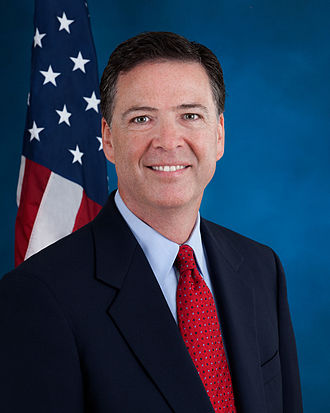
FBI Director James B. Comey has created a bit of a mess.

Here's how he might get out of it.

The FBI's investigation of Hillary Clinton's treatment of classified emails as Secretary of State was wrapped up in July. Comey announced that while her procedures were "extremely careless," she had neither the requisite criminal intention, nor was there any other reason, to proceed with her prosecution.

One of Hillary's closest aides, Huma Abedin, was married to Congressman Anthony Weiner. Weiner, formerly infamous for sending women lewd pictures of himself, is now being investigated by the FBI for doing so with a 15 year old girl. As a product of that investigation, it appears that in addition to whatever else he may have had on his computer, there were some of Huma Abedin's emails -- possibly including email exchanges between her and Hillary Clinton.

Department of Justice practice is to not reveal details of ongoing criminal investigations, and not to make announcements that might affect the outcome of a political campaign within 60 days of Election Day. Comey, having made a commitment to members of Congress to keep them informed of developments regarding Clinton's classified emails, informed them -- 11 days before the presidential Election Day -- of the possibility there might be more emails as a result of the Weiner investigation. Apparently Weiner's computer, containing some 600,000 emails, had been sometimes shared with his wife.

At the time, Comey's FBI didn't even have a search warrant authorizing their access to Huma Abedin's emails. (Now they have one.) Apparently he had not even seen any of the relevant emails, let alone made a judgment about what problems they did, or did not, raise.

Given the role throughout the 2015-16 presidential campaign of what Senator Bernie Sanders once famously described as "Hillary's damned emails," it could have been predicted that Comey's rekindling this fire, raising suspicions without a soupçon of facts, would have the impact on the election's outcome that is already showing up. Talk about an "October surprise!"

What's worse, as the opening quote reports, the FBI is saying it's unlikely there will be any facts prior to Election Day.

So what's to be done? Don't insist, for now, that the excellent must be permitted to be the enemy of the good.

1. Do a quick search of the emails. Microsoft Outlook, and most other email programs, have a search feature. It's something I often use, and it's incredibly fast. If Google can search through billions of documents in less than a second, there's no reason why searching through 600,000 emails should take "several weeks."

2. How do Hillary and Abedin refer to each other in emails -- first name, full name, initials, title, code names? Do they always do so? Pull out every email that contains those identifiers -- whether in the text, to, from, or subject fields.

3. Then search those emails for words that might identify a classified email -- secret, top secret, confidential, C, eyes only, classified. Compare those with the classified emails of Secretary Clinton that the FBI has already investigated and remove the duplicates.

4. Print out and divide the remainder, if any, among however many FBI agents are necessary to get those emails read and evaluated within 24 hours (preferably agents formerly involved in the investigation of the Secretary's emails).

5. If nothing is discovered that significantly adds or subtracts from what was known in July, have Director Comey issue a statement something like the following:
I apologize to the American public, the Congress, and the presidential campaigns for any confusion that I may have created by my recent report to Congressional leaders regarding what we thought might be additional emails relevant to our previous investigation of former Secretary of State Clinton. My prior commitments to Congress required that I make some report as soon as I became aware of this development. It was certainly not my intention, nor that of the Bureau, to affect the election in any way.

In that spirit, I wish to announce that our preliminary evaluation of the newly discovered emails, some of which were duplicates, indicates that they will add nothing new to what we knew in July.

While we will continue to evaluate them more closely, I wanted to make clear that at this time it does not appear that we will be altering the advice we provided the Department of Justice at that time.
Of course, from the Clinton campaign's perspective this risks that disclosing what the initial search reveals might be much more damaging than what's now in the media -- and Trump's speeches.

And then there's always Comey's option to simply resign -- either explaining, or not, whatever pressures may have been applied to him that caused him to do this.

# # #

This essay was published by OpEdNews on November 1, 2016. It stimulated the following exchange of comments on that site:

Comment by Rob Kall: Good ideas, all of them, including Comey resigning.

Submitted on Tuesday, Nov 1, 2016 at 12:33:53 AM

Reply to Rob Kall: Email Reply from Nicholas Johnson: Thanks, Rob; appreciate it.

There's an old saying: "Get a reputation as an early riser and you can sleep all day."

I think that may have played a role in what I wrote: his reputation for courage in standing up to the surveillance community (his rush to Ashcroft's hospital bedside; although he also asked Apple for a back door), his quality education and law school teaching, his range of experience -- up to and including essentially running the Department of Justice as Deputy Attorney General. I, like so many others, was willing to give him the benefit of the doubt regarding his decision to violate two policies of the Justice Department (don't talk about ongoing investigations; don't do anything that might impact an election within 60 days of Election Day) -- "there must have been a good reason for him to do that."

Now I'm not so sure. I don't have enough facts at this point to come to a final judgment about any of this. But sadly, this "morning after the night before," I at least have to hold in suspension the possibility that, whether pushed into it by others or coming to it all on his own, at least a part of his motivation was to contribute to a diminishing of Clinton's margin of victory, or her defeat.

Meanwhile, and however that comes out, I do still think the earlier the FBI can follow the quick steps I outlined in the op ed the better.

Submitted on Tuesday, Nov 1, 2016 at 7:40:04 AM

Comment by Nicholas Johnson: With regard to Director Comey's possible resignation: this is, of course, a wholly separate issue. The more urgent matter is what can be done to minimize the harm he may have done to a presidential election. His departure would do virtually nothing to address that concern.

However, here are some brief notes on this "separate issue." FBI Directors are now appointed for ten-year terms. Appointed in 2003, Comey's term won't expire until 2023. He can, of course, resign at any time. And the ten-year terms are not, in effect, "ten years of a life appointment." FBI Directors can be, and have been, fired by presidents. President Obama has, so far, continued to express confidence in Director Comey.

Submitted on Tuesday, Nov 1, 2016 at 10:14:17 AM

Shad Williams Reply to Nicholas Johnson: Did not know that about the 10 year term. I will need to look up what is the term limit of the CIA director?

Submitted on Tuesday, Nov 1, 2016 at 12:10:16 PM

Reply to Shad Williams Email Reply from Nicholas Johnson: Shad: Thanks for the comment. To the best of my recollection the CIA Director is, like most other presidential appointees, someone who serves, as we say, "at the pleasure of the president." Otherwise put, she or he can be fired at any time. Indeed, some administrations have had the practice of getting a "resignation" from everyone they appoint -- that is, an undated letter of resignation to the president that can be dated and then used at any time.

Submitted on Tuesday, Nov 1, 2016 at 3:20:14 PM

Comment by BFalcon: Correct me if I am wrong.

Comey did not disclose anything about the investigation to public.

He wrote the letter to Congressional Committee as addendum to his testimony which, I presume, was his obligation.

Do you believe, if the search that you suggested finds something that could be relevant and incriminating, that they should, two or three days before elections, state that to public?

Submitted on Tuesday, Nov 1, 2016 at 11:57:35 PM

Reply to BFalcon Email Reply from Nicholas Johnson: Correct me if I am wrong.

Response: Thank you, BFalcon, for this provocative comment.

Comey did not disclose anything about the investigation to public.

Response: He disclosed a great deal about the investigation -- which has had an effect, whether intended or not, on voters' preferences. You are of course correct that he did not disclose anything about the results of the investigation, because according to him it not only had not ended it had not even begun until they got the necessary search warrant. He did not need to reveal the results of a yet-to-be-begun investigation. All he needed to do to impact Hillary's chances was to say that there was one, that in effect the investigation closed in July was reopened 11 days before the election.

He wrote the letter to Congressional Committee as addendum to his testimony which, I presume, was his obligation.

Response: He tried to suggest that he, as well as you, presumed that was his obligation. Obviously, since I am not privy to his communications with the Republican Congressional leadership, I cannot know what his "obligation" was. Some have said it is inappropriate to include members of Congress in the details of an ongoing investigation. Be that as it may, it would seem sufficient to me to both satisfy any obligation he might have while also complying with both Department of Justice procedures: no comments about ongoing investigations, and no comments within 60 days of an election that might affect its outcome. Any yet-to-be-discovered revelations that might or might not come out of Weiner's computer would not need to be reported until there is something to report; certainly, the fact the FBI was going to look there to see if there was anything worth pursuing is not of sufficient importance to warrant violating Department of Justice standards. The only thing the early statement accomplished was to raise suspicions and innuendo regarding a presidential candidate.

Do you believe, if the search that you suggested finds something that could be relevant and incriminating, that they should, two or three days before elections, state that to public?

Response: That is the result of what I am proposing. Comey should never have made the statement he did. Having done so he can't take it back. The damage has been done. Both campaigns and other leaders of both parties have urged that more facts be revealed. Hillary's insistence this be done suggests to me that she thinks there's little to nothing there. If it turns out there is a smoking gun, or arsenal, there then -- having gone this far -- the members of Congress he wrote, and the public, are probably entitled to know that before the election, rather than having to go into the voting booth with nothing but suspicions.

Submitted on Wednesday, Nov 2, 2016 at 2:20:02 PM

BFalcon Reply to Nicholas Johnson: Again, I am not sure from what you say that Comey disclosed anything to the public, did he?

If somebody is charged with investigation of a bunch of mail and testifies under oath that all the mail was investigated, it is my opinion that the person, when he learns that there is some more mail to be completed, should amend the testimony simply disclosing this fact.

I disagree with you that revealing e.g. that "there is possibly incriminating information" just before the elections would be right. The voters should make their choice without further "information" (necessarily incomplete and not final).

Submitted on Wednesday, Nov 2, 2016 at 8:50:07 PM

Reply to BFalcon Email Reply from Nicholas Johnson: BFalcon: Thanks for the follow-up. I disagree with you only in the sense that I have come to different conclusions -- as expressed in an earlier comment.

I do not disagree in the sense that I think you are "wrong." I think yours are rational, easily supported -- and, indeed, widely shared (including by Comey and Republican congressional leaders) -- conclusions (regarding both what Comey was "obliged" to do in the past, and in the future with pre-Election Day discoveries). -- Nick

Submitted on Thursday, Nov 3, 2016 at 10:20:02 AM

Comment by Nicholas Johnson: I am finding it increasingly difficult to suspend judgment regarding FBI Director Comey's and some agents' deliberate efforts to adversely affect Clinton's chances in next Tuesday's election. See this morning's Washington Post: Editorial, "Can Anyone Control the FBI?" The Washington Post, November 5, 2016 ("In the days since [FBI Director Comey's announcement of the 'discovery of additional emails in the investigation of Hillary Clinton's private server'], the FBI's behavior has grown even more questionable. FBI sources have fanned new doubts about Ms. Clinton's candidacy with inaccurate leaks about an investigation of the Clinton Foundation."), and Ben Brody and Chris Strohm, "FBI Surprises With Files on Clinton '01 Pardon of Marc Rich," Bloomberg, November 1, 2016 ("The FBI unexpectedly released 129 pages of documents related to an investigation closed without charges in 2005 into President Bill Clinton's pardon of Marc Rich, who had been married to a wealthy Democratic donor. The file was posted online Monday but received little attention until the FBI noted it in a tweet on Tuesday afternoon. It comes as Director James Comey faces fire from Democrats and even some Republicans for releasing information about his renewed investigation into Hillary Clinton's use of e-mail.")

Submitted on Saturday, Nov 5, 2016 at 11:07:57 AM

Comment by Nicholas Johnson: I suffer no illusions that there is anyone in Washington, let alone the Director of the FBI, who would know or care what I am thinking and writing about, or would be influenced by it if they did know. But it's always somewhat satisfying, after writing a proposed course of action, that others -- with more knowledge of the situation than I possess -- subsequently come to the same, or similar conclusions. So it is with my OpEdNews piece, above. In this case, what I proposed (Comey shouldn't have opened the issue, but having done so should now put all the agents necessary to going through the additional emails before election day, and then announce the results) is apparently what was done. (It is, however, not clear whether or not they used the specific steps I suggested for speeding the process, though it's reasonable to assume they did.) See Matt Apuzzo, Michael S. Schmidt and Adam Goldman, "Emails Warrant No New Action Against Hillary Clinton, F.B.I. Director Says," New York Times, November 7, 2016, p. A1.

Submitted on Monday, Nov 7, 2016 at 4:16:54 PM

# # #

Saturday, October 29, 2016

An Outrageous Merger

It’s outrageous that AT&T and Time Warner may be permitted to merge.

Of course, there are antitrust issues.

If it’s approved, some competitors will go out of business, others won’t get started, and consumers will pay more and get less.


Antitrust law is not designed to regulate anti-competitive behavior; it is designed to prevent anti-competitive behavior.

Permitting AT&T to acquire Time Warner would be like (with credit to Mason Williams) giving a small boy a ball and then saying, “Now don’t bounce it” – or hiring someone to watch him.

Regulation doesn’t work. What’s called “agency capture” is widespread and well documented. In the BP oil spill case, it involved the regulators literally sleeping with the regulated. Even if an agency isn’t captured it probably doesn’t have enough personnel to do meaningful regulation. The FCC of my day had three employees to respond to 85,000 complaints, and they travelled in pairs.

The only way to prevent anti-competitive corporate behavior is to forbid the mergers that make it possible.

But antitrust law and lawyers often have ways of finding adequate competition when no one else can see it. Moreover, the serious antitrust issues and economic impact of this proposed merger are the least of our concerns.

Mergers of media firms, unlike those in other industries, raise issues involving our democracy, analogous to those associated with the First Amendment.

Some involve politics and governing. Major media owners are more politically powerful than major donors. When a single owner has dominant control of newspapers, radio, television and cable systems within a state or region it can affect elections. When a weapons manufacturer also owns a network, it creates an appearance of possible conflict in its war coverage.

Other issues involve the creative community. Suppose a single corporation owns movie studios, theaters, a TV network, book publishers, newspapers, and other forms of media. It can favor its movies in its theaters, make its authors guests on its TV shows, and advertise all its products in its newspapers.

Both AT&T and Time Warner are among the world’s largest corporations. Time Warner’s HBO and Cinemax programming is sold in 150 countries, its Turner programs in 200. AT&T is the largest telecommunications company in the world, also in 200 countries. Both are holding companies, conglomerates, that together own dozens of corporations. Many are known to you, like CNN, HBO, or DirectTV. Check their corporate Web pages for more.

Worst of all, and what ought to absolutely preclude this merger, they will represent a gigantic combination of programming and delivery (“content and conduit”) -– the ultimate choke-hold on the distribution of a diversity of content.

The AT&T of old only provided distribution, the conduit. Everyone was entitled to a phone. And once you got one, you could send any ideas you wanted into that phone and through AT&T’s lines. Other institutions might come after you for disclosing national security secrets, fraudulent marketing, or defamation, but not AT&T.

There was a legal “right of entry” into the old AT&T network. No longer. There will be no legal rights for America’s creators of content. Nor will there be a financial incentive for AT&T to carry their content.

From any perspective, it would be outrageous for regulators to approve this merger.
_______________
Nicholas Johnson, a former FCC commissioner (1966-73), played a significant role in frustrating ITT’s efforts to acquire ABC. Blog: FromDC2Iowa.blogspot.com Contact: mailbox@nicholasjohnson.com

Note: This blog essay was published online by OpEdNews, October 26, 2016.


# # #

Monday, August 20, 2012

Lehman's 'Get Out of Jail Free' Card

August 19, 2012, 11:30 a.m.

Will Wall Street Ever Be Prosecuted?
Since writing "Goldman: Too Big to Jail," August 12, 2012, questioning why both Justice and the SEC dropped their cases against Goldman Sachs, CBS' "60 Minutes" has asked, and in large measure answered, the same question about the Lehman Brothers case: "The Case Against Lehman Brothers," CBS 60 Minutes, August 19, 2012.


You can find the online "60 Minutes" video here, and the full transcript here.

Here are some Fair Use excerpts from that program. Steve Kroft is the interviewer, Anton Valukas is the bankruptcy court-appointed Chicago lawyer tasked with investigating what happend within Lehman, and the additional narrative is in italics.
When Lehman Brothers collapsed, 26,000 employees lost their jobs and millions of investors lost all or almost all of their money, triggering a chain reaction that produced the worst financial crisis and economic downturn in 70 years. Anton Valukas' job was to provide the bankruptcy court with accurate, reliable information that the judges could use to resolve the claims of creditors picking over Lehman's corpse. . . .

Steve Kroft: Did these quarterly reports represent to investors a fair, accurate picture of the company's financial condition?

Anton Valukas: In our opinion, they did not.

Steve Kroft: And isn't that against the law?

Anton Valukas: It certainly, in our opinion, was against civil law if you will. There were colorable claims that this was a fraud, yes.

By colorable claims Valukus means there is sufficient evidence for the Justice Department or the Securities and Exchange Commission to bring charges against top Lehman executives, including CEO Richard Fuld, for overseeing and certifying misleading financial statements, and against Lehman's accountant, Ernst and Young, for failing to challenge Lehman's numbers. . . .

Steve Kroft: How are you so sure of that? Anton Valukas: Because we read the emails in which we observed the people saying that they were doing it. . . . A jury would have to decide who's telling the truth.

But so far there has been no jury to hear the evidence. Despite Valukas' findings -- and the supporting documents and testimony to back them up -- the Securities and Exchange Commission has not brought any charges of any kind against former Lehman executives. For the past few months, we've made numerous requests to interview the SEC's head of enforcement. All of those requests have been declined.

Steve Kroft: The Securities and Exchange Commission has not brought a case.

Anton Valukas: No, they have not.

There is one plausible explanation why SEC hasn't has not gone after top Lehman executives. As it turns out, some of Lehman's most egregious accounting shenanigans took place right under the noses of government regulators.

Steve Kroft: How closely was the SEC monitoring Lehman Brothers during this time?
Anton Valukas: They were on premises. They were talking to the Lehman people daily. They officed there.
After six years of reporting on stories like this, no wonder Steve Kroft candidly concludes, in a "60 Minutes Overtime" interview (5:18 minutes in), "I think this is the last story I'll do about nobody being held accountable, because I've really sort of given up. I don't think the federal government, either the SEC or the Justice Department, are going to bring any cases against individuals. I just don't think they're going to."

This is one time when I don't really welcome the confirmation. I'd like to have been proven wrong. But Kroft's conclusions is almost identical to mine in "Goldman: Too Big to Jail."

That he and I come to these conclusions when a Democratic Administration is calling the shots is distressing. Especially since we have no alternative. If anything, the Republicans would be worse -- although it's difficult to imagine how they might go about achieving that distinction.

# # #

Sunday, August 12, 2012

Goldman: Too Big to Jail?

August 12, 2012, 11:50 a.m.

[For confirmation of the conclusion in this blog entry, see the discussion of CBS 60 Minutes' presentation of the issues in, "Lehman's 'Get Out of Jail Free' Card."]

"If You Can't Trust Your Banker"

video

Credit: "Shady Deal at Sunny Acres," Maverick, 2nd Season, 1958. The popular early television series, Maverick, "starring James Garner and Jack Kelly, remains the most famous and widely discussed episode of the Western comedy television series Maverick. Written by Roy Huggins and Douglas Heyes and directed by Leslie H. Martinson, this 1958 second season episode depicts gambler Bret Maverick (James Garner) being swindled by a crooked banker (John Dehner) after depositing the proceeds from a late-night poker game, then recruiting his brother Bart Maverick (Jack Kelly) to mount an elaborate sting operation to recover the money." It's also the source of two oft-quoted lines: "If you can't trust your banker, whom can you trust?" and "I'm working on it." See, "Shady Deal at Sunny Acres," wikipedia.org. And see "Terrorist Bankers," February 13, 2009.

Woody Guthrie (1912-1967) warned us there would be days like this, when he wrote in the story of "Pretty Boy Floyd,"
Yes, as through this world I've wandered
I've seen lots of funny men;
Some will rob you with a six-gun,
And some with a fountain pen.

And as through your life you travel,
Yes, as through your life you roam,
You won't never see an outlaw
Drive a family from their home.
Woody Guthrie, "Pretty Boy Floyd," woodyguthrie.org.

If fountain pens and handguns are merely optional choices for bank robbers, why is it that those who choose handguns end up in jail, and those who choose fountain pens (as augmented with today's computers) end up living in multiple million dollar mansions? (See, e.g., "Homes: Weeks' Salisbury, Romney's Six," May 30, 2012.) Why is it those with handguns get less than $10,000, and those who use fountain pens are handed millions? Jason Koebler, "What You Should Know Before Robbing a Bank; Most bank robberies net just a few thousand dollars," US News, June 11, 2012 ("The vast majority of bank robberies are relatively unsuccessful affairs, having netted criminals just $7,500 in 2010 on average, according to the FBI.").

For our answer we must turn to a modern-day Woody Guthrie, Harry Shearer, who provides us some musical insight into the operations of Goldman Sachs. Here is a snippet from his song . . .

"Mr. Goldman and Mr. Sachs"
Harry Shearer
When Mr. Goldman met Mr. Sachs
Business ran on railroad tracks
The world was simpler, you can't forget
When Mr. Sachs and Goldman met

Said Mr. Goldman, "For years and years,
Our guys have got the most between the ears"
Said Mr. Sachs, "Let's unhook some reigns,
And find new ways to profit off our traders' brains"

Spinning gold out of flax,
Mr. Goldman and Mr. Sachs

Spinning gold out of flax,
Mr. Goldman and Mr. Sachs

"Up to the Clintons," says Sachs with glee,
"Our former chief now runs the Treasury"
Slapped Mr. Goldman to Mr. Sachs,
"Everything's OK, we can relax"
For the full lyrics and much more commentary and video clips, see "Goldman, Sachs and Shearer," August 14, 2010.

When Goldman Sachs folks were successful in persuading the House, Senate, Treasury, Fed and President that Wall Street banks were "too big to fail," I responded that those banks were "too big to bail" -- no entity should be permitted to become too big to fail, to merge and monopolize itself into such size that taxpayers are offered no other option than to privatize their profits and socialize their losses. They should be split into entities of such size that, like other American businesses, they can be permitted to fail.

Now, it turns out, they are also "too big to jail."

And so it is that we came to read this last week:
The Justice Department said Thursday it won't prosecute Wall Street firm Goldman Sachs or its employees in a financial fraud probe. . . .

"The department and investigative agencies ultimately concluded that the burden of proof to bring a criminal case could not be met based on the law and facts as they exist at this time," the department said. . . .

A Senate subcommittee chaired by Sen. Carl Levin, D-Mich., in April 2011 found that Goldman marketed four sets of complex mortgage securities to banks and other investors but that the firm failed to tell clients that the securities were very risky. The Senate panel said Goldman secretly bet against the investors' positions and deceived the investors about its own positions to shift risk from its balance sheet to theirs.

The Justice Department's decision capped a good day for Goldman as the Securities and Exchange Commission decided not to file charges against the firm over a $1.3 billion subprime mortgage portfolio. . . . The Senate panel probe turned up company emails showing Goldman employees deriding complex mortgage securities sold to banks and other investors as "junk" and "crap." Levin said . . . Goldman "gained at the expense of their clients and they used abusive practices to do it." . . . In 2010, Goldman agreed to pay $550 million to settle civil fraud charges by the SEC of misleading buyers of mortgage-related securities. The agreement applied to one of the four deals cited by the Senate subcommittee.
Pete Yost, "Government won't prosecute Goldman Sachs in probe," Associated Press/Google, August 10, 2012.

In other words, two years ago Goldman Sachs agreed they were sufficiently guilty of something to be willing to pay a $550-million-dollar fine, A year later the Senate committee sure thought they had engaged in "abusive practices" that made them guilty of something. And now the Department of Justice finds that "the burden of proof to bring a criminal case could not be met"?! So it's "case dismissed," even though Goldman Sachs has already confessed to the need for them to pay a fine in excess of one-half billion dollars for one of the four offenses that would make up that "criminal case."

Jill Treanor, "Goldman Sachs handed record $550m fine over Abacus transaction; Securities and Exchange Commission punishes bank over collateralised debt obligation," The Guardian, July 15, 2010 ("The [Goldman Sachs] Abacus case had called into question the integrity of Wall Street after the commission alleged Goldman had packaged up mortgages into Abacus and then sold the CDO [collateralized debt obligation] to investors without telling them one of its powerful clients, the hedge fund Paulson, had been taking a trading position intended to profit from a fall in the value of US house prices.").

It sounds to me like the "burden of proof" ought to be on those elected officials in Washington, and the Department of Justice, to justify this decision to those American, and global, citizens who have borne the burdens of the global economic collapse from which Goldman and others have profited.

It's also noteworthy, it seems to me, how little attention the mainstream media gave to this story. The Associated Press ran the story quoted, and linked to, above. But I didn't see any fragment of it in any of the local papers I read. The New York Times offered a short piece, but put it back on page B-5. Ben Protess and Azam Ahmed, "S.E.C. and Justice Dept. End Mortgage Investigations Into Goldman,", New York Times, August 10, 2012, p. B5.

But the Times is to be credited with informing us in the very same story of what may or may not be the coincidental fact that, on the very same day the Department of Justice dropped all charges, the U.S. Securities and Exchange Commission also did so:
Separately, Goldman Sachs announced early Thursday that the Securities and Exchange Commission had ended an investigation into a $1.3 billion subprime mortgage deal, taking no action. The move was an about-face for the commission, which notified the bank in February that it planned to pursue a civil action.
In other words, the U.S. Senate asks the Justice Department to investigate and prosecute what it considers very serious charges against Goldman Sachs. The SEC announces that it's going to go after Goldman in a civil action. And then, on Goldman's glorious day, both the DOJ and the SEC do what the Times calls "an about-face."

Of course, "a correlation is not a cause," but it's fair to note that this year, so far, Open Secrets reports that Goldman Sachs has made total political campaign contributions of roughly $5 million, plus $4.5 million on "lobbying," plus another roughly $1 million in "soft money." "Goldman Sachs Totals," OpenSecrets.org.

It may have been a good day for Goldman Sachs, but it has not otherwise been a good year for all the other banks.
This hasn’t been a good year for Bank of America.

In February, the bank paid a $1 billion dollar fine to the Feds for defrauding the FHA by underwriting loans to unqualified buyers. Just last month Bank of America joined Visa, MasterCard and other large banks to settle a price fixing case brought by retailers over credit card swipe fees. The bank’s portion of that fine: $738 million. . . .

Mortgage investors, claiming that they were misled about the quality of the mortgages and mortgage-backed bonds the bank sold them, have filed claims that have cost the bank over $13 billion so far. The bank lost over $19 billion on their consumer real estate division last year. . . .

Part of Bank of America’s $2.46 billion dollar profit came from cutting their bad loans reserve, a rather neat accounting sleight of hand.

Most recently, Bank of America was the recipient of a subpoena and Request for Information from the U.S. Department of Justice regarding their role in the Libor benchmark interest rate scandal. Berkshire Bank likewise named Bank of America, Citigroup, and Barclays as some of the defendants in their lawsuit for damages, alleging that Libor fraud lowered the . . . interest payments . . . received from customers.

-- Karen Rogers, "Can Bank of America Survive Libor?" Motley Fool, August 8, 2012.


ING Bank has agreed to pay a $619 million penalty for moving billions of dollars through the U.S. financial system at the behest of Cuban and Iranian clients, acts that violated economic sanctions [and] falsifying the records of New York financial institutions . . .. "These cases . . . ultimately contribute to the fight against money laundering and terror financing," Manhattan District Attorney Cyrus Vance said . . ..

-- Charles Riley, "ING to pay $619 million for Cuba, Iran dealings," CNN/Money/Fortune, June 12, 2012


Barclays [Bank]’s record $451 million fines for interest rate manipulation sent bank shares plunging . . . amid speculation that lenders could face billions of dollars in lawsuits. . .. Traders at the U.K.’s second-biggest bank by assets routinely coordinated with counterparts from at least four other banks in an attempt to move interest rate benchmarks [including] the London interbank offered rate, or Libor, and Euribor . . . to generate profits on derivatives held by the banks, the agencies said. . . . Citigroup Inc., Royal Bank of Scotland Group, UBS, ICAP, Lloyds Banking Group and Deutsche Bank are among the firms regulators are investigating.

-- Joshua Gallu, Silla Brush and Lindsay Fortado, "Barclays Libor Fine Sends Stocks Lower as Probes Widen," Bloomberg, June 28, 2012.

If you can't trust your banker, whom can you trust?

It's reminiscent of the story of the father who places his young son on the mantlepiece of their fireplace, holds out his arms, and tells the son to jump. The father steps back, and lets his son fall on the tiles below. When the bewildered and bawling boy looks up and asks why his father did that, the father replies, "Son, that's to teach you the lesson that you should never trust anyone, not even your own father."

The sad conclusion: (1) No, you can't trust your banker. (2) Nor can you trust your elected officials to regulate banks effectively. (3) No matter how you vote this next November those truths will not change. Bank executives are just too big to jail.

Have a nice day.
# # #

Thursday, December 16, 2010

Wiki Not Only Source of Leaks

December 16, 2010, 9:00 a.m.

We Have Found the Enemy
(bought to you by FromDC2Iowa.blogspot.com*)

While embarrassed U.S. Government officials in the State Department and Department of Justice are busily trying to come up with some legal theory to persecute Julian Assange beyond what the Swedes have devised, it turns out that other officials have been busily leaking material more significant than any Wikileaks ever dreamed of revealing.

(See, Nicholas Johnson, "Wikileaks Random Thoughts & Comments," December 7, 2010; Nicholas Johnson, "Wikileaks In Its Own Words," December 3, 2010;
Charlie Savage, "U.S. Tries to Build Case for Conspiracy by WikiLeaks," New York Times, December 16, 2010, p. A1; Elisabeth Bumiller, "Intelligence Reports Offer Dim View of Afghan War," New York Times, December 15, 2010, p. A1.)

As the Times' Charlie Savage reports this morning, above,
Since WikiLeaks began making public large caches of classified United States government documents this year, Justice Department officials have been struggling to come up with a way to charge Mr. Assange with a crime . . . including the Espionage Act of 1917 and the Computer Fraud and Abuse Act of 1986.

But while prosecutors have used such laws to go after leakers and hackers, they have never successfully prosecuted recipients of leaked information for passing it on to others — an activity that can fall under the First Amendment’s strong protections of speech and press freedoms.
How ironic that on the same front page of the same newspaper the day before, Elisabeth Bumiller was passing along to Times' readers the leaks from highly classified government documents provided to her by U.S. government officials, above -- clearly not all (if, indeed, any) of whom had the legal authority to declassify them.

Bear in mind, these are not like a Wikileaks' State Department cable that might report a single diplomat's impressions of a given individual, event or situation. These are the joint product of our nation's 16 top intelligence agencies in what's called the National Intelligence Estimates. And they happen to deal with a debate currently ongoing within the Administration regarding the future of U.S. involvement in Afghanistan and Pakistan; a debate that pits the Department of Defense against the intelligence community. Bumiller reports these "two new classified intelligence reports [one on Afghanistan, the other on Pakistan] offer a . . . negative assessment and say there is a limited chance of success . . .."

And who are her unnamed sources? "[A] number of American officials," referred to simply as "officials" throughout the very revealing story.

Savage reports the Justice Department may have already convened a grand jury to consider possible charges against Assange -- who is probably a constitutionally protected distributor of often-inconsequential cables, not the original hacker or leaker.

Will there also be a DOJ grand jury to consider prosecution of the officials who clearly were the leakers of classified intelligence reports to The New York Times?

Will there be a prosecution of The New York Times and the other leading global newspapers that have also performed a much more consequential (in terms of size of audience) distribution of the cables than anything Wikileaks ever did?

To paraphrase Jesus' comment regarding the medical profession, "Politician, heal thyself." Luke 4:23.

Or, as cartoonist Walt Kelly once had his popular character, Pogo, observe, "We have met the enemy and he is us."
_______________

* Why do I put this blog ID at the top of the entry, when you know full well what blog you're reading? Because there are a number of Internet sites that, for whatever reason, simply take the blog entries of others and reproduce them as their own without crediting the source. I don't mind the flattering attention, but would appreciate acknowledgment as the source -- even if I have to embed it myself.
-- Nicholas Johnson
# # #