Showing posts with label emails. Show all posts

Monday, October 31, 2016

Hillary's New Emails: A Solution for FBI Director Comey

Related: Richard W. Painter, "On Clinton Emails, Did the F.B.I. Director Abuse His Power?" New York Times, October 30, 2016 (possible violation of Hatch Act; author: University of Minnesota law professor, and former chief White House ethics lawyer, 2005 to 2007); Matt Apuzzo, Michael S. Schmidt and Adam Goldman, "Justice Department Obtains Warrant to Review Clinton Aide's Emails," New York Times, October 31, 2016, p. A1 (background); Editorial, "Can Anyone Control the FBI?" The Washington Post, November 5, 2016 ("In the days since [FBI Director Comey's announcement of the 'discovery of additional emails in the investigation of Hillary Clinton’s private server'], the FBI’s behavior has grown even more questionable. FBI sources have fanned new doubts about Ms. Clinton’s candidacy with inaccurate leaks about an investigation of the Clinton Foundation."); Ben Brody and Chris Strohm, "FBI Surprises With Files on Clinton ’01 Pardon of Marc Rich," Bloomberg, November 1, 2016 ("The FBI unexpectedly released 129 pages of documents related to an investigation closed without charges in 2005 into President Bill Clinton’s pardon of Marc Rich, who had been married to a wealthy Democratic donor. The file was posted online Monday but received little attention until the FBI noted it in a tweet on Tuesday afternoon. It comes as Director James Comey faces fire from Democrats and even some Republicans for releasing information about his renewed investigation into Hillary Clinton’s use of e-mail."); Matt Apuzzo, Michael S. Schmidt and Adam Goldman, "Emails Warrant No New Action Against Hillary Clinton, F.B.I. Director Says," New York Times, November 7, 2016, p. A1.

F.B.I. agents are all but certain that it [their review of newly-found Huma Abedin-Hillary Clinton emails] will not be completed by Election Day, and believe it will take at least several weeks."

Michael S. Schmidt and Matt Apuzzo, "10 Questions (and Answers) About New Email Trove," The New York Times, October 31, 2016, p. A15.
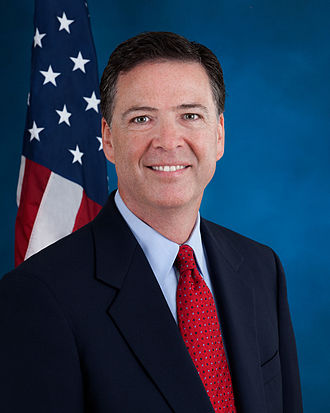
FBI Director James B. Comey has created a bit of a mess.

Here's how he might get out of it.

The FBI's investigation of Hillary Clinton's treatment of classified emails as Secretary of State was wrapped up in July. Comey announced that while her procedures were "extremely careless," she had neither the requisite criminal intention, nor was there any other reason, to proceed with her prosecution.

One of Hillary's closest aides, Huma Abedin, was married to Congressman Anthony Weiner. Weiner, formerly infamous for sending women lewd pictures of himself, is now being investigated by the FBI for doing so with a 15 year old girl. As a product of that investigation, it appears that in addition to whatever else he may have had on his computer, there were some of Huma Abedin's emails -- possibly including email exchanges between her and Hillary Clinton.

Department of Justice practice is to not reveal details of ongoing criminal investigations, and not to make announcements that might affect the outcome of a political campaign within 60 days of Election Day. Comey, having made a commitment to members of Congress to keep them informed of developments regarding Clinton's classified emails, informed them -- 11 days before the presidential Election Day -- of the possibility there might be more emails as a result of the Weiner investigation. Apparently Weiner's computer, containing some 600,000 emails, had been sometimes shared with his wife.

At the time, Comey's FBI didn't even have a search warrant authorizing their access to Huma Abedin's emails. (Now they have one.) Apparently he had not even seen any of the relevant emails, let alone made a judgment about what problems they did, or did not, raise.

Given the role throughout the 2015-16 presidential campaign of what Senator Bernie Sanders once famously described as "Hillary's damned emails," it could have been predicted that Comey's rekindling this fire, raising suspicions without a soupçon of facts, would have the impact on the election's outcome that is already showing up. Talk about an "October surprise!"

What's worse, as the opening quote reports, the FBI is saying it's unlikely there will be any facts prior to Election Day.

So what's to be done? Don't insist, for now, that the excellent must be permitted to be the enemy of the good.

1. Do a quick search of the emails. Microsoft Outlook, and most other email programs, have a search feature. It's something I often use, and it's incredibly fast. If Google can search through billions of documents in less than a second, there's no reason why searching through 600,000 emails should take "several weeks."

2. How do Hillary and Abedin refer to each other in emails -- first name, full name, initials, title, code names? Do they always do so? Pull out every email that contains those identifiers -- whether in the text, to, from, or subject fields.

3. Then search those emails for words that might identify a classified email -- secret, top secret, confidential, C, eyes only, classified. Compare those with the classified emails of Secretary Clinton that the FBI has already investigated and remove the duplicates.

4. Print out and divide the remainder, if any, among however many FBI agents are necessary to get those emails read and evaluated within 24 hours (preferably agents formerly involved in the investigation of the Secretary's emails).

5. If nothing is discovered that significantly adds or subtracts from what was known in July, have Director Comey issue a statement something like the following:
I apologize to the American public, the Congress, and the presidential campaigns for any confusion that I may have created by my recent report to Congressional leaders regarding what we thought might be additional emails relevant to our previous investigation of former Secretary of State Clinton. My prior commitments to Congress required that I make some report as soon as I became aware of this development. It was certainly not my intention, nor that of the Bureau, to affect the election in any way.

In that spirit, I wish to announce that our preliminary evaluation of the newly discovered emails, some of which were duplicates, indicates that they will add nothing new to what we knew in July.

While we will continue to evaluate them more closely, I wanted to make clear that at this time it does not appear that we will be altering the advice we provided the Department of Justice at that time.
Of course, from the Clinton campaign's perspective this risks that disclosing what the initial search reveals might be much more damaging than what's now in the media -- and Trump's speeches.

And then there's always Comey's option to simply resign -- either explaining, or not, whatever pressures may have been applied to him that caused him to do this.

# # #

This essay was published by OpEdNews on November 1, 2016. It stimulated the following exchange of comments on that site:

Comment by Rob Kall: Good ideas, all of them, including Comey resigning.

Submitted on Tuesday, Nov 1, 2016 at 12:33:53 AM

Reply to Rob Kall: Email Reply from Nicholas Johnson: Thanks, Rob; appreciate it.

There's an old saying: "Get a reputation as an early riser and you can sleep all day."

I think that may have played a role in what I wrote: his reputation for courage in standing up to the surveillance community (his rush to Ashcroft's hospital bedside; although he also asked Apple for a back door), his quality education and law school teaching, his range of experience -- up to and including essentially running the Department of Justice as Deputy Attorney General. I, like so many others, was willing to give him the benefit of the doubt regarding his decision to violate two policies of the Justice Department (don't talk about ongoing investigations; don't do anything that might impact an election within 60 days of Election Day) -- "there must have been a good reason for him to do that."

Now I'm not so sure. I don't have enough facts at this point to come to a final judgment about any of this. But sadly, this "morning after the night before," I at least have to hold in suspension the possibility that, whether pushed into it by others or coming to it all on his own, at least a part of his motivation was to contribute to a diminishing of Clinton's margin of victory, or her defeat.

Meanwhile, and however that comes out, I do still think the earlier the FBI can follow the quick steps I outlined in the op ed the better.

Submitted on Tuesday, Nov 1, 2016 at 7:40:04 AM

Comment by Nicholas Johnson: With regard to Director Comey's possible resignation: this is, of course, a wholly separate issue. The more urgent matter is what can be done to minimize the harm he may have done to a presidential election. His departure would do virtually nothing to address that concern.

However, here are some brief notes on this "separate issue." FBI Directors are now appointed for ten-year terms. Appointed in 2003, Comey's term won't expire until 2023. He can, of course, resign at any time. And the ten-year terms are not, in effect, "ten years of a life appointment." FBI Directors can be, and have been, fired by presidents. President Obama has, so far, continued to express confidence in Director Comey.

Submitted on Tuesday, Nov 1, 2016 at 10:14:17 AM

Shad Williams Reply to Nicholas Johnson: Did not know that about the 10 year term. I will need to look up what is the term limit of the CIA director?

Submitted on Tuesday, Nov 1, 2016 at 12:10:16 PM

Reply to Shad Williams Email Reply from Nicholas Johnson: Shad: Thanks for the comment. To the best of my recollection the CIA Director is, like most other presidential appointees, someone who serves, as we say, "at the pleasure of the president." Otherwise put, she or he can be fired at any time. Indeed, some administrations have had the practice of getting a "resignation" from everyone they appoint -- that is, an undated letter of resignation to the president that can be dated and then used at any time.

Submitted on Tuesday, Nov 1, 2016 at 3:20:14 PM

Comment by BFalcon: Correct me if I am wrong.

Comey did not disclose anything about the investigation to public.

He wrote the letter to Congressional Committee as addendum to his testimony which, I presume, was his obligation.

Do you believe, if the search that you suggested finds something that could be relevant and incriminating, that they should, two or three days before elections, state that to public?

Submitted on Tuesday, Nov 1, 2016 at 11:57:35 PM

Reply to BFalcon Email Reply from Nicholas Johnson: Correct me if I am wrong.

Response: Thank you, BFalcon, for this provocative comment.

Comey did not disclose anything about the investigation to public.

Response: He disclosed a great deal about the investigation -- which has had an effect, whether intended or not, on voters' preferences. You are of course correct that he did not disclose anything about the results of the investigation, because according to him it not only had not ended it had not even begun until they got the necessary search warrant. He did not need to reveal the results of a yet-to-be-begun investigation. All he needed to do to impact Hillary's chances was to say that there was one, that in effect the investigation closed in July was reopened 11 days before the election.

He wrote the letter to Congressional Committee as addendum to his testimony which, I presume, was his obligation.

Response: He tried to suggest that he, as well as you, presumed that was his obligation. Obviously, since I am not privy to his communications with the Republican Congressional leadership, I cannot know what his "obligation" was. Some have said it is inappropriate to include members of Congress in the details of an ongoing investigation. Be that as it may, it would seem sufficient to me to both satisfy any obligation he might have while also complying with both Department of Justice procedures: no comments about ongoing investigations, and no comments within 60 days of an election that might affect its outcome. Any yet-to-be-discovered revelations that might or might not come out of Weiner's computer would not need to be reported until there is something to report; certainly, the fact the FBI was going to look there to see if there was anything worth pursuing is not of sufficient importance to warrant violating Department of Justice standards. The only thing the early statement accomplished was to raise suspicions and innuendo regarding a presidential candidate.

Do you believe, if the search that you suggested finds something that could be relevant and incriminating, that they should, two or three days before elections, state that to public?

Response: That is the result of what I am proposing. Comey should never have made the statement he did. Having done so he can't take it back. The damage has been done. Both campaigns and other leaders of both parties have urged that more facts be revealed. Hillary's insistence this be done suggests to me that she thinks there's little to nothing there. If it turns out there is a smoking gun, or arsenal, there then -- having gone this far -- the members of Congress he wrote, and the public, are probably entitled to know that before the election, rather than having to go into the voting booth with nothing but suspicions.

Submitted on Wednesday, Nov 2, 2016 at 2:20:02 PM

BFalcon Reply to Nicholas Johnson: Again, I am not sure from what you say that Comey disclosed anything to the public, did he?

If somebody is charged with investigation of a bunch of mail and testifies under oath that all the mail was investigated, it is my opinion that the person, when he learns that there is some more mail to be completed, should amend the testimony simply disclosing this fact.

I disagree with you that revealing e.g. that "there is possibly incriminating information" just before the elections would be right. The voters should make their choice without further "information" (necessarily incomplete and not final).

Submitted on Wednesday, Nov 2, 2016 at 8:50:07 PM

Reply to BFalcon Email Reply from Nicholas Johnson: BFalcon: Thanks for the follow-up. I disagree with you only in the sense that I have come to different conclusions -- as expressed in an earlier comment.

I do not disagree in the sense that I think you are "wrong." I think yours are rational, easily supported -- and, indeed, widely shared (including by Comey and Republican congressional leaders) -- conclusions (regarding both what Comey was "obliged" to do in the past, and in the future with pre-Election Day discoveries). -- Nick

Submitted on Thursday, Nov 3, 2016 at 10:20:02 AM

Comment by Nicholas Johnson: I am finding it increasingly difficult to suspend judgment regarding FBI Director Comey's and some agents' deliberate efforts to adversely affect Clinton's chances in next Tuesday's election. See this morning's Washington Post: Editorial, "Can Anyone Control the FBI?" The Washington Post, November 5, 2016 ("In the days since [FBI Director Comey's announcement of the 'discovery of additional emails in the investigation of Hillary Clinton's private server'], the FBI's behavior has grown even more questionable. FBI sources have fanned new doubts about Ms. Clinton's candidacy with inaccurate leaks about an investigation of the Clinton Foundation."), and Ben Brody and Chris Strohm, "FBI Surprises With Files on Clinton '01 Pardon of Marc Rich," Bloomberg, November 1, 2016 ("The FBI unexpectedly released 129 pages of documents related to an investigation closed without charges in 2005 into President Bill Clinton's pardon of Marc Rich, who had been married to a wealthy Democratic donor. The file was posted online Monday but received little attention until the FBI noted it in a tweet on Tuesday afternoon. It comes as Director James Comey faces fire from Democrats and even some Republicans for releasing information about his renewed investigation into Hillary Clinton's use of e-mail.")

Submitted on Saturday, Nov 5, 2016 at 11:07:57 AM

Comment by Nicholas Johnson: I suffer no illusions that there is anyone in Washington, let alone the Director of the FBI, who would know or care what I am thinking and writing about, or would be influenced by it if they did know. But it's always somewhat satisfying, after writing a proposed course of action, that others -- with more knowledge of the situation than I possess -- subsequently come to the same, or similar conclusions. So it is with my OpEdNews piece, above. In this case, what I proposed (Comey shouldn't have opened the issue, but having done so should now put all the agents necessary to going through the additional emails before election day, and then announce the results) is apparently what was done. (It is, however, not clear whether or not they used the specific steps I suggested for speeding the process, though it's reasonable to assume they did.) See Matt Apuzzo, Michael S. Schmidt and Adam Goldman, "Emails Warrant No New Action Against Hillary Clinton, F.B.I. Director Says," New York Times, November 7, 2016, p. A1.

Submitted on Monday, Nov 7, 2016 at 4:16:54 PM

# # #

Monday, July 04, 2016

Clinton-Lynch Tarmac Talk; 'What Were They Thinking?'

Here Are Some Possibilities
For a politician long praised for his political smarts, it was a striking error of judgment on [Bill] Clinton’s part to walk to [Attorney General Loretta] Lynch’s plane for any kind of conversation. It was a similarly huge lapse on the part of the attorney general, who was appointed by Clinton as a U.S. attorney in 1999, to allow him to come aboard for any kind of conversation.

-- Dan Balz, "How Everyone Looks Bad Because Bill Clinton Met With Loretta Lynch," The Washington Post (online), July 2, 2016
NOTE, July 5, 2016, 1:00 p.m.: Since writing this blog essay, the FBI released its report regarding possible criminal violations by Hillary Clinton regarding her use of a private email server. What follows in this section is a link to the New York Times story about FBI Director James Comey's news conference, and a link to a transcript of his remarks on that occasion. They are followed by what I believe to be the most significant portions of that transcript. (For anyone interested in the case, the full transcript is very much worth reading.) Finally, I add some comments of my own. While this information is of sufficient significance to be noted here, none of it affects the analysis in the earlier blog essay regarding the meeting between Bill Clinton and Attorney General Lynch -- with the possible exception of the timing of Director Comey's statement (about which I comment).

Mark Landler, "F.B.I. Director James Comey Recommends No Charges for Hillary Clinton on Email," The New York Times (online), July 5, 2016; "Statement by FBI Director James B. Comey on the Investigation of Secretary Hillary Clinton’s Use of a Personal E-Mail System," FBI National Press Office, Washington, D.C., July 5, 2016
Although we did not find clear evidence that Secretary Clinton or her colleagues intended to violate laws governing the handling of classified information, there is evidence that they were extremely careless in their handling of very sensitive, highly classified information.

For example, seven e-mail chains concern matters that were classified at the Top Secret/Special Access Program level when they were sent and received. These chains involved Secretary Clinton both sending e-mails about those matters and receiving e-mails from others about the same matters. There is evidence to support a conclusion that any reasonable person in Secretary Clinton’s position, or in the position of those government employees with whom she was corresponding about these matters, should have known that an unclassified system was no place for that conversation. In addition to this highly sensitive information, we also found information that was properly classified as Secret by the U.S. Intelligence Community at the time it was discussed on e-mail (that is, excluding the later “up-classified” e-mails).

None of these e-mails should have been on any kind of unclassified system, but their presence is especially concerning because all of these e-mails were housed on unclassified personal servers not even supported by full-time security staff, like those found at Departments and Agencies of the U.S. Government—or even with a commercial service like Gmail.

. . .

She also used her personal e-mail extensively while outside the United States, including sending and receiving work-related e-mails in the territory of sophisticated adversaries. Given that combination of factors, we assess it is possible that hostile actors gained access to Secretary Clinton’s personal e-mail account.

. . .

Although there is evidence of potential violations of the statutes regarding the handling of classified information, our judgment is that no reasonable prosecutor would bring such a case. Prosecutors necessarily weigh a number of factors before bringing charges. There are obvious considerations, like the strength of the evidence, especially regarding intent. Responsible decisions also consider the context of a person’s actions, and how similar situations have been handled in the past.

In looking back at our investigations into mishandling or removal of classified information, we cannot find a case that would support bringing criminal charges on these facts. All the cases prosecuted involved some combination of: clearly intentional and willful mishandling of classified information; or vast quantities of materials exposed in such a way as to support an inference of intentional misconduct; or indications of disloyalty to the United States; or efforts to obstruct justice. We do not see those things here.

To be clear, this is not to suggest that in similar circumstances, a person who engaged in this activity would face no consequences. To the contrary, those individuals are often subject to security or administrative sanctions. But that is not what we are deciding now.
My thoughts. (1) If the only possible prosecution was under the statute requiring proof of "intention," then I think Director Comey's announced decision not to prosecute is, if not inevitable, at least reasonable lawyering by a prosecutor for the reasons he cites (quoted above). But if there are statutes making it a criminal offense to be "extremely careless" when handling top secret documents (without the need to prove "intention" to risk disclosure), or if "any reasonable person person . . . should have known that an unclassified system was no place for" classified documents or email conversations -- both of which Director Comey charged as having occurred -- then more explanation is called for as to why those criminal statutes were not used.

(2) Timing. (a) Media. As I write this, the evening news programs have not yet aired. By Comey's releasing this statement today [July 5] rather than tomorrow the story will have to compete with news coverage of the joint Obama-Clinton campaigning in North Carolina today, thus weakening the FBI's decision's adverse impact on Clinton (as well as Trump-camp criticisms of both Comey's decision and Clinton's use of private email servers). (b) Speed. The past Saturday, Sunday, and Monday were holidays for millions of Americans -- including some journalists -- an ideal time to kill, or reduce the impact, of stories one would rather censor. Maybe Comey had already written his statement by mid-week of last week, predicting how the Saturday morning questioning of Hillary was likely to go. But no matter how one counts the time, going from a Saturday morning questioning session to a Tuesday morning statement, regarding a year-long investigation involving tens of thousands of documents, is more than fast-track service for any government agency. I take the Director at his word that no one from the White House or Justice Department interfered with the investigation's outcome. But that does not necessarily exclude suggestions as to when a decision would be preferred.

(3) CNN has created a two-minute video with clips contrasting Hillary's statements with the FBI's findings revealed by Director Comey. Gregory Krieg, "FBI Boss Comey's 7 Most Damning Lines on Clinton," CNN Politics, July 5, 2016, 1805 ET. Look at the top of the page, immediately below the big video screen, for the small picture from the video titled "Watch the FBI Refute Clinton Email Claims" (it has no separate, unique URL) which runs 2:03

(4) Criminal statutes. The following is not legal advice, is not the product of thorough research, and is not intended to suggest that Hillary Clinton violated any of these laws -- none of which seems to precisely cover the facts in her case (some deal with theft of government property that includes documents, others the deliberate doing of harm to the United States, or removing documents with no intention of returning them). But together they give some sense of what federal criminal statutes provide (as found in Title 18 of the United States Code) that might be thought to be in some way related. For what I believe does represent solid legal research and analysis (whether or not other lawyers will agree with it) -- from last January no less -- see Dan Abrams, "Trump is Wrong, Hillary Clinton Shouldn’t Be Charged Based on What We Know Now," LawNewz, January 29, 2016, republished, March 2, 2016 (continued with a link at the bottom of Abrams’ editorial).
18 USC 793
(f) Whoever, being entrusted with or having lawful possession or control of any document, writing, . . . note, or information, relating to the national defense, (1) through gross negligence permits the same to be removed from its proper place of custody . . ., or (2) having knowledge that the same has been illegally removed from its proper place of custody . . . , and fails to make prompt report of such loss . . . — Shall be fined under this title or imprisoned not more than ten years, or both.

18 USC 1924
(a) Whoever, . . . by virtue of his office . . . becomes possessed of documents or materials containing classified information of the United States, knowingly removes such documents or materials without authority and with the intent to retain such documents or materials at an unauthorized location shall be fined under this title or imprisoned for not more than one year, or both. . . . (c) [T]he term “classified information of the United States” means information originated, owned, or possessed by the United States Government concerning the national defense or foreign relations of the United States that has been determined pursuant to law or Executive order to require protection against unauthorized disclosure in the interests of national security.

18 USC 2071(b)
(a) Whoever willfully and unlawfully . . . removes . . . or, with intent to do so takes and carries away any . . . document . . . filed or deposited . . . in any public office . . . shall be fined under this title or imprisoned not more than three years, or both. (b) Whoever, having the custody of any such record, . . . document, paper, . . . unlawfully . . . removes . . . the same, shall be fined under this title or imprisoned not more than three years, or both; and shall forfeit his office and be disqualified from holding any office under the United States.

18 USC 641
Whoever . . . knowingly converts to his use or the use of another . . . any record . . . of the United States or of any department or agency thereof, . . . Shall be fined under this title or imprisoned not more than ten years . . ..

[The original blog essay begins here.] The FBI has been investigating whether Hillary Clinton, former Secretary of State and presumptive Democratic presidential nominee, did anything illegal by establishing a private server for her official and private email -- thereby subjecting top secret and other classified government documents to greater risk of hacking or other disclosure.

She was subjected to three and a half hours of questioning by the FBI on Saturday, July 2.

Normally, it would befit media savvy, sophisticated political campaign managers to choose that date (the beginning of a three-day July 4th holiday weekend), and to control her movements as they did (they avoided any still or video pictures of her leaving home, entering or leaving the FBI offices). They thereby insured there would be the least possible media coverage that day, and that stories about FBI questioning of their candidate will have faded by July 5th -- further guaranteed by arranging for President Obama to campaign alongside her on the 5th. In this case, however, Hillary is haunted -- as she and her managers have acknowledged -- by a majority public perception (that may be both untrue and unfair) that she lies, is secretive and untrustworthy. When the FBI investigation is focused on one of the reasons for that public perception -- her home-based personal email server while Secretary of State -- her managers' minimizing public knowledge regarding the FBI's questioning might not have been the wisest choice.

But those issues I leave to others. This blog essay is not about how she handled her emails, her experience and qualifications for the presidency, or the desirability of her holding that office. It is how events of last week were perceived and covered by the media, Washington insiders, and the rest of us.

On Monday evening, June 27, former president Bill Clinton, Hillary's husband, held his plane at Phoenix’s Sky Harbor executive airport to await the arrival of Attorney General Loretta Lynch's plane a few minutes after his plane had been scheduled to take off. Ken Kurson, "EXCLUSIVE: Security Source Details Bill Clinton Maneuver to Meet Loretta Lynch; Former president delayed Phoenix takeoff to snare '20-25 minute encounter' with Attorney General," The Observer (online), July 1, 2016.

Dan Balz is one of Washington's most experienced and ablest political reporters. His take on the Clinton-Lynch meeting, in the excerpt quoted above, was the take of most reporters and Washington insiders -- for them to meet at that time was "a striking error of judgment," and a "huge lapse" (for reasons explored below).

Is that a possible explanation? Maybe. As we say, "anything's possible." The most likely explanation? I don't think so.

I have no inside knowledge of the events and conversations preceding and during the Clinton-Lynch visit, involving them and others. How could I have? But there are certainly more possibilities than those being offered by the parties, their apologists, and the media.

Clinton and Lynch are both lawyers; she is the nation's (or at least the government's) top lawyer. Both are fully seeped in the professional requirements of legal ethics (a major subject of their annual, mandatory Continuing Legal Education courses). They had to have been aware of the impropriety of a private meeting between an interested party (Bill Clinton, Hillary's husband) and the ultimate decider during this investigation of Hillary Clinton. If this were already a contested judicial or administrative agency proceeding the meeting would have constituted what is called an ex parte contact with a judge -- an occasion at which both parties are required to be present -- that could result in disbarment of the offending lawyer.

Both are politically savvy. President Clinton has made his share of bad decisions during his career as a politician, but most have been personal rather than political -- and no one is suggesting this one was in the former category. Indeed, he is probably one of the most well informed, experienced, sophisticated and successful politicians of our time. Lynch is politically experienced as well -- a Harvard law graduate who practiced law with two of the nation's prestigious law firms, as a prosecutor going after Democratic and Republican office holders alike, and successfully maneuvering through her Senate hearing.

What were the motives behind the Clinton-Lynch encounter? There is no explanation that I find persuasive. But the one I find least persuasive is the possibility that the two of them were totally oblivious to the legal, professional, political, media, and other consequences of their getting together for a chat about golf and grandchildren at this time, in this way, in this place.

Here are some other possibilities.

(1) They did talk about the merits and disposition of the Hillary investigation. Of all the possibilities, this is the least likely in my opinion -- in part because of the points made above.

(2) However, . . . depending on when the decision was made to schedule her FBI questioning for Saturday morning (July 2), they might have discussed that scheduling.

The Benghazi report was going to come out the next day (June 28). That might have seemed worth talking about.

They might have talked about the advantages of replacing the Attorney General with the appointment of an independent counsel -- thereby postponing the conclusion of the investigation beyond the November election.

(3) Perhaps Bill just wanted to reestablish and reinforce the Clintons' personal relationship with Lynch -- to implant a face on what might otherwise be a dry legal document. Yes, money is probably the most persuasive element of political power in Washington. But close behind, if not ahead of money are personal relationships. These may not be Iowa-style "friendships," perhaps, let alone b-f-f relationships. As President Truman is said to have observed, "If you want a friend in Washington, get a dog."

But establishing, and maintaining personal relationships is a major part of a lobbyist's job description. It's the part that doesn't always involve pressing the client's case directly. It's dropping in for a chat about whatever; sharing and paying for a drink or lunch, round of golf, fishing trip, pro ball game, or travel abroad. It's said that before a lobbyist asks a member of Congress for a favor, he or she should first do ten favors for the member.

As Maritime Administrator or FCC commissioner I always refused that kind of contact, but I would take time to visit with almost anyone coming to my office (if it would not violate the spirit of ex parte prohibitions). One of my visitors was an AT&T representative. He was a tall, friendly guy from Alabama, with a southern accent and smooth manner, great stories, and an ability to relate to anyone. He knew me well enough to never talk about AT&T business, and I'd like to believe AT&T's lawyers' efforts to remove me from AT&T cases, coupled with my dissenting opinions, would support my belief that he had no effect on my positions on telephone issues. But he did lighten my day and I was always happy to chat with him. I have never had my own private jet plane, but if I had one back then I wouldn't have been surprised, if the occasion arose, that he might have walked across a tarmac to pay me a visit.

Maybe that was a part of Bill Clinton's instinct; after all, he had given Lynch's career a big boost with a U.S. Attorney appointment earlier in her career. It couldn't hurt, he might have thought, to have his mere presence remind her of that without even mentioning the appointment -- or the pending investigation of his wife.

(4) Maybe this meeting was a way of signaling the Attorney General's preferences to the FBI and Justice personnel. The President, of course, has already done this with his earlier statements suggesting he doesn't believe Hillary's private email server was all that serious, his endorsement of her (before the Democratic National Convention selected her or the FBI investigation was concluded), and his agreement to go campaigning with her this week.

Those who wish to thrive (or at least survive) within any bureaucracy, including government, develop sensitive antennae that pick up on signals from those higher up the food chain. Of all the civil service, among those whose honor I respect the most are those at the Justice Department and FBI. I'd like to believe they'd not be swayed in their decisions by anything other than the merits of a case.

But Bill Clinton may have thought that, whatever else Justice and FBI employees might surmise from public revelations of the Clinton-Lynch meeting, they would at least aware that their top boss has a sufficiently friendly and casual relationship with Hillary's husband to have had this meeting with him at this time. And he may have thought these signals from the President and Attorney General would be of benefit to Hillary with regard to the election generally, and this investigation in particular.

(5) It's possible that Bill Clinton, Lynch, or both wanted the Attorney General to have a conflict -- and therefore be able to stay out of the FBI's Hillary investigation. There were enough security and other folks around at the time of the Clinton-Lynch visit that they would both have to have known that the meeting would become public knowledge.

How might Lynch's recusal advantage them?

The Attorney General was confronting a lose-lose choice. As the polls reveal, and many commentators are now saying, the fact that a majority of the public thinks Hillary lies and can't be trusted is one of her major hurdles at this time. (Obviously, I'm not asserting those public perceptions are warranted or fair; I'm just saying they exist and are a political problem for Hillary as a presidential candidate.)

If the FBI indicts Hillary, and the Attorney General either lets that decision proceed without comment, or expresses support for it, she would engender the enmity of the the entire Democratic Party establishment on the eve of the Party's convention. It would be even worse if the FBI gives Hillary a soft slap on the wrist and does nothing more, and then the Attorney General intervenes and, with the advice of staff members, essentially reverses the FBI and imposes serious penalties.

On the other hand, if the FBI doesn't indict Hillary, and Lynch goes along with that result, or worse if they do indict and Lynch essentially reverses their decision, it would support Trump's assertion that "the fix is in," reflecting badly both on the Attorney General and the President.

Following the revelations, and criticism, of her meeting with Bill Clinton the Attorney General appears to have taken what are seemingly two inconsistent positions. The first was that she would simply accept whatever the FBI decides. Because this seemed to raise some questions about the propriety of her doing so, given her responsibilities for review and approval, she then seemed to backpedal a bit, reserving the right to intervene.

Anyone with the political history and power of the Clintons, and their campaign and other staffers, might very well have access to individuals within the Justice Department, or FBI, willing to pass along information about the status of the investigation. (Again, for reasons stated earlier, I do not believe this would happen with those employees; but such things are not unknown in Washington.) Hillary certainly at least knows what she was asked during her FBI questioning that may have given her some clues. But if, for example, there were inside reports, and they indicated that the upper levels of the Justice Department want an indictment, but the FBI seems to be more lenient, there would be an advantage to the Clinton campaign to remove the Attorney General from the process.

Bottom line. I'm not suggesting any of these possibilities are true. I certainly have no desire to do Donald Trump any favors. But as I began, this blog essay is not about Hillary's merits and the November election.

It is about how the media, Washington insiders, and the rest of us thought and wrote about these events. The predominant response seemed to be simply, "What were they thinking?" The only possibility those asking this question could imagine was that Lynch and Bill Clinton weren't thinking. On the other hand, I believe this bizarre behavior of Bill Clinton and the Attorney General, whose department is investigating his wife's past actions, could be explained by a number of things they might have been thinking. And that if we're going to discuss what they did, and its significance, we have an obligation to get beyond the conclusion that the only possible explanation is that it was just "a striking error of judgment" and a "huge lapse."

# # #