Sunday, September 18, 2011

Those Kinds of Riots Here

September 18, 2011, 11:45 a.m.

The Language of the Unheard

“You have a lot of kids graduating college can’t find jobs. That’s what happened in Cairo. That’s what happened in Madrid. You don’t want those kinds of riots here.”

-- New York City Mayor Michael Bloomberg, quoted in Kate Taylor, "Bloomberg, on Radio, Raises Specter of Riots by Jobless," New York Times, September 17, 2011, p. A19. [Photo credit: Craig Ruttle/Associated Press]

Internal Links Within This Blog Entry

Poor People's Movements

Iowa Citizens for Community Improvement and Iowa Democratic Party

Golden Rules and Revolutions

Reich Robert Reich and "The Truth About the Economy"

Trudeau Garry Trudeau's "Doonesbury"

Bloomberg In 2011 our media have enabled us to focus upon, and cheer on, the rising tsunami of mass protest movements in Tunisia, Egypt, Libya, and elsewhere. We have seen that, while messy and usually disorganized, the ability of such movements to bring about change.
"The Arab Spring (Arabic: الربيع العربي‎; also known as the Arabic Rebellions or the Arab Revolutions) is a revolutionary wave of demonstrations and protests occurring in the Arab world. Since 18 December 2010 there have been revolutions in Tunisia[2] and Egypt;[3] a civil war in Libya resulting in the fall of its regime;[4] civil uprisings in Bahrain,[5] Syria,[6] and Yemen;[7] major protests in Israel,[8] Algeria,[9] Iraq,[10] Jordan,[11] Morocco,[12] and Oman,[13] and minor protests in Kuwait,[14] Lebanon,[15] Mauritania,[16] Saudi Arabia,[17] Sudan,[18] and Western Sahara.[19] Clashes at the borders of Israel in May 2011 have also been inspired by the regional Arab Spring.[20] The protests have shared techniques of civil resistance in sustained campaigns involving strikes, demonstrations, marches and rallies, as well as the use of social media to organize, communicate, and raise awareness in the face of state attempts at repression and internet censorship.[21]" "Arab Spring," Wikipedia.org.
For this week's update see, Laura Kasinof, "Fighting Erupts for Second Day in Yemeni Capital," New York Times, September 19, 2011.

Although Michael Bloomberg did not expand on his comment, he provided a pin prick of a reminder that such things could happen here -- although he limited the protesters to unemployed college graduates, and one senses he clearly views it as an option to be avoided. Not incidentally, if the Mayor hasn't noticed, "Occupy Wall Street" is already active. It's not one of "those kinds of riots" -- yet -- but it is getting close, very unambiguous in word and deed, and being subjected to a similar form of oppression, in this instance by New York City police:


And meanwhile, . . .
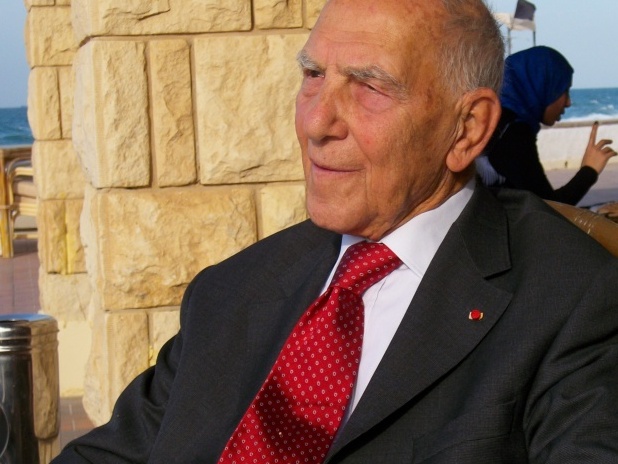
[Photo credit: Indigene editions La Voix de l'Enfant and NPR.] . . . WWII hero Stephane Hessel has titled his book Time for Outrage. See Eleanor Beardsley, "WWII Survivor Stirs Literary World With 'Outrage,'" NPR, September 22, 2011 (now two million copies in 30 languages) ("'If you want to be a real human being — a real woman, a real man — you cannot tolerate things which put you to indignation, to outrage. You must stand up. I always say to people, 'Look around; look at what makes you unhappy, what makes you furious, and then engage yourself in some action.''").

Poor People's Movements Had Bloomberg continued to speak on the subject it would have been necessary for him to acknowledge that such mass protest movements not only could happen here, they have happened here. And when they have happened here they have often proven to be very similar in effect to those we have cheered in the Arab spring -- a messy, disorganized way to produce change.

But they have been not just a way to produce change, for the working class and poor, many observers have concluded they are the only way to create progress.

Among such observers are Frances Fox Piven and Richard A. Cloward, authors of Poor People's Movements (New York: Random House/Vintage, 1977, paperback 1979). Tim Haight and I used it as one of the readings in a course we co-taught at the University of Wisconsin, Madison, in the spring of 1980. Piven and Cloward challenge many of the assumptions of America's Left as a result of their study of what is embodied in chapters titled, "The Unemployed Workers' Movement," "The Industrial Workers' Movement," "The Civil Rights movement," and "The Welfare Rights Movement."

They argue, for example, that efforts to "organize" the working poor actually tend to be self-defeating, for a variety of reasons, and what they say is "the obvious fact that whatever the people won was a response to their turbulence and not to their organized members." Introduction, first edition, p. xxiii. In the introduction to the paperback edition they take on their critics:
Some critics were dissatisfied, for example, with the various expressions of the post-World War II black movement: with the civil rights struggle in the South, or the riots in the North, or the surging demand for public welfare benefits that produced a welfare explosion in the 1960s. . . . But popular insurgency does not proceed by someone else's rules or hopes: it has its own logic and direction. It flows from historically specific circumstances: it is a reaction against those circumstances, and it is also limited by them.
Introduction, paperback, p. xi.

(Not incidentally, since welfare is mentioned, the authors observe, "Nor did the participants in the relief movement of the 1960s prefer welfare; together with Harrington, they plainly preferred decent jobs at decent wages. But they understood the political facts of their lives rather more clearly than Harrington: the unemployed poor in this period lacked the power to force programs of full employment." pp. xiii-xiv.)

Please understand, if it is not obvious, that I am not advocating "those kinds of riots here." What I am advocating is that those in a position to respond to legitimate demands from the unemployed and working poor not leave them with no option but the only one they have found to work in the past.

Iowa Citizens for Community Improvement and the Iowa Democratic Party Recently we have even seen leaders of the Iowa Democratic Party complain about citizen action that, by all accounts, fell far short of "those kinds of riots." Matt Kearney and Sarah Clark, "CCI's Tactics Are Appropriate," Iowa City Press-Citizen, September 15, 2011. For more detail see, Trish Nelson, "Brouhaha Over Grassley Town Hall," Blog for Iowa, September 6, 2011.

Let me make clear, I am not taking sides in this fight. There are reasons why the Iowa Democratic Party would want to distance itself from any group's behavior that was characterized as something other than "Iowa nice" -- however valid, or invalid, you might think its reasons. But in the context of this blog entry, the point is that there are also reasons why citizens who have been consistently ignored or rebuffed in their efforts to politely exercise their First Amendment right "to petition the government for a redress of grievances" might ultimately choose other tactics rather than give up entirely on what they consider legitimate, reasonable demands.

Here is an excerpt from the opinion piece:

Recent strong criticisms of Iowa Citizens for Community Improvement by Sue Dvorsky (the chairwoman of the Iowa Democratic Party) and John Deeth (a local Democrat and blogger) warrant a reply.

Both Dvorsky and Deeth take ICCI members to task for their confrontational conduct at a recent town hall meeting with Sen. Chuck Grassley in Carroll -- an event where neither Dvorsky or Deeth was present. Although a video record of the event is on the Internet, both seem to base their version of events on reportage from Douglas Burns of the Daily Times Herald, who claims CCI members "hurled insults" during the forum, then became "a mob" blocking Grassley from a subsequent media interview, and finally, used "physicality" to prevent the senator's clear passage to his car.

Watch the video and judge for yourself if any of this took place.

Deeth finds all of this "shameful, hateful and dangerous" -- especially considering Grassley is such a "venerable public servant and exceedingly decent man," as Burns put it. As a partisan Democrat, Deeth says that the only real way to change Grassley's vote is by beating him in an election and then chastises CCI members for not working for Democrat Roxanne Conlin.

There's only one problem with this. CCI is not a partisan political party. It is an issue-oriented, grassroots community organization working for change. Our members are Democrats, Republicans, Greens, Libertarians and independents. We don't have any political litmus test for participation in CCI.

A lot of the frustration people are feeling in this country is with a two-party "system" that seems to constantly shape-shift to serve the interests of corporations rather than people. People elect candidates who promise "change" then get no change at all.

Former Gov. Chet Culver [a Democrat] promised local control of hog lots and promptly changed his tune after the election. He promised his strong supporters in the union movement improvements to Iowa's collective bargaining process and then vetoed the bill. Is it any wonder that people get angry and discouraged?

Deeth and Dvorsky are unhappy with the way thousands of CCI members express this anger. They ridicule our "trite chants" and "demands" and ask that we abide by their version of civility. But history teaches us something different.

Women did not receive equal rights or suffrage by being nice. The civil rights struggle was not won by sitting quietly in the back of the bus. And the many victories of the labor movement were not won without noisy and sometimes bloody -- picket lines and strike actions.
As you see, ICCI is learning from, and applying, the lessons Piven and Cloward passed along in Poor People's Movements -- albeit with tactics (and dare I say, results) far less than those the authors examine.

Golden Rules and Revolutions Two and one-half years ago I wrote an eight-part blog entry series here on this theme, "Golden Rules and Revolutions." (That link goes to Part VIII, which opens with links to the prior seven in the series.)

The reference to "Golden Rules," of course, is to both the Biblical reference and the take-off, "S/he who has the gold makes the rules."

A European lecturer at the law school the other day took questions following a talk on controlling health care costs. In the course of the talk he blithely mentioned that, of course, all the EU countries have universal, single-payer health care systems. I asked,"How do you explain that European countries accept as a matter of course that citizens should be taxed to provide health care for all, while we're not even debating the issue any longer in the U.S.?" He replied, "I guess we just have more of a sense of solidarity."

He's right. The problem, of course, is that as the gap between our rich and poor continues to widen, as increasing hostility is driven by lack of jobs and social services, so long as we refuse to institute federal-government-as-employer-of-last-resort jobs programs and as a result our consumer-driven economy fails to recover, we are increasing the risk of "those kinds of riots here."

Here is an excerpt from the opening blog essay in that eight-part series, "Income Disparity & Revolution":

Increasing income disparity, despair. . . I am not a conspiratorial theorist, nor am I charging that anyone truly desires to turn the United States into a third world country, in which the top 1% of super rich rule over a 90% in abject poverty. All I would observe is that what is happening -- as a result of what will be spelled out in this series -- is not that different from what would be happening if that were the goal of government officials and the ruling elite.

[F]rom the late 1980s to the mid-2000s . . . inequality increased across the country. . . . No state has seen a significant decline in inequality during this period. . . .

On average, incomes have declined by 2.5 percent among the bottom fifth of families since the late 1990s, while increasing by 9.1 percent among the top fifth.
Pulling Apart: A State-by-State Analysis of Income Trends, Center on Budget and Policy Priorities, April 9, 2008.

And see, for Iowa data, David DeWitte, "Report finds income gap growing in Iowa," GazetteOnline, April 9, 2008, 11:40 a.m. ("The income gap between rich and poor is growing faster in Iowa than in most other states, according to a new report, which found a 49.3 percent average income growth in the wealthiest Iowa households over the past two decades. . . .")

. . . and Revolution. I recall reading many years ago -- where it was I would have no way of recalling now -- that there is a rough mathematical formula for predicting the point at which a growing income disparity will ultimately produce a revolution.

No, I don't think we're yet there in the United States.

But I am one of those who thinks Senator Obama was right when he said, "Lately, there has been a little, typical sort of political flare-up because I said something that everybody knows is true, which is that there are a whole bunch of folks in small towns in Pennsylvania, in towns right here in Indiana, in my home town in Illinois who are bitter. . . . They are angry. They feel like they have been left behind. They feel like nobody is paying attention to what they're going through." Perry Bacon Jr. and Shailagh Murray,"'Bitter' Is a Hard Pill For Obama to Swallow; He Stands by Sentiment as Clinton Pounces," Washington Post, April 13, 2008, p. A6. . . .

It's reminiscent of Ben Stein's story about his visit with Warren Buffett.

It turned out that Mr. Buffett, with immense income from dividends and capital gains, paid far, far less as a fraction of his income than the secretaries or the clerks or anyone else in his office. . . . “How can this be fair?” he asked . . ..

Even though I agreed with him, I warned that whenever someone tried to raise the issue, he or she was accused of fomenting class warfare.

“There’s class warfare, all right,” Mr. Buffett said, “but it’s my class, the rich class, that’s making war, and we’re winning.”
Ben Stein, "In Class Warfare, Guess Which Class Is Winning," New York Times, November 26, 2006.

Those who refuse to acknowledge what's happening in America can charge those who do with being "elitist," or fomenting "class warfare." But that does little to assuage the anger of those on the losing side of this warfare.

And when that anger is permitted to seethe long enough the news from elsewhere can serve as a reminder of the limits that ultimately come to constrain the greed of oppressive governments and the super rich elite.

Barbara J. Fraser, "As Economy Grows, Income Disparity in Latin America Widens," Catholic News Service, August 3, 2007 ("a two-day general strike in the region was called to protest government economic policies. . . . The incident was one of many around Peru in mid-July, as teachers, farmers and others took their discontent to the streets . . .. ")

Thu-Trang Tran, "A new peasant revolution – is China learning from its past?" Inside Asia, June 1, 2006 (". . . The government is concerned about the simmering social tension resulting from the widening wealth gap as the giant economy powers its way to the top spot.")

Associated Press, "Egypt: American freelance photojournalist and translator detained while covering riots," International Herald Tribune, April 10, 2008 ("Thousands of Egyptians angry over high food prices and low wages have been rioting this week in Mahallah . . . in Egypt, a U.S. ally where 40 percent of the people live in or near poverty.")
No, I don't think we need fear imminent revolution in America.

And no, I don't think the declining dollar, the $40 trillion in unfunded federal debt we're leaving to our great-grandchildren, our multi-billion-dollar negative trade balance, and recession mean we're on the precipice of third-world status.

But I do think we need to take the impact of our economy and governmental policies on ordinary Americans much more seriously than I sense our leaders and media are willing to do. Why? For starters, because I think it is the decent, just and humane thing to do.

But also for all the reasons I have laid out here and will in the rest of the series to come.
"Golden Rules & Revolutions: A Series - I," April 12, 2008.

Robert Reich and "The Truth About the Economy" In a recent blog entry, in another context, I had occasion to share Robert Reich's two-minute explanation of the problem, "The Truth About the Economy." "Why Iowa? Chase Garrett and Robert Reich," September 8, 2011. It is even more relevant here:


We usually find ourselves in agreement, and certainly did on that one.
See also "Robert Reich Debunks 6 Big GOP Lies about the Economy" video, for related material:


Garry Trudeau's "Doonesbury" Finally, I conclude (did you think I never would?), with this morning's Doonesbury, from Garry Trudeau:

[With credit, and daily thanks and applause, to Garry B. Trudeau, Doonesbury.]

When you find Michael Bloomberg, Stephane Hessel, Frances Fox Piven & Richard A. Cloward, Iowa Citizens for Community Improvement, Robert Reich, and Garry Trudeau in agreement, it might just be a good time to rethink where we are going with America and why.

# # #

Saturday, September 10, 2011

Terrorism, War, 9/11 and Looking Within

September 10, 2011, 11:30

Reflections September 10, 2011, About Terrorism September 11, 2001

On the eve of 9/11's tenth anniversary, and all the reflecting that date triggers, it's useful to put it in context -- as we wait to see the outcome of the threatened truck bomb attack. Eric Schmitt and Scott Shane, "Hearing Rumors of a Plot, Cities Make Their Security Forces Seen," New York Times, September 10, 2011, p. A9

Given that milestone, this semester's Cyber and Electronic Law has led off with a focus on national security and the legal issues surrounding the role of technology as a weapon of war, a defensive shield, and a force eroding our civil liberties and privacy.

So the students and I naturally tend to keep an eye out for the new developments that seem to pop up on a daily basis, and informally share news stories with each other.

Thus, this morning's [Sept. 10] Associated Press story on the Gazette's front page, "An Intel Q&A: How the U.S. Gets It, Where It Goes," caused me to seek out the original and full story online. Kimberly Dozier and Calvin Woodward, "An intel Q&A: How the US gets it, where it goes," Associated Press/Panama City [Florida] News Herald, September 10, 2011.

It turned out to be a partial and not too detailed overview, mostly material we've already discussed in class, but useful basic information if you haven't been tracking what's going on.

What caught my eye, however, was an accompanying interactive document, "Government Targeted: Nine charged in radical U.S. Christian militia plot."

The only opening text is brief: "People who have attacked the government range from neo-Nazis and other racist and religious radicals to members of armed militias. A look at some of the most notorious attacks or plots the last 15 years."

What follows, as you scroll right, are descriptions of various anti-government attacks, with dates, pictures of the perpetrators, and the scenes of their damage.

Here are some of the first few:

It begins with April 19, 1995, and a picture of the Oklahoma City federal building after the bombing by "militia movement sympathizer Timothy McVeigh and assistant Terry Nichols."

Next is a deliberate derailment of an Amtrak train in Arizona six months later by the "Sons of Gestapo" (never caught).

Two months after that, December 18, 1995, "Tax protester Josephy Martin Baillie" is arrested when a "plastic drum packed with ammonium nitrate and fuel" is found behind the Reno, Nevada, IRS building.

"Seven members of Mountainer Militia are arrested in a plot to blow up the FBI's national fingerprint records center in West Virginia" the following year.

In 1997, "anti-government extremists" in what is "believed to be a protest against taxes" set fire to a Colorado Springs, Colorado, IRS office.

"Armed anti-government activists" near Fort Hood, Texas, chose July 4th of that year to attempt "an alleged planned invasion of an army base."

"Materials to make the deadly poison ricin" were found in the home of James Kenneth Gluck following his "10-page letter to judges in Colorado threatening to 'wage biological warfare' on a county justice center." That was 1999.

The list goes on: a plot to assassinate the governor of Washington, someone trying to buy sarin nerve gas and C-4 explosives who says "it would be a 'good thing' if somebody could detonate a weapon of mass destruction in Washington, D.C.," the discovery of "stockpiles of weapons allegedly intended for attacks on government officials," a "white supremacist, shoots a security guard to death at the U.S. Holocaust Memorial Museum," an IRS dispute "and a hatred of the government" led to injury and death when a private plane was deliberately flown into an IRS building, someone "fascinated with conspiracy theories, libertarian ideas and the science of warfare" shot Pentagon police.

Obviously, there are many more -- and probably far more than what the AP interactive feature describes -- up to and including last year:
"March 28, 2010

Nine alleged members of a Christian militia group that was girding for battle with the Antichrist were charged with plotting to kill a police officer and slaughter scores more by bombing the funeral - all in hopes of touching off an uprising against the U.S. government. The Hutaree militia members were arrested in raids in Michigan, Indiana and Ohio."
What are we to make of this history?

1. "Crime" often involves a theft of property, or aggression toward another arising out of a personal encounter. That is not what these incidents represent. All of the cases cited by the AP, however criminal, and whatever the mental health of the perpetrators, are in one degree or another politically or ideologically driven -- in this case, often by a hatred of the American government in general or a specific agency (such as the IRS) in particular.

The Southern Poverty Law Center reports a variety of additional ideological and hatred-driven attacks -- primarily representing racial and religious, rather than anti-government, hatred -- in its Hate Map, Intelligence Files, Intelligence Report, and Hate Incidents.

2. None of the anti-American-government terrorists mentioned above were of the Muslim faith, let alone driven, or even influenced, by Muslim beliefs.

Some were overtly "Christian" (as was the recent Norwegian terrorist, Anders Behring Breivik, "described as a right-wing fundamentalist Christian" -- notwithstanding some media's early assertions he must have been Muslim).

The Daily Show With Jon StewartMon - Thurs 11p / 10c
In the Name of the Fodder
www.thedailyshow.com
Daily Show Full EpisodesPolitical Humor & Satire BlogThe Daily Show on Facebook

Virtually all of the individuals involved in the AP examples, one suspects, would self-identify as either Christian or non-religious. [The one possible exception, which the AP mentions and I did not include above, is "Nidal Malik Hasan, an Army major, allegedly opens fire at Fort Hood military base in Texas, killing 13 people and wounding many others. The motive behind the shooting is unclear. Hasan was in contact with a radical American-Yemeni cleric before the attack."]

3. We still confront real threats. Most responsible public officials, and American citizens, have made a genuine effort to distinguish between "anti-American radical Islamic fundamentalist jihadists" (or some similar phrase) and the peaceful American citizens who are their own neighbors, colleagues and friends of the Muslim faith.

We do this as naturally as we distinguish between members of the "Christian Hutaree Militia" and the Congregationalists and Catholics of our acquaintance.

Yet make no mistake, the evil motives of all responsible for the thousands of deaths, and subsequent consequences, of the attacks on September 11, 2001, in New York, Washington, and Pennsylvania, are among the worst in the trail of incidents of unspeakable cruelty throughout human history. I join all who continue to grieve over the loss of life on that day -- and the continuous loss of life, and $4 trillion in treasure, that have continued until the present day.

That kind of threat continues, despite our efforts.

The old line is still valid: "You're not paranoid, you've got real enemies."

America has real enemies. Eric Schmitt and Scott Shane, "Hearing Rumors of a Plot, Cities Make Their Security Forces Seen," New York Times, September 10, 2011, p. A9.

But if we are truly concerned about "terrorism," and seek to preserve our "homeland security," we need to look within as well as without. We need to recognize that by all odds the greatest source of terrorism in America -- criminal acts driven by political ideology and hatred -- comes from those who look like us and attend our churches.

As I have written elsewhere on this subject:
President Bush at one time said that those who finance, or “harbor” terrorists and their training camps, are as much our enemy as those who attack us.

OK, but surely we don't want to argue that it is only "terrorism" when others do it to us. And yet, if not, how do we justify "harboring" -- to use President Bush's word – the American Catholics who were financing terrorist acts of the IRA against Protestants in Ireland?

What about the "harboring" of our former "School of the Americas" (“SOA”) training camp in Georgia? It's trained those we've called "freedom fighters," and others might call “terrorists,” in Central and South America.

School of the Americas Watch charges that, "Graduates of the SOA are responsible for some of the worst human rights abuses in Latin America.” Does that make the former School of the Americas a terrorist training camp?

Apparently our government thinks not. At least there was no known plan to bomb the State of Georgia -- to be distinguished from our military forces sent to the Republic of Georgia.

Should we have bombed the State of Idaho [Timothy McVeigh's home] after the Oklahoma City bombing?
Nicholas Johnson, "General Semantics, Terrorism and War," Fordham University (speech text), New York City, September 8, 2006 (with endnotes of sources).

4. Rhetoric is relevant. Do I think right-wing, hate-spewing, haranguing talk shows are the sole motivating force responsible for the incidents itemized by the AP, or Jared Lee Loughner's shooting Arizona Rep. Gabrielle Giffords on January 8th of this year? No; of course not. Nicholas Johnson, "Glenn Beck: 'Shoot Them in the Head;' Beck Says 'Progressives' Are Radical, Revolutionary Communists Who May Shoot You," January 24, 2011.

On the other hand, there is a distressing similarity between what was said or espoused by some of those involved in the AP's cases, and some of the rhetoric coming from politicians, talk show hosts, and TV's chattering classes as they repeat their talking points.

With "freedom of speech" should go a certain "responsibility of speech," especially from those enjoying the awesome power and reach of our mass media.

Just some thoughts as we show our respect for our military, those who have survived as well as those who did not, patriotically following orders fashioned by others than themselves, and those civilians who also lost their lives ten years ago tomorrow.*
_____
* Chris Matthews just used [September 10, 5:00 p.m.] the following numbers: 6000 U.S. military killed (two times U.S. civilians on 9/11), 250,000 civilians killed in Iraq and Afghanistan, 100,000 U.S. military injured and requiring care (some, for life), and a cost of $4 trillion.

# # #

Thursday, September 08, 2011

Why Iowa? Chase Garrett and Robert Reich

September 8, 2011, 3:00 p.m. (with some edits and additions September 9, 2011, 9:30 a.m.)

Just Your Everyday Walk Around a Small Iowa Town

I was lucky to have been born and raised in Iowa City, and schooled in the University's experimental elementary and high school (now North Hall). The next 30 years I spent elsewhere -- Texas, California, but mostly Washington, D.C. When I returned home, some friends and former colleagues on the east and west coasts would ask, "Iowa, Nick? Why Iowa?"

As those of us who live here know, there are hundreds of responses to those questions. Last evening provided yet one more.

Walking along downtown Iowa City's Washington Street, following a reception at a restaurant that can match many of those on the coasts, we came upon an amazing piano player, 22-year-old Chase Garrett. He was sitting at a piano kindly placed on the sidewalk by those who thought it would be a nice addition to this community of literature (one of three so designated by the United Nations), theater, music, and creative arts generally.


Here is a direct link to the YouTube location of my video, and a link to Chase's Web site: http://chasegarrett.com//.

It turns out I'm far from the first person to discover this guy and upload his music to YouTube. Put "Chase Garrett" (in quotes) into YouTube search, and you'll see over 100 more.

From there we wandered down the hill to the Iowa Memorial Union (about three blocks). (Another nice thing about Iowa City is that an easy walk can get you to many of the places you want to go. If you're in a hurry you can bike. With time to spare, you can even drive.)

What we found in the main lounge of the IMU was a standing room only crowd, packed to the walls, waiting to hear a free lecture by Robert Reich, http://robertreich.org, once Secretary of Labor and now University of California, Berkeley, professor of public policy.

Yet another advantage of life in an intellectual, research and cultural environment, Robert Reich's appearance was the University of Iowa Lecture Committee's Distinguished Lecture for 2010-2011, and one in the Public Policy Center's Forkenbrock Series, under the joint sponsorship of the University Lecture Committee, and the Public Policy Center (Peter C. Damiano, director).

He had the audience in the palm of his hand, roaming the stage with a hand held mike, no notes, incisive comment, humor, and a Jack-Benny-like sense of timing and the pause -- necessary last evening because of the audience's tendency to interrupt him with applause throughout, and a couple standing ovations. All in all a great evening.

It was nice to have a chance to visit with him before and after the event, recalling his campaigning in Iowa City for presidential candidate Senator Bill Bradley. Reich and I write on similar subjects and come to similar conclusions. The primary difference between us being (1) he knows what he's talking about, and I rely on gut instinct in coming to the same conclusions, and (2) people read what he writes and come to listen to what he has to say. (I am always surprised and delighted to discover that at least one of my close family members has actually read one of these blog entries. There was even one day last year when two had done so on the same day.) I told him that I got all my best ideas from him, and he was polite enough to instantly respond with the lie that he got all his best ideas from me.

I won't bother to repeat what he had to say in his lecture and Q and A; but here is his own truncated video version of some of his themes in 2:33 minutes.


Drake University, where he spoke the following evening, has a video of his Drake speech, albeit with less than adequate audio (apparently from a source other than his mike).

If you are a regular reader of this blog (there's bound to be one somewhere), you've encountered most of the themes here during the last three years or so. But I will refer you to a story in the local press in which Diane Heldt nicely captured the gist of Wednesday evening's presentation.

Diane Heldt, "Reich: Nation must stimulate economy, address wealth inequity," The Gazette/SourceMedia Group News, September 8, 2011

In his planned speech to the nation Thursday night about the economy, President Obama must be bold and ambitious, and relay the message of “priming the pump” with robust government stimulus and spending, former Secretary of Labor Robert Reich said Wednesday night at the University of Iowa.

Government stimulus to boost consumer spending, loans to the states to perk up their flagging budgets and stop job cuts and the re-creation of such programs as the WPA to add jobs are what’s needed to revive the economy — steps far beyond just extending unemployment and the tax cuts, Reich said.

“It is more important now than deficit reduction,” he told a standing-room only crowd at the Iowa Memorial Union. “The debt, the deficit issue, although real, is manageable. What needs to be addressed now is jobs and growth.”

About 500 people turned out Wednesday to see Reich speak, the UI’s 2011-12 Distinguished Lecture event. Reich served in three presidential administrations, most recently as the Secretary of Labor for President Bill Clinton. Reich has authored 13 books; his most recent is “Aftershock: The Next Economy and America’s Future.”

Reich said he’s not suggesting the way out of our economic morass is to consume more things and fill our homes. Rather than blind consumerism, he advocates a broader notion of consumption — consuming better health care, a better environment, better arts and all the benefits of living a better life.

Government can only get so far priming the pump with stimulus when there’s not enough water in the well to begin with, Reich said. The issue of wealth inequality in the United States has to be addressed to produce long-term economic solutions, he said.

The wealthiest people control so much of the income that the vast middle class doesn’t have enough purchasing power to keep the economy going without going into debt, he said. Without reversing this trend of inequality, the country will come up against this issue again and again, Reich said.

“My fear is there is not much of a dialogue going on about any of this,” he said.
Why Iowa?

Chase Garrett, Robert Reich, and a lovely, short September evening's walk. That's one reason why Iowa.

There are hundreds more.

# # #

Tuesday, September 06, 2011

Governance: School Board Job No. 1

September 6, 2011, 7:45 a.m.

There's been a lot of confusion around town regarding the "Carver governance model." Here is a brief, 500-word effort to explain why and how it empowers, rather than restrains in any way, school boards and their stakeholders. Additional resources on this and other K-12 topics is below the column.

(Mis)understanding Carver
Nicholas Johnson
Iowa City Press-Citizen
September 6, 2011, p. A7
[temporary Press-Citizen link:
http://www.press-citizen.com/article/20110906/OPINION02/109060303/-Mis-understanding-Carver]


A blazing sunset filled the Grand Canyon. But as I was taking it in from the canyon's rim, the photographer next to me swore at his expensive Nikon camera.

"What's the matter?" I asked.

"My camera doesn't work," he said.

"The lens cover's on," I observed.

"Again?!" he exclaimed. "That's the trouble with these (expletive) Nikons."

And that's been our community's trouble with the Carver governance model. We're confusing the idea with its execution.

Carver works for Fortune 500 corporations, large and small non-profits -- and other districts' school boards.

It even worked for ours at one time.

"Plan your work, and work your plan" is good advice for any effort. But if the plan doesn't come off the shelf, the results are no more satisfying than when the lens cover doesn't come off the camera.

The basics of Carver are common sense, and the common practices of anyone who achieves their goals, including everyone reading this paper. A teenager plans to be a doctor. A couple plans a wedding. Iowa City's Combined Efforts Theater goes from script writing to opening night. Coach Kirk Ferentz goes from recruiting to a winning football season. The Powell Doctrine's evaluation of when you do, and don't, go to war and how. Every budding entrepreneur with a business plan.

We all know, "if you don't know where you're going, the odds are very good you'll never get there." It's great to plan, but if you're not clear whether you're planning a wedding or a waterfall in the backyard it's unlikely you'll end up with either.

It's the same with planning a school district's future.

School administrators and teachers need to be involved in planning, but they are overworked as it is. They don't have time for sitting around thinking about the future of the district.

Carver says that's board members' No. 1 job. Identifying and then transforming the district's highest priority ideals into specific dates, measurable goals and regular reports -- with constant monitoring. It's not like a one-time vaccination. It's continuous, hard work. Their job.

That, and drafting job descriptions -- their own, not an easy task, and the superintendent's. Much of the latter can be his accomplishment of board goals.

Carver is not about how boards conduct meetings. Nor how or whether board members answer their email, visit schools or welcome citizen input.

Carver simply reminds them that, whatever else they choose to do, they must first answer the question, "How would we know if we were ever 'successful'?"

Carver's suggestions are like an exercise routine. Make the commitment, work the plan, you'll get results. But as we all know, because there are more exercise books purchased than read, and more read than followed, is not a reason to curse the books.

Iowa City has abundant human resources. Once our board determines and reveals precisely where the district is going, we can get there.

But the picture will remain cloudy if we continue to curse the camera and refuse to remove the lens cover.
_______________
Nicholas Johnson, a former member of the Iowa City Community School Board, maintains www.nicholasjohnson.org and teaches at the University of Iowa College of Law.

__________

Resources

Nicholas Johnson served as a member of the Iowa City Community School District school board 1998-2001. Published material during that term, including the 75 or so bi-weekly Press-Citizen columns on K-12 issues, can be found here.

For more on governance and Carver in general, and what the school board did in particular, see Nicholas Johnson, "Board Governance: Theory and Practice" (last updated April 24, 2001).

For an update on what's been written since, go to the main Web page, http://www.nicholasjohnson.org, look for the Google search icon in the left column, put "governance" in the search panel, click the dot in front of "FromDC2Iowa Blog," and click on "Google Search." As of this morning that produced 249 hits.

This week two public meetings with school board candidates (tonight and Thursday) will focus on school finance, and school boundaries.

School finance. The former is addressed in a five-part series of Press-Citizen columns, numbers 6, 7, 8, 9 and 10 (Dec. 22, 1998 through Feb. 16, 1999), available here.

School boundaries. Within the limits of federal and state law, school boards can design school boundaries however they'd like. A way of thinking about that task is laid out in
Nicholas Johnson, "District needs cluster schools," Iowa City Press-Citizen, June 3, 2009, reprinted in the blog entry "Cluster Schools Potential for IC District?" June 3, 2009. This source also contains the lively exchange of comments the column inspired.

Note, as with Carver's approach to governance, that the "cluster schools" approach to boundaries does not limit a school board in any way. It can make schools as roughly equal, or as different, as it likes with regard to say, comparative class sizes, distribution of "free-and-reduced-lunch" children, distances students travel by bus, and other variables. It simply provides a way of looking at, thinking and discussing, district-wide school boundary plans that have enough guiding principles and flexibility to last 10 or 20 years.

# # #

Monday, August 15, 2011

Republicans' Iowa Straw Poll

August 15, 2011, 5:30 p.m.

Winning's Not "The Only Thing" In Politics or Golf

There were two major contests within the last 72 hours. Both resulted in someone being proclaimed "the winner."

First was the Iowa Republicans' "straw poll" Saturday [August 13] afternoon.

The headline proclaimed, ""Michele Bachmann wins Iowa Straw Poll." Jennifer Jacobs, "Michele Bachmann wins Iowa Straw Poll," Des Moines Register, August 14, 2011. (Other quotes from the story: "Michele Bachmann, the first woman to win the Iowa straw poll, is now the official front-runner in Iowa . . .. With 16,892 Iowans casting ballots, Bachmann won with 4,823 votes. . . . Bachmann’s win . . ..) [Photo credit: Charles Dharapak, Associated Press.]

What does "win" mean in this context?

Even if one candidate got 50% or more of the vote, they still wouldn't have won enough to buy deep fat fried butter on a stick at the Iowa State Fair.

Moreover, on this occasion (a) Bachmann only got 28% of the vote, and (b) Ron Paul virtually tied her with 27%. They were separated by only 152 votes out of 16,891. Does it make any sense to proclaim one a "winner" and the other a "loser," given those numbers out of 55 million registered Republicans?

Here is Jon Stewart's take on the mainstream media's virtual total dismissal of second place finisher Ron Paul:

The Daily Show With Jon StewartMon - Thurs 11p / 10c
Indecision 2012 - Corn Polled Edition - Ron Paul & the Top Tier
www.thedailyshow.com
Daily Show Full EpisodesPolitical Humor & Satire BlogThe Daily Show on Facebook

"Indecision 2012 - Corn Polled Edition - Ron Paul & the Top Tier," August 15, 2011.

I have a lot more problems with that straw poll.

For starters, two of the Party's frontrunners -- Mitt Romney and Rick Perry -- weren't even on the ballot. Jon Huntsman was, but made no effort to garner votes. What does it mean to "win" a vote in which the two leaders haven't participated?

The straw poll is about as far as one can get from scientific polling. It's a fund raiser; it's a poll tax on steroids. It's Chicago politics with no holds barred.

To vote you first have to pay the $30 poll tax -- except that "you" don't have to pay, because the candidate will pay you to vote. Moreover, candidates can bus in voters from anywhere -- and do. Last time Romney paid $10 million to bus in and turn out straw poll voters. (This time he wisely chose to save the money.) [Thanks to "baune" for Aug. 17 blog correction/comment, below, "Not that it matters that much, but Mitt Romney's name was on the ballot for the straw poll." Thus, the first sentence, two paragraphs above, should have read: "For starters, two of the Party's frontrunners -- Mitt Romney and Rick Perry -- weren't even campaigning for votes."]

Maybe the vote is a measure of how much money candidates were able to raise, and willing to spend, on staff, organization, buses and poll tax tickets, but it's not much indication of Republican voters' preferences at this point.

Indeed, there is a suspicion that some voters "refused to stay bought." They went to the tent of the candidate with the best food and entertainment, accepted their $30 ticket, and then voted for whomever they pleased.

Finally, there's the matter of Republicans' judgment, to the extent the results were a measure of their genuine choice. Not that there aren't Democrats equally capable of snatching defeat out of the jaws of victory, mind you, but it does say something about Iowa Republicans that less than 1/2 of 1% of them are willing to support the one candidate actually capable of attracting enough independents and even Democrats to defeat Obama in a head-to-head general election once it is heavily covered by the media. That candidate? Jon Huntsman.
_____

The other contest finished up on Sunday, August 14. It was the 2011 PGA Championship at the Atlanta Athletic Club in Johns Creek, Georgia.

Golf has always been more honorable than politics. Players' actual, and reported, numbers of strokes are far less likely to have been manipulated or distorted than a straw poll's number of votes.

And so it is that we know Keegan Bradley took one less stroke to finish a three-hole playoff than Jason Dufner required.[Photo credit: Kohjiro Kinno, Sports Illustrated.]

Thus, the headline proclaims that Bradley "wins PGA Championship." Gary Van Sickle, "First time's a charm for Bradley as he wins PGA Championship in a playoff," Sports Illustrated, August 15, 2011.

He deserved to win. He played spectacular golf throughout. I tend to agree with SI that "Bradley just might be that new golf star America so badly needs" -- though I may not be as confident as SI that America "badly needs" a golf star, as much as, say, to bring some of our wars to a close, create a few million jobs, and get our economy back on a growth curve.

How any human is capable of hitting a little golf ball with a stick some 200 to 300 yards and have it land within 15 feet of a flag is beyond me -- especially when most of that distance is over a lake. In fact, the only thing Bradley's game had in common with mine was his triple bogey on the 15th (where he did leave one in the lake).

The difference in ultimate outcome was that he was able to recover and Dufner was not, which is what sent them into a three-hole playoff which Bradley managed to finish with one stroke less than Dufner.

I understand about winning in sports. A baseball team can have better hitting and batting than their opponent for eight innings and still lose the game in the bottom of the ninth. A 1/100th of a second can make the difference between the gold and silver medals in swimming or downhill skiing. And some of the world's best golfers may be separated by no more than one to three strokes at the end of a tournament.

But after a sporting contest between the world's finest is over, it often seems to me that more needs to be said about the accomplishments of all the participants, not just the final score, or "winner's" time. I know that's not what some of the participants think. They want to "win." But it's what I think, as I review in my mind the unbelievable catch in the football game, the golfer's 30-foot putt, or approach shot that comes within a half inch of a hole in one.

Bradley and Dufner were no Fred Astaire and Ginger Rogers, of whom it was said, he was great, but she did everything he did, backwards and in high heels.

Neither Keegan Bradley nor Jason Dufner were were wearing high heels or walking backwards; both were playing on the same golf course.

But before the playoff, don't forget that out of all the championship golfers who made the cut for this tournament, it was only Jason Dufner who was able to tie the tournament score of America's new young golfing superstar -- who won the first major championship in which he played -- "that new golf star America so badly needs."

In my book Dufner's accomplishment is worthy of a little more recognition and respect than the characterization of Bradley as the "winner" and Dufner the "loser" of that championship. Clearly, Dufner is also a "golf star America needs."

And I'd say the same for Ron Paul's accomplishment in the straw poll -- brought about, I suspect, more from the wild enthusiasm from his Libertarian supporters than with busloads of strangers and lots of money.
# # #

Here's how the 16,892 straw poll votes ended up:

1st Michele Bachmann 4823 28.551977%
2nd Ron Paul 4671 27.652143%
3rd Tim Pawlenty 2293
4th Rick Santorum, 1657
5th Herman Cin 1456
6th Newt Gingrich 385
7th Jon Huntsman 69
8th Thaddeus McCotter 35

Tuesday, August 09, 2011

The Last One to Die . . .

August 9, 2011, 1:50 p.m.

. . . for a mistake


Every Sunday toward the end of ABC News' "This Week with Christiane Amanpour," she says (as she does 45 seconds into the excerpt above, from the August 7, 2011, show's "Lives of Note" segment), "And we remember all of those who died in war this week."

It is, for me, a very somber moment; a Sunday church service of sorts. No more multi-tasking. I stop whatever else I am doing to focus on the name, rank and young age of each. I think of their families, loved ones, parents.

Last Sunday Amanpour continued, "The Pentagon has yet to release the identities of the Americans who were killed yesterday in the single deadliest attack of the war in Afghanistan, but we have learned the names of seventeen soldiers and Marines who were killed the days before."

With the soldiers' names, their home towns scrolled by: Edmond, Oklahoma; Broken Arrow, Oklahoma; Daly City, California; Columbus, Georgia; Wilson, North Carolina; Moscow, Pennsylvania; Brecksville, Ohio; Dallastown, Pennsylvania; Sapulpa, Oklahoma; Sliver Spring, Maryland; Holton, Kansas; Jacksonville, Florida; Red Bay, Alabama; Chelsea, Oklahoma; Chatsworth, California; Vernal, Utah; Warner Robins, Georgia.

They are not all well known American towns. Some are little more than a stop for gas when you take a trip along one of America's scenic "blue highways." But this week, each of those 17 towns is filled with grieving Americans.

The men and women in today's military were not drafted. They volunteered. We need a military, and all of us owe thanks and more to those willing to serve.

But we, and our elected officials, also owe them common sense, and more restraint in our willingness to risk their lives.

If there were hostile armed forces entering the United States from Canada, Mexico, or either coast by sea, I would be willing to take up arms myself, even in my advanced age, to help protect my country.

But the war into which we sent these 17 soldiers, and the 38 who died last Saturday, is not that kind of war.

The likelihood of the Afghan Taliban doing harm to Americans residing in the United States is somewhere between slim and none at all. Even in 2001, the individuals who attacked us on 9/11, and their funding, primarily came from Saudi Arabia not Afghanistan; and our decade-long goal since then -- to capture or kill bin Laden -- now truly is, "mission accomplished." The only Americans who are at risk of harm from the Taliban are those who have been sent into Afghanistan -- over the objections of many Afghans -- and whose presence is now fueling Afghan hostility and Taliban recruiting efforts.

The bumper sticker says, "Whatever is the question, war is not the answer." That's not, strictly speaking, always true in every instance. I'm not confident there was any meaningful answer besides war to Hitler's advance through Europe. War is sometimes not only an answer, it is the only answer.

But as I have written about the Viet Nam war, and in comparable ways about Iraq and Afghanistan, war is not a very sensible option when and if,
1. given the history of the country, you will be perceived as only the latest in a centuries-long string of invaders (which prior to us in Viet Nam were the French),

2. you can’t speak or understand the native language,

3. you know little or nothing of the history, religion, culture and customs of the people, and have little grasp of the territory in which you’re fighting,

4. you are easily identified by your “enemy,” and to make sure you will be, you wear uniforms

5. your enemy, on the other hand, looks almost identical to your allies and the locals you employ, and refuses to wear a uniform,

6. since there is no “front line,” as such, territory is repeatedly lost, and gained, only to be lost again,

7. during which battles, your troops are given the impossible choice between (a) killing disproportionately large numbers of innocent civilians, or (b) being killed by enemy fighters who look like innocent civilians,

8. with the consequence that an internal inconsistency exists between the strategy of “winning hearts and minds,” and the tactic of “burning down the village to save it,” such that the longer the fighting continues the more counterproductive it becomes

9. up to and including the possibility of exacerbating, rather than reducing, chaos and civil war
Nicholas Johnson, "General Semantics, Terrorism and War" (2006).

That piece also contains my own version of what's credited to former General Colin Powell as the "Powell Doctrine" -- questions the military leaders (and we citizens and taxpayers) need to ask our politicians before sending our sons, daughters and dollars to war:
* What, specifically, is the goal you’re trying to accomplish?
* Why do you think a military operation will contribute to (rather than impede) its accomplishment?
* What will it require in troops, materiel, lives and treasure to achieve that goal?
* Are you prepared to provide those resources and pay those costs?
* Will the American people support this effort for as long as it takes -- and how long will that be?
* How will we know if we’ve ever been “successful”?
* What, then, will be our exit strategy?
* What will happen when we leave?
* Will that be consistent with our original mission?
Given the conditions under which war is, and is not, a viable option, and given the questions that need to be at least asked, and hopefully answered, before engaging in war, my own view is that we ought to get our military personnel out of Afghanistan before even more will die.

In reflecting on the 30 more American dead in one helicopter (38 counting Afghans, whom I think should and do count), I hear an echo of the words of Senator John Kerry -- then a 27 year old Navy veteran of Vietnam -- in testimony before the Senate Foreign Relations Committee on April 23, 1971:
How do you ask a man to be the last man to die in Vietnam? How do you ask a man to be the last man to die for a mistake?
Kerry's entire moving presentation is very much worth reading, the video excerpt worth watching, in the context of Afghanistan today. Deborah White, "John Kerry's Famed 1971 Testimony to Congress on Vietnam," About.com.


A cynic might respond, "Don't be worrying about the last military man or woman to die in Afghanistan, Nick. The last person to die in Afghanistan hasn't yet been born."

We can only hope and pray that's not true.

Yet from what I read and hear in the media, we have troops in 150 countries, SOCOM (United States Special Operations Command) forces in 75, headed toward 100 by the end of this year, plus the CIA personnel and the private sector warriors. SOCOM has increased its numbers by four-fold or more since 9/11, and shows no signs of slowing down. (See/hear, e.g., Tom Ashbrook, "Special Operations Forces In Afghanistan," On Point, August 9, 2011.)

So, sadly, the cynic is probably right.

Nor are our military adventures unrelated to the global financial troubles, and the riots in London. The best estimates are that when everything is totaled up, the cost of Iraq and Afghanistan, including the lifelong care of the wounded, will run something like the $2-3 trillion we currently need to balance a budget.

Given that, in Afghanistan, even defining "success" seems almost as difficult as achieving it, one is not reassured by President Obama's insistence that "We will press on and we will succeed. Our troops will continue the hard work . . .." "President Obama Pledges to Press on in Afghan War," Reuters, August 8, 2011.

One is reminded of more of the commentary regarding the Viet Nam war, so effectively embedded into the anti-war protest songs that played a role in ultimately bringing that failed effort to an end.

Press on?

How about "push on"?

Here's Pete Seeger's Viet Nam era "Waist Deep in the Big Muddy ("and the big fool said to push on"):


While we're at it, here are a couple more from that war:

Edwin Starr singing his song "War (What is it good for? Absolutely nothing)" (1969)


An excerpt from the lyrics:
"War, what's it good for?/Absolutely nothing."
War..huh...look out...
What is it good for?
Absolutely nothing...listen to me ohhhhh
WAR! I despise,
'cause it means destruction of innocent lives,
War means tears to thousands of mother's eyes,
When their sons gone to fight and lose their lives.
I said WAR!...huh...good God y'all,
What is it good for?
Absolutely nothing
And . . .

Country Joe & The Fish, "Feel Like I'm Fixing to Die Rag"


with an excerpt from those lyrics:
Well, come on all of you, big strong men,
Uncle Sam needs your help again.
He's got himself in a terrible jam
Way down yonder in Vietnam
So put down your books and pick up a gun,
We're gonna have a whole lotta fun.

And it's one, two, three,
What are we fighting for ?
Don't ask me, I don't give a damn,
Next stop is Vietnam;
And it's five, six, seven,
Open up the pearly gates,
Well there ain't no time to wonder why,
Whoopee! we're all gonna die.

Come on Wall Street, don't be slow,
Why man, this is war au-go-go
There's plenty good money to be made
By supplying the Army with the tools of its trade,
But just hope and pray that if they drop the bomb,
They drop it on the Viet Cong.
Why aren't we out in the streets? Why aren't there songs protesting the Afghan war?

Because those who favor war, even when it is counterproductive, learned a lesson from Viet Nam. To keep the American people from demanding an end to foreign and military policies of perpetual war, you need only provide the illusion that it is war without sacrifice.

(1) War costs nothing -- except for those few Americans (as a percentage of 325 million) who die or are wounded. We don't have to pay the costs of war. There are no war taxes. We simply put it on our Chinese credit card; we borrow the money -- plus a little more for tax breaks for the wealthy.

(2) We've abolished the draft. No one has to go to war; just the ones who want to. What could be more American than that?

As a strategy for perpetual war, it seems to have worked.

The last one to die for this mistake? She's yet to be born.

# # #

Saturday, August 06, 2011

Here's Another Nice Mess

August 6, 2011, 8:30 a.m.

Congress as Laurel and Hardy

Stan Laurel and Oliver Hardy created one of the most popular two-man comedy teams ever, "Laurel and Hardy." Together they made some 100 films from the 1920s to 1950s. See, "Laurel and Hardy," Wikipedia.org. Somewhere in each film, or stage routine, "Ollie" would inevitably deliver the line, "Well, here's another nice mess you've gotten me into."


The behavior of our Congress, especially the House, calls to mind that line of Ollie's.

In "When Obstruction Becomes Treason," July 30, I referred to our waiting for "the other boot to fall."

Well, there it now is, right on our neck.

"Standard & Poor’s removed the United States government from its list of risk-free borrowers for the first time on Friday night [August 5, 2011] . . .." Binyamin Appelbaum and Eric Dash, "S.&P. Downgrades Debt Rating of U.S. For the First Time," New York Times, August 6, 2011, p. A1.

Let me repeat that, while you think about it: "Standard & Poor’s removed the United States government from its list of risk-free borrowers for the first time . . .."

What does "for the first time" refer to? It is a reference to the beginning of the United States of America's government on March 4, 1789. See "United States Constitution," Wikipedia.org.

That's right. For the first time in the history of our country we have a Congress so partisan, so selfish, so childish, so stupid, so irresponsible, so ideologically constrained, as to be willing to bring down the credit rating of our country.

Indeed, the only good news seems to be that the performance has attracted both the attention and the basic good sense of the American people: "A record 82 percent of Americans now disapprove of the way Congress is handling its job — the most since The Times first began asking the question in 1977 . . .." Michael Cooper and Megan Thee-Brenan, "Disapproval Rate for Congress at Record 82% After Debt Talks," New York Times, August 5, 2011, p. A1.

Now it may be that the sky is not falling -- although the global stock markets are. The other two ratings services, Moody's and Fitch, have not, at least not yet, lowered our credit rating. But it's very hard to argue with S&P's analysis, even if one wishes to argue with its conclusion. As Appelbaum and Dash report:
The company . . . said it was cutting its rating of long-term federal debt to AA+, one notch below the top grade of AAA. It described the decision as a judgment about the nation’s leaders, writing that “the gulf between the political parties” had reduced its confidence in the government’s ability to manage its finances.

“The downgrade reflects our view that the effectiveness, stability, and predictability of American policymaking and political institutions have weakened at a time of ongoing fiscal and economic challenge,” the company said in a statement.
Isn't that what you think, too?

As further evidence of Congress' role playing Laurel and Hardy with very, very serious business, China is getting nervous.

Imagine you had loaned $1.2 trillion to your brother-in-law, only to discover that he's not quite as reliable, competent and trustworthy in managing a big business as you originally thought. Wouldn't you be a little nervous, too?
China, the largest foreign holder of United States debt, said Saturday [August 6, 2011] that Washington needed to “cure its addiction to debts” and “live within its means,” just hours after the rating agency Standard & Poor’s downgraded America’s long-term debt.

The harshly worded commentary, which was released by China’s official Xinhua news agency, was Beijing’s latest attempt to express its displeasure with Washington. . . .

Chinese officials are clearly concerned that China’s substantial holdings of American debt, worth at least $1.1 trillion, is being devalued.

“The U.S. government has to come to terms with the painful fact that the good old days when it could just borrow its way out of messes of its own making are finally gone,” read the commentary . . ..

Beijing, which did not release any other official statement on the downgrade, called on Washington to make substantial cuts to its “gigantic military expenditure” . . ..

The commentary serves as a sharp illustration of how America’s standing in the world is sliding and that China now views itself as ascendant. . . .

China is sitting on the world’s largest foreign exchange holdings and its economy is growing at close to 9 percent. The country is also once again racking up huge trade surpluses with the rest of the world. . . . [For another example of a country that is enjoying the benefits of a government more intelligent, rational and functional than ours, see "What Brazil Can Teach America," August 4, 2011.]

Beijing policy makers are discussing ways to diversify the country’s foreign exchange holdings away from dollars and also how to encourage Chinese companies to invest some of the foreign reserves overseas. . . .

China has about $3 trillion in foreign exchange reserves . . ..

Analysts say that if China pulls back from purchasing Treasuries, the dollar would weaken and America’s borrowing costs would rise sharply . . ..

[G]overnment leaders here increasingly sound like they are losing confidence.

“International supervision over the issue of U.S. dollars should be introduced and a new stable and secured global reserve currency may also be an option to avert a catastrophe caused by any single country,” the Xinhua commentary said."

"China, a Big Creditor, Says U.S. Has Only Itself to Blame," Reuters/New York Times, August 6, 2011.

The messes that Laural and Hardy got into were fiction, and funny.

The messes that many members of Congress repeatedly get us into are neither fiction nor funny. They're tragedy, not comedy; reality, not fiction.

They keep offering us further proof, if any were needed, that there comes a point at which obstruction is treason. A point Congress has now gone far beyond.

# # #

Thursday, August 04, 2011

What Brazil Can Teach America

August 4, 2011, 10:00 a.m.

America, There Is Another Way

Things aren't looking really good for America right now. And, frankly, I don't see a way out.

Our answers are obvious. What appears to be even more obvious is that we're apparently not going to choose any of them.

If we can't learn from our mistakes, or from others' success, at least it may be psychologically palliative to know about, and watch, other countries' progress and know that darkness is not covering the entire world.

As I have written here repeatedly, it seems so obvious that in an economy 70% driven by consumer spending it does little good to ask CEOs to build more plant and hire more workers when consumers aren't prepared to buy what's already stored in warehouses. With true un- and under-employment running closer to 20% than 9%, and some population sectors (e.g., black, male, high school dropouts) running over 50%, even those with jobs fear they may lose them, and those with job security are still shaky about their financial future (e.g., galloping inflation; global depression).

What we should have done three years ago was apply a lesson from the New Deal depression recovery: make the federal government the employer of last resort (e.g., WPA and CCC). That would have put money in the pockets of those who would have spent it, and helped restore the confidence of the rest of us as well. Gradually, as they spent, and the rest of us followed, it would have become rational for CEOs to increase production -- and hiring, moving the employed from federal to private payrolls.

Of course, now that the trillions have been given to Goldman Sachs' and other executives among the over-privileged employed, those who fear that we really can't go on spending billions and trillions on additional "stimulus" programs have a point.

That's why I don't see a way out -- especially given the financial problems confronting Greece, Spain and Italy, among others, as well. It's now impacting even China, since the rest of us have less with which to buy even China's production.

Many of our public officials have proven themselves to be either ignorant, incompetent, or venal. Clearly they can't either govern or be governed. (One is reminded of the adage "Lead, follow, or get out of the way" -- given that none of those options seem acceptable to them.) They seem prepared to see American fall further rather than "compromise" an emotionally held ideological mantra. See, e.g., "When Obstruction Becomes Treason," July 30, 2011.

So while we sit and wait for the final boot to fall, I find some satisfaction in Brazil, and its example that there is another way.

Here are some relevant fair use excerpts from a segment on last Sunday's [July 31, 2011] CBS' "60 Minutes" program -- "Brazil: The World's Next Economic Superpower?" -- followed by some comments from me.
While most of the world is consumed with debt and unemployment, Brazil is trying to figure out how to manage an economic boom. As we first reported last December, it was the last country to enter the Great Recession, the first to leave it, and is now poised to overtake France and Britain as the world's fifth largest economy. . . .

Brazilian tycoons like Eike Batista, who has . . . a net worth of $27 billion . . . said, "GDP-wise, we are bigger than all the other countries [in South America] together. . . .."

With most of the world's economies stagnant, Brazil's grew at 7 percent last year, three times faster than America. It is a huge country, slightly larger than the continental U.S., with vast expanses of arable farmland, an abundance of natural resources, and 14 percent of the world's fresh water.

Eighty percent of its electricity comes from hydropower, it has the most sophisticated bio fuels industry in the world, and for its size, the world's greenest economy. Brazil is already the largest producer of iron ore in the world, and the world's leading exporter of beef, chicken, orange juice, sugar, coffee and tobacco -- much of it bound for China, which has replaced the U.S. as Brazil's leading trade partner. . . .

Batista, who has interests in mining, transportation, oil and gas, is building a huge super-port complex north of Rio with Chinese investment. The complex will accommodate the world's largest tankers and speed delivery of iron ore and other resources to Asia.

But it's not just commodities that are driving the Brazilian boom. The country has a substantial manufacturing base and a large auto industry. Aviation giant Embraer is the world's third-largest aircraft manufacturer, behind Boeing and Airbus and a main supplier of regional jets to the U.S. market. . . .

"We have to create more engineers," he told Kroft. "In my oil company, I'm importing Americans to weld our platforms, just to give you an, an idea."

"To weld the platforms?" Kroft asked.

"Yes," Batista said. "There's a lack of welders. We are walking into a phase of almost full employment. Already we have created this year 1.5 million jobs. It's unbelievable." . . .

President Luiz Inácio Lula da Silva walked into the president's office. . . .

When he was elected eight years ago on his fourth try, Lula was a firebrand labor leader with socialist tendencies. Some predicted another Hugo Chavez.

But he left office at the end of last year with an 87 percent approval rating and much of the credit for turning the country around. . . .

Lula [said], "Look, every once in awhile I joke that a metal worker with a socialist background had to become president of Brazil to make capitalism work here. . . .."

He added, "If you look at the banks' balance sheets for this year, you will see that the banks have never made so much money in Brazil as they have during my government. The big companies have never sold as many cars as they have during my government, but the workers have also made money."

So how has he managed to do that?

Lula told Kroft he has "found out something amazing."

"The success of an elected official is in the art of doing what is obvious," Lula said. "It is what everyone knows needs to be done but some insist on doing differently."

One thing obvious to Lula was the social and economic chasm separating Brazil's rich and poor. He gave the poor families a monthly stipend of $115, just for sending their children to school and taking them to doctors.

The infusion of cash helped lift 21 million people out of poverty and into the lower middle class, creating an untapped market for first-time buyers of refrigerators and cars.

But he was also far friendlier to business than anyone expected. Lula encouraged growth and development, and maintained conservative fiscal policies and tight banking regulations that left Brazil unscathed by the world financial crisis. . . .

[E]conomists from Goldman Sachs no less are predicting that Brazil - along with Russia, China and India - will dominate the world economy in the 21st century.

If it happens, Brazil would be a different kind of superpower, one that would rather make love not war. It has no nuclear arsenal, and aside from contributing a small number of troops to the allied cause in 1944, Brazil hasn't fought a war since 1870.

"Why fight?" Batista asked. "With all the pleasures, beach and sun. War? Forget it. Soccer? Let's watch a soccer game. Let's go to the beach. Let's drink a beer."
So what lessons does Brazil offer America? Here are a few from my perspective.

How can we explain why Brazil is enjoying an "economic boom" and was "the last country to enter the Great Recession, the first to leave it, and is now poised to overtake France and Britain as the world's fifth largest economy" -- and we were not?

Why was it that Brazil's economy "grew at 7 percent last year, three times faster than America"?

Environmental initiatives. Did you notice the line that, "Eighty percent of its electricity comes from hydropower, it has the most sophisticated bio fuels industry in the world, and for its size, the world's greenest economy"? Our public officials, responsive to the campaign contributions, lobbying and other pressures from special interests, such as the oil industry, have failed to seize our opportunity to wean ourselves from fossil fuels. Brazil has figured out a way to fuel its cars with ethanol while still producing food for export.

Manufacturing base. Note that, Brazil "has a substantial manufacturing base and a large auto industry. Aviation giant Embraer is the world's third-largest aircraft manufacturer, behind Boeing and Airbus and a main supplier of regional jets to the U.S. market. . . ." We've largely abandoned our manufacturing, and the jobs it provided, letting American corporations profit by outsourcing and building plants overseas. As a result, Brazil has "created this year 1.5 million jobs" and is "walking into a phase of almost full employment." Meanwhile our government, while turning its back on the obvious solution of creating federal jobs for the unemployed, is bemoaning our 20% actual unemployment.

Economic recovery means supporting the poor. Some of our political leaders have as their primary mission (after making sure President Obama fails as a president and is limited to one term) the reduction or elimination of government itself, and everyone seemingly runs and hides at the mere whisper of the word "socialism." By contrast, Brazilians were not only willing to elect an confessed socialist, they -- including most of the Brazilian business community -- now give him 87% approval ratings.
"The success of an elected official is in the art of doing what is obvious," Lula said. "It is what everyone knows needs to be done but some insist on doing differently."

One thing obvious to Lula was the social and economic chasm separating Brazil's rich and poor. He gave the poor families a monthly stipend of $115, just for sending their children to school and taking them to doctors.

The infusion of cash helped lift 21 million people out of poverty and into the lower middle class, creating an untapped market for first-time buyers of refrigerators and cars.
This approach appeals to me, of course, because it demonstrates the success of precisely what I have been arguing; the solutions to our problems are available, we just need to be "doing what is obvious" that our majority "insist on dong differently."

Henry Ford, no socialist, knew that his success depended on his pricing his cars, and paying his workers, such that the workers could afford to buy the cars they were building.

Like Lula's Brazil we, too, need to recognize, and do something about, "the social and economic chasm separating [our] rich and poor." To stimulate an economy you need to give more money to the poor, not to the rich. Brazil proves it. By lifting "million[s of] people out of poverty and into the lower middle class, [we, too, could create] an untapped market for first-time buyers of refrigerators and cars" and pull our economy out of economic malaise in short order. That it is also a humane thing to do is an added benefit for those who care about such things.

Government regulation can be our friend. One of the consequences of our "best government that money can buy" is that workers die on offshore oil rigs that pollute the Gulf, and in coal mines that have been documented as unsafe, and Wall Street is permitted to profit while bringing down the global economy.

How did Lulu deal with that phenomenon? Was he hostile to business? Not at all. "[H]e was also far friendlier to business than anyone expected. Lula encouraged growth and development . . .." However, and this is the big difference, he also "maintained conservative fiscal policies and tight banking regulations that left Brazil unscathed by the world financial crisis. . . ." When we permit special interests to buy a substitution of "self-regulation" in place of rational regulation, as we do, people die and economies collapse. Lulu knew better than to permit that to happen. Why don't we?

As a result, now even the "masters of the universe," "[E]conomists from Goldman Sachs no less are predicting that Brazil - along with Russia, China and India - will dominate the world economy in the 21st century."

The true cost of military budgets. Finally, it is no accident that Switzerland and Brazil are among the most solid economies in the world. What am I talking about? We pay a price, an enormous and debilitating price, for our insistence on being, not only the strongest military power in the world, but one that spends more than the next ten nations combined.

What does Brazil do?

"Brazil . . . would rather make love not war. It has no nuclear arsenal, and aside from contributing a small number of troops to the allied cause in 1944, Brazil hasn't fought a war since 1870. "Why fight?" Batista asked. "With all the pleasures, beach and sun. War? Forget it. Soccer? Let's watch a soccer game. Let's go to the beach. Let's drink a beer."

Some final words. You see? That's what we could have been doing. We knowingly and deliberately chose not to. We chose to borrow 40% of what we spend. We chose to maintain three ongoing wars, and a military presence in 150 countries. We chose not to create a level playing field for third parties, or provide public financing of campaigns. We chose to run from anything that might be labeled socialism. We chose not to tax ourselves, and especially not our wealthiest.

We chose to become a third world country in which the richest 1% control 90% of the wealth. We chose to watch video games, computer screens, smart phones and TV rather than march in the streets in protest.

Finding ourselves in a hole, we chose to go on digging.

Rather than sucking it up and doing what needs to be done, we're still kicking the can down the road.

It's been fun. But it's no fun anymore.

Have a nice day.

Like to watch the entire segment? Here it is:


# # #