Showing posts with label AbrahamLincoln. Show all posts

Tuesday, June 13, 2023

Democracy and Political Norms

Democracy Depends on Political Norms
Nicholas Johnson
The Gazette, June 13, 2023, p. A5

Politicians who play by our democracy’s essential political norms put the oil in its joints. Those who violate them risk democracy’s creaking and breakdown.

Political norms are no more complicated than kindergarten norms. “Treat others as you want to be treated.” “Sharing is caring.” Like the norms of the NFL or movie studios.

Players want to win the game. But once over they accept the score and each other to maintain a league that can produce an $18 billion season. Bill Maher has explained how good movies can be made by actors who don’t like each other, but work together because, “We’ve got a movie to make.”

Politicians must do no less. They have a nation to govern. They must accept election results and maintain civility and respect for those with whom they disagree.

In 2008 a supporter of Senator John McCain attacked Obama as “an Arab.” McCain bristled, "No ma'am, he's a decent family man, citizen, that I just happen to have disagreements with.”

Abraham Lincoln beat Stephen Douglas for the presidency. Douglas’ response? "Partisan feeling must yield to patriotism. I'm with you, Mr. President, and God bless you."


In 2000 Senator Al Gore became the first presidential candidate since 1888 to win the plurality of the vote but lose the electoral vote. The election was ultimately decided by four Justices of the Supreme Court appointed by President Reagan and one appointee of President H.W. Bush. Al Gore’s response?

“While I strongly disagree with the court's decision, I accept it. I accept the finality of this outcome …. For the sake of our unity as a people and the strength of our democracy, I offer my concession.” [Photo credit: C-SPAN; this is a still photo that does not link to the video. To watch and listen to the video of Al Gore's concession speech, Dec. 13, 2000, click here: https://www.c-span.org/video/?161263-1/al-gore-concession-speech -- a 7-minute video that should be seen by every American before the 2024 election.]

Equally important is the norm of forbearance. Just because the Constitution grants the president or Congress a power doesn’t mean its use complies with norms.

President Washington knew he was creating norms. His self-restraints included terms (two), executive orders (eight) and pardons (16). He only vetoed two bills, signing many with which he disagreed “out of respect” for the Congress.

Article II, section 2 of the Constitution says the president has power to appoint Supreme Court justices – “with the advice and consent of the Senate.”

In 1986 Democrats joined in the approval of President Reagan’s nomination of conservative Antonin Scalia for a 98-0 vote. Between 1866 and 2016 the Senate never refused to hold hearings on a president’s Supreme Court nomination – including the 74 occasions when it was the last year of the president’s term. Why? That was the norm.

Until President Obama’s nomination of Merrick Garland March 16, 2016. (Robert Bork was given a hearing; and supported by three Democrats and opposed by six Republicans.)

We have the power to fix our democracy – at the ballot box. Ask yourself four questions: “Does this candidate follow the norms? Practice tolerance and forbearance? Strengthen or weaken democracy? Would a kindergarten teacher say he or she ‘Plays well with others?’”

Nicholas Johnson is the author of “Columns of Democracy.” mailbox@nicholasjohnson.org

SOURCES
Kindergarten norms. Frances McIntosh, “Want A Higher-Performing Team? Follow Kindergarten Rules,” Forbes, Feb. 5, 2018, https://www.forbes.com/sites/forbescoachescouncil/2018/02/05/want-a-higher-performing-team-follow-kindergarten-rules/

Chaffron, “Kindergarten Keynotes : 8 Gold Star Rules For the Grownup World,” Mack’s Musings, Aug. 7, 2018, https://mackthemaverick.com/2018/08/07/kindergarten-keynotes-8-gold-star-rules-for-the-grownup-world/

For a list: Google search “Kindergarten rules for adults”

NFL. Chris Kolmar, “20+ National Football League Demographic and Financial Statistics [2023]: NFL Revenue + History,” Zippia.com, March 27, 2023, https://www.zippia.com/advice/nfl-demographics-financials/ (“The NFL’s total 2022 revenue was $18 billion, an increase from $12.2 billion in 2020.”)

Personal observation: at least some opposing players greeting and even giving hugs to each other.

Movies. Bill Maher, “New Rule: Parliament Fights,” Real Time with Bill Maher, YouTube, Feb. 17, 2023, 1.5 million views as of June 5, 2023, https://www.youtube.com/watch?v=5O1ezj7qcwQ (“I know we hate each other, but we’ve got a movie to make.”)

McCain. John McCain’s defense of Obama. “McCain Counters Obama ‘Arab” Question,” https://www.youtube.com/watch?v=jrnRU3ocIH4 (“"No ma'am, he's a decent family man, citizen, that I just happen to have disagreements with on fundamental issues, and that's what this campaign is all about," McCain said to applause. https://abc7chicago.com/mccain-defends-obama-arab-2008-campaign-john/4058948/

“John McCain’s 2008 Concession speech,” https://www.npr.org/2008/11/05/96631784/transcript-of-john-mccains-concession-speech (numerous passages throughout)

Douglas. “Text of Gore’s Concession Speech,” New York Times, Dec. 13, 2000, https://www.nytimes.com/2000/12/13/politics/text-of-goreacutes-concession-speech.html (“Almost a century and a half ago, Senator Stephen Douglas told Abraham Lincoln, who had just defeated him for the presidency, "Partisan feeling must yield to patriotism. I'm with you, Mr. President, and God bless you.")

Gore. “2000 United States Presidential Election,” Wikipedia, https://en.wikipedia.org/wiki/2000_United_States_presidential_election (“Though Gore came in second in the electoral vote, he received 543,895 more popular votes than Bush,[53] making him the first person since Grover Cleveland in 1888 to win the popular vote but lose in the Electoral College.[54]”)

“Supreme Court Nominations (1789-Present),” U.S. Senate, https://www.senate.gov/legislative/nominations/SupremeCourtNominations1789present.htm (Voted against Gore: Reagan appointees Rehnquist, Kennedy, O’Connor, Scalia; HW Bush appointee Thomas Voted for Gore: Ford appointee Stevens; HW Bush appointee Souter; Clinton appointees Breyer and Ginsberg)

Mark S. Brodin, “Bush v. Gore: The Worst (or at least second-to-the-worst) Supreme Court Decision Ever,” 12 Nev. L.J. 563 (2012), https://scholars.law.unlv.edu/nlj/vol12/iss3/8/

“Al Gore,” Wikipedia, https://en.wikipedia.org/wiki/Al_Gore (“On December 13, 2000, Gore conceded the election.”)

“Text of Gore’s Concession Speech,” New York Times, Dec. 13, 2000, https://www.nytimes.com/2000/12/13/politics/text-of-goreacutes-concession-speech.html (“while I strongly disagree with the court's decision, I accept it. I accept the finality of this outcome, which will be ratified next Monday in the Electoral College. And tonight, for the sake of our unity as a people and the strength of our democracy, I offer my concession.”)

Washington. Restraint in number of terms. How Democracies Die, pp. 105-06

Restraint in issuing vetoes and executive orders. How Democracies Die, p. 129

“The Executive Clemency of George Washington: One of Just a Handful of Pardons Ever Signed by President George Washington,” RAAB Collection, https://www.raabcollection.com/presidential-autographs/george-washington-pardon (“The influence of Washington's clemency policy is striking. He signed very few clemency warrants as President, perhaps as few as 16, and of those known 16, since some were issued for multiple applicants, they covered 28 individuals.”)

Justices Appointments.

Constitution. The Constitution of the United States, Art. II, Sec. 2 (“He [the President] shall have Power, . . . and by and with the Advice and Consent of the Senate, shall appoint . . . Judges of the supreme Court . . ..”)

Holding hearings. Supreme Court appointments norm. (“In theory, the Senate could block presidents from appointing any of their preferred … justices …. This has not happened because of an established Senate norm of deferring to presidents …. Between 1880 and 1980 more than 90 percent of Supreme Court nominees were approved …. In the 150-year span between 1866 and 2016 the Senate never once prevented the president from filling a Supreme Court seat.”) How Democracies Die, pp. 135-36.

Scalia appointment. “The ultra conservative Antonin Scalia, a Reagan appointee, was approved in 1986 by a vote of 98 to 0, despite the fact that the Democrats had more than enough votes (47) to filibuster.” How Democracies Die, pp. 136.

Successors’ appointments. “On seventy-four occasions during this period [1866-2016], presidents attempted to fill Court vacancies prior to the election of their successor. And on all seventy-four occasions – though not always on the first try – they were allowed to do so.” How Democracies Die, pp. 136.

Obama/Garland. “On March 16, 2016, President Barack Obama nominated appellate judge Merrick Garland to fill Scalia’s seat. ... a qualified candidate, and … an ideological moderate. But for the first time in American history, the U.S. Senate refused to even consider an elected president’s nominee for the Supreme Court. ... Since 1866, every time a president had moved to fill a Supreme Court vacancy prior to the election of his successor, he had been allowed to do so. … It was an extraordinary instance of norm breaking.” How Democracies Die, pp. 145-46.

“Merrick Garland Supreme Court nomination,” Wikipedia, https://en.wikipedia.org/wiki/Merrick_Garland_Supreme_Court_nomination (“On March 16, 2016, President Obama nominated Merrick Garland, the Chief Judge of the United States Court of Appeals for the District of Columbia Circuit, to fill the vacant seat on the Court.”)

Bork hearing. “Robert Bork Supreme Court nomination,” Wikipedia, https://en.wikipedia.org/wiki/Robert_Bork_Supreme_Court_nomination

General. Steven Levitsky and Daniel Ziblatt, How Democracies Die, New York: Crown, 2018 Index, “norms, democratic,” Index p. 308 pp. 5-8, 21, 23, 61-62, 65-78, 87-92 (rewriting rules), 100-144, 146-149, 153-155, 157-162 (mutual toleration), 167-175, 176-203 204, 210-211, 212-213, 217, 220, 222, 230-231

Google search: “origins of "norms," their relationship to regulations, laws, and constitutional provisions and how essential norms are to the preservation of a democracy”

Ashraf Ahmed, “A Theory of Constitutional Norms,” Michigan Law Review, May 2022, https://michiganlawreview.org/journal/a-theory-of-constitutional-norms/

Josh Chafetz & David E. Pozen, “How Constitutional Norms Break Down,” U.C.L.A. Law Review, 65 UCLA L. Rev. 1430 (2018), https://www.uclalawreview.org/how-constitutional-norms-break-down/

# # #

Tuesday, November 08, 2022

Money and Politics

Money in Politics Buys Influence
Nicholas Johnson
The Gazette, November 8, 2022, p. A8

California’s 1960”s Assembly Speaker, Jesse Unruh, was the first to observe, “money is the mother’s milk of politics.”

EMILY’s List, dedicated to supporting women candidates, named itself with an acronym for “Early Money is Like Yeast” – adding, “it makes the dough rise.”


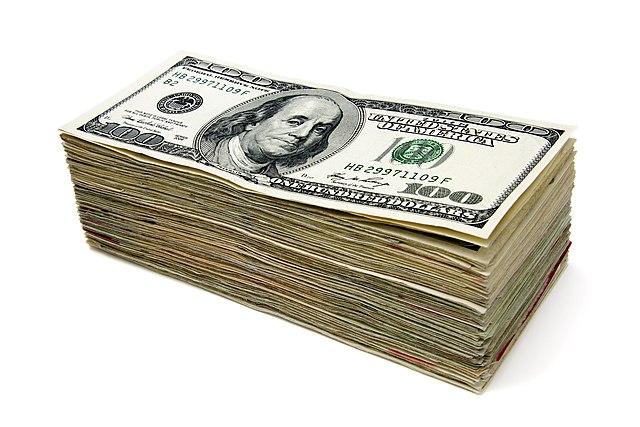
And rise it has. The total for the 2018 congressional midterms was $5.7 billion. This year? Open Secrets reports over $9.3 billion.

And what percent of the 18-and-above U.S. population of 255 million personally donated a total of $200 or more to that $9 billion? For men, 0.58 percent; women, 0.35 percent. Total for the top five donors? $365 million.
[Photo: wikimedia; attribution: emergencydentistsusa.com/price]

What’s wrong with this picture? To borrow from Elizabeth Barrett Browning, “let me count the ways.”

Influence. It’s not clear that America ever had what Abraham Lincoln wished for at Gettysburg in 1863: a “government of the people, by the people, for the people.” Early Federalists were fond of the line, “Those who own the country ought to govern it.” We still have what those Federalists wanted: a “government of the people, by the wealthy, for the wealthy.”

Doubt it? Go back and re-read the numbers.

Everyone can cast one vote. Everyone does not have the same political influence. As Molly Ivins titled one of her books, “You Got to Dance with Them What Brung You.”

Investment. For some anonymous big donors their political contribution is an investment, not a gift. It can return more than buying stocks. I once calculated the return as 1000 or 2000 to one. Give a million dollars, get back a billion – in subsidies, contracts, tariffs, tax breaks, cut rates on drilling or grazing on public lands, or approved mergers.

Time. To put fundraising in perspective, a U.S. senator would have to raise $9343, every day, 365 days a year, for six years, to amass this year’s $25 million average campaign cost. For House members it’s $4528 a day for two years. That’s half, or more, of every day. No wonder they don’t have time to read, let alone write, legislation.

In addition to their own campaign, they’re expected to raise money for their party’s leadership and committee chairpersons – thereby further transferring political influence and power away from the individual Senate and House members.

So what can we do? There’s no shortage of suggestions. Here are examples – some used in other countries.
  • Public funding; from government, or via voters’ vouchers.
  • Term limits. When terms are expiring incumbents don’t need money.
  • Reject Citizens United. Corporations aren’t “persons;” dollars aren’t “speech.”
  • Outlaw dark money. If an organization’s money ultimately reaches candidates all its donors should be identified.
  • Limit weeks of campaigning.
And, because half of all campaign contributions pay for media and fundraising:
  • Require that TV stations, licensed to serve “the public interest,” provide free time to candidates.
  • Prohibit, or limit the number of, political TV commercials.
  • Require candidates using attack ads to pay for attached reply ads from the candidate attacked.
Anyone want “government for the people”? Let’s get to work.
_______________
Nicholas Johnson, a former FCC commissioner, has worked in political campaigns since 1952. Contact mailbox@nicholasjohnson.org

SOURCES
Mother’s milk. Gary Hooser, “The Mother’s Milk of Politics,” The Garden Island (Hawaii), Aug. 7, 2019, https://www.thegardenisland.com/2019/08/07/opinion/the-mothers-milk-of-politics/ (“Jesse Unruh . . . is credited with coining the phrase ….”)

Emily’s list. “Our History,” Emily’s List, https://www.emilyslist.org/pages/entry/our-history (“Early money is like yeast, it makes the dough rise.”)

$9 billion. “See how campaign money is being spent ahead of midterms,” PBS, Oct 17, 2022, https://www.pbs.org/newshour/show/see-how-campaign-money-is-being-spent-ahead-of-midterms (“You go back to 2018, [total spending was] $5.7 billion. … this year? … OpenSecrets says more than $9.3 billion ….”)

Donors. “Donor Demographics” [donors as percentage of U.S. population], Open Secrets, https://www.opensecrets.org/elections-overview/donor-demographics

“Who Are the Biggest Donors? Open Secrets, https://www.opensecrets.org/elections-overview/biggest-donors

(Top Individual Contributors: All Federal Contributions, 2021-2022 (rounded; top five) George Soros $128 million (Democrats) Richard Uihlein $81 million (Republicans) Kenneth C. Griffin $69 million (Republicans) Jeffrey S. & Janine Yass $47 (Republicans) Timothy Mellon $40 million (Republicans) $10,000 (Democrats) Total $365 million

E. B. Browning. Elizabeth Barrett Browning, “How Do I Love Thee?” (Sonnet 43), Poets.org, https://poets.org/poem/how-do-i-love-thee-sonnet-43 (“How do I love thee? Let me count the ways. I love thee to the depth and breadth and height My soul can reach …”)

Gettysburg Address. Abraham Lincoln, Gettysburg Address, Nov. 19,1863, https://www.loc.gov/resource/rbpe.24404500/?st=text (“… we here highly resolve that these dead shall not have died in vain, that this nation, under God, shall have a new birth of freedom, and that government of the people, by the people, for the people, shall not perish from the earth.”)

Those who own the country. Search Google Books with “Adams” AND “those who own the country” Numerous sources. Attributed to John Jay and Samuel Adams. Including, Gilbert John Clark, Life Sketches, Thoughts, Facts and Facetia/e of Eminent Lawyers (1895), vol. 1, p. 46, quoting from, John Adams Diary, 1774, p. 79, “’Those who own the country ought to govern it,’ was a favorite maxim with Mr. Jay.”

Molly Ivins. Molly Ivins, “You Got to Dance with Them What Brung You,” 1999, https://www.amazon.com/You-Dance-Them-What-Brung/dp/0679754873

Political “Investments.” Nicholas Johnson, “Campaigns: You Pay $4 or $4000,” Des Moines Register, July 21, 1996, p. 2C, https://www.nicholasjohnson.org/rcntpubl/campaign.html (“Why would anyone contribute so much money? The answer first came to me during President Nixon's Administration. Milk producers wanted a higher support price. The Department of Agriculture could find no justification. The producers gave Nixon $200,000. Shortly thereafter we all started paying $400 million more for our milk. The math isn't too hard: $400 million divided by $200,000 means the milk producers got a 2000-to-one return on that campaign contribution. What a "return on investment"!”)

“Campaign finance in the United States,” Wikipedia, https://en.wikipedia.org/wiki/Campaign_finance_in_the_United_States (“Campaign finance in the United States is the financing of electoral campaigns at the federal, state, and local levels. In 2020, nearly $14 billion was spent on federal election campaigns in the United States -- "making it the most expensive campaign in U.S. history",[1] "more than double" what was spent in the 2016 election.[2] Critics complain that following a number of Supreme Court decisions -- Citizens United v. FEC (2010) in particular -- the "very wealthy" are now allowed to spend unlimited amounts on campaigns (through "Super PACs"), and to prevent voters from knowing who’s trying to influence them (contributing "dark money" that masks their identity).[3] Consequently, as of at least 2022, critics (such as the Brennan Center for Justice) allege "big money dominates U.S. political campaigns to a degree not seen in decades" and is "drowning out the voices of ordinary Americans."[3]) (“More than one billion dollars of Dark money was donated in 2020.[50]”) (“No major party nominee turned down government funds for the general election from 1976, when the program was launched, until Barack Obama did so in 2008.[71] Obama again declined government funds for the 2012 campaign, as did Republican nominee Mitt Romney, setting up the first election since the program's launch in which neither major party nominee accepted federal funding.[72] Nor did either Donald Trump or Hillary Clinton accept federal funding for the 2016 general election.[73]”) (“Impact of contributions A 2016 experimental study in the American Journal of Political Science found that politicians made themselves more available for meetings with individuals when they believed that the individuals had donated to their campaign.[85] A 2011 study found that "even after controlling for past contracts and other factors, companies that contributed more money to federal candidates subsequently received more contracts."[86] A 2016 study in the Journal of Politics found that industries overseen by committees decreased their contributions to congresspeople who recently departed from the committees and that they immediately increase their contributions to new members of the committees, which is "evidence that corporations and business PACs use donations to acquire immediate access and favor—suggesting they at least anticipate that the donations will influence policy."[87]) (“A 2012 study by Lynda Powell examined "subtle and not-so-subtle ways in which money buys influence" in state legislatures "from setting a party's agenda, to keeping bills off the floor, to adding earmarks and crafting key language in legislation", rather than the roll call to vote yes or no on particular legislation.[90] She found that political money "carries more weight" in states with "more highly compensated legislators, larger chambers, and more professionalized leadership structures", where the "majority party's advantage is tightly contested and whose legislators are more likely to hold hopes of running for higher office";[90] less weight where legislatures have term limits and voters are more highly educated.[90][91]”)

Expenditures. “Top Spending Candidate Committees 2022 Cycle,” Expenditures, Open Secrets, https://www.opensecrets.org/campaign-expenditures (Top five Senate committees (rounded): Warnock $76 million; Mark Kelly $73 million, Val Demings $68 million, Fetterman $52 million, and Tim Ryan $45 million; Total $314 million. 6 years = 2190 days. $76 million/2190 = $34,703

David Knowles, “U.S. Senate seat now costs $10.5 million to win, on average, while US House seat costs, $1.7 million, new analysis of FEC data shows,” New York Daily News, March 11, 2013, https://www.nydailynews.com/news/politics/cost-u-s-senate-seat-10-5-million-article-1.1285491

Average cost. “Average Price of Victory,” Karl Evers-Hillstrom, “State of Money in Politics: The price of victory is steep,” Open Secrets, Feb. 19, 2019, https://www.opensecrets.org/news/2019/02/state-of-money-in-politics-the-price-of-victory-is-steep/ (“[In 2018] Victorious Senate candidates spent an average of $15.7 million, while the average winning House candidate shelled out just over $2 million on average.” See third “Source” cite. Total costs this year ($9.3 billion), vs. costs in 2018 ($5.7 billion), is a 163% increase. 163% of $15.7 million is $25.6 million; 163% of $2 million is $3.26 million. Daily costs. 6 years=2740 days. 25.6 million/2740=$9,343 2 years=720 days. 3.26 million/720=$4528

What can we do?

The examples/selections of proposals are my own, from reading, conversations, and experience over the years. I make no claim to being the first to think of any of them (except perhaps the last). What follows are random selections of material touching on these ideas.

General

Electoral Reform, Wikipedia, https://en.wikipedia.org/wiki/Electoral_reform (includes “4. Electoral reform by Country” for 17 countries)

Google search: “reforms to cut the high costs of American elections”

Column’s proposals.

Public funding: government or vouchers.

“Public financing of campaigns,” Campaign Finance in the United States,” Wikipedia, https://en.wikipedia.org/wiki/Campaign_finance_in_the_United_States#Public_financing_of_campaigns (“Massachusetts … taxpayers are allowed to contribute $1 to the statewide election fund by checking a box on their annual income taxes.” “Seattle voters approved the Democracy voucher program in 2015, which gives city residents four $25 vouchers to donate to participating candidates.[99] Vouchers have been proposed in other cities and states as a means to diversify the donor pool, help more candidates run for office, and boost political engagement.”)

Term limits. When their term is expiring incumbents don’t need money.

Dan Greenberg, “Term Limits: The Only Way to Clean Up Congress,” The Heritage Foundation, Aug. 10, 1994, https://www.heritage.org/political-process/report/term-limits-the-only-way-clean-congress (“[T]erm limits … are supported by large majorities of most American demographic groups; they are opposed primarily by incumbent politicians and the special interest groups which depend on them.”)

Reject Citizens United.

Corporations aren’t “persons;” dollars aren’t “speech.” “Campaign Finance Reform Amendment,” Wikipedia, https://en.wikipedia.org/wiki/Campaign_finance_reform_amendment

“We the People Amendment,” Campaign finance reform amendment, Wikipedia, https://en.wikipedia.org/wiki/Campaign_finance_reform_amendment#We_the_People_Amendment (“Section 2. Federal, State and local government shall regulate, limit, or prohibit contributions and expenditures, including a candidate’s own contributions and expenditures, to ensure that all citizens, regardless of their economic status, have access to the political process, and that no person gains, as a result of that person’s money, substantially more access or ability to influence in any way the election of any candidate for public office or any ballot measure.”)

Dark money.

“Dark money” exception,” “Campaign Finance in the United States,” Wikipedia, https://en.wikipedia.org/wiki/Campaign_finance_in_the_United_States#"Dark_money2_exception (“A major loophole to disclosure requirements is "dark money," so named because while the recipient knows the identity of those giving them money, the public knows neither the identity of the campaigns, candidates nor other entities receiving the money, nor the amounts raised and spent, as these are exempt from disclosure requirements.”)

Limit weeks of campaigning.

Danielle Kurtzleben, “Why Are U.S. Elections So Much Longer Than Other Countries'?” National Public Radio, Oct. 21, 2015, https://www.npr.org/sections/itsallpolitics/2015/10/21/450238156/canadas-11-week-campaign-reminds-us-that-american-elections-are-much-longer (Japan 12 days; France 2 weeks; Canada 78 days; Argentina 60 days; U.K. 139 days; Mexico 147 days;

Require that TV stations, licensed to serve “the public interest,” provide candidates free time.

Danielle Kurtzleben, ibid, “Big Money in Politics,” (“ … in some countries, like Japan, candidates each get equal, free, ad space”).

Prohibit, or limit the number of, political TV commercials.

Danielle Kurtzleben, ibid, “Big Money in Politics,” (“A candidate can't keep advertising for a year and a half, for example, without millions of dollars at his or her disposal. The U.S. system essentially requires candidates to raise millions of dollars to even mount a serious run.” “Brazil, the U.K. and Japan, among many others, simply don't allow candidates to purchase TV ads (but that doesn't mean zero ads — in some countries, like Japan, candidates each get equal, free, ad space).”)

Require political attack ads to pay for an attached reply ad from the candidate attacked.

By “attached ad” is meant that a reply to the attack would immediately follow the attack. Many variables are possible. The station (or social media source) could provide that the station would provide the time to the person attacked without charge (as the FCC required with its “personal attack” rule). It would be an equal opportunity to immediately reach the audience exposed to the attack (a variance on the “equal opportunity” rule). And it would provide a different view on a “controversial issue of public importance” (as required by the “fairness doctrine”).

So while this idea has no specific antecedent its underlying concept was the basis for analogous FCC rules (dates indicating when they were abolished): the “equal opportunity,” “fairness doctrine” (1987) and “personal attack” (2000) rules. (For the “equal opportunity” rule, see “Equal-Time Rule,” Wikipedia, https://en.wikipedia.org/wiki/Equal-time_rule .)

Overly simplified but adequate for our purposes, they all recognized the power of mass media, and the “public interest” requirement in stations’ licenses. “Equal opportunity” provided that if a station gave free time to one candidate, they were obliged to provide an “equal opportunity” to reach its audience to all other candidates for that office.

The “fairness doctrine” required two things: stations must provide some programming dealing with “controversial issues of public importance,” and, in doing so, provide a representation of the range of viewpoints on that issue.

The “Personal Attack Rule, https://en.wikipedia.org/wiki/Personal_attack_rule “The personal attack rule was invoked whenever ‘an attack is made upon the honesty, character, integrity, or like personal qualities of an identified person or group’ during broadcast or original cable TV programming while discussing ‘controversial issues of public importance.’[1] After such an attack, within a week the broadcast station or cable provider responsible for the programming was required to give the person or group attacked the following: notification and identification of the cablecast; a script, tape or accurate summary of the attack; and an offer of a reasonable opportunity to respond over the cable facilities.[1]”

# # #