Showing posts with label PoliticalContributions. Show all posts

Tuesday, June 27, 2023

War, Who's It Good For?

War, Who’s It Good For?
Nicholas Johnson
The Gazette, June 27, 2023, p. A6

How have we become the global participant in forever wars? Spending half our discretionary federal appropriations on war. More than the next 10 nations combined. Running up debt of $32 trillion, with interest payments over $600 billion annually.

We are as far from what the founders provided as could be imagined. They wanted to avoid wars.

In the U.S. House of Representatives' own website there’s a discussion of its constitutional war powers (Article I, section 8, clauses 11-16). “The Congress shall have power … to declare war . . .."

In the website’s discussion of the founders’ intentions it says, “The decision to send the nation to war is perhaps Congress’s gravest responsibility . . .. For the Members, to declare war against a foreign power is to send their constituents, their neighbors, their family, and even themselves into harm’s way. . . . The founders felt that war should be difficult to enter, and they expected congressional debate to restrain the war-making process.”

They presumed wars would require a draft and pay-as-you-go financing.

How’s that been working for us? Pretty well through World War II -- the last time Congress complied with the constitutional requirement it “declare war.” Following WWII the war budget was around $14 billion (in today’s dollars).

Then things began to change.

The Viet Nam War protests made clear that if the U.S. wanted to actually use the military taxpayers were paying for, the one percent who actually fought the wars would have to be either volunteers or the mercenaries of defense contractors. [Photo credit: Vietnam War protesters, the Pentagon, Oct. 21, 1967, Frank Wolfe, Lyndon B. Johnson Library, via Wikimedia.]

So, the draft was abolished, January 27, 1973. House members could quietly go along with fighting a war without either supporting, or opposing, the declaration of one. No mothers cried; their sons stayed home. The financial cost of wars could be camouflaged from taxpayers by putting it on a credit card and increasing the debt limit.

The military’s best and brightest explained the need for a rationale for war, the benefits and costs of fighting one, and the need for exit strategies. But few House members seemed to be listening.

In 1969, the song writers gave us “War, What’s It Good For? Absolutely Nothing.” It doesn’t get a lot of play these days. Besides, what we should be singing is, “War, Who’s It Good For?”

There’s an answer to that one.

Decades ago, my research revealed that the payback on corporate campaign contributions ran at least 1000-to-one. Give a million, get a billion (e.g., federal contracts, tax cuts, tariffs).

Today that’s increased a bit. With a trillion-dollar budget for war, it’s not only too big to fail, it’s too big to audit. But some numbers are available.

One contractor’s political contributions for one year were $3 million. A 1000-to-one return would have been $3 billion. But this contractor got $40 billion in contracts. Not a 1000-to-one return; a 13,000-to-one return.

Meanwhile, Congress talks about cutting the budget -- while continuing to add more for war than even requested.

Nicholas Johnson, as U.S. Maritime Administrator, had some responsibility for sealift to Viet Nam. mailbox@nicholasjohnson.org

SOURCES
Congress spending half on war. “Consolidated Appropriations Act, 2023; SUMMARY OF APPROPRIATIONS PROVISIONS BY SUBCOMMITTEE,” https://appropriations.house.gov/sites/democrats.appropriations.house.gov/files/FY23%20Summary%20of%20Appropriations%20Provisions.pdf (“The Consolidated Appropriations Act, 2023 totals $1.7 trillion in discretionary resources across the fiscal year 2023 appropriations bills. In total, the regular 12 appropriations bills include $800 billion in non-defense funding, a $68 billion—9.3 percent—over last year. This is the highest level for non-defense funding ever and a larger increase in both dollar and percentage than fiscal year 2022. The bills also provide $858 billion in defense funding.)

“Current US Defense Spending” [2021-2024], US Government Spending, https://www.usgovernmentspending.com/defense_spending_history (military, veterans, foreign aid, total defense: 2024 $909.4 billion $322.1 billion $73.7 billion $1.3052 trillion)

More than next 10 nations combined. “The United States now spends more on defense than the next 10 countries combined,” Peter G. Peterson Foundation, April 24, 2023, https://www.pgpf.org/blog/2023/04/the-united-states-spends-more-on-defense-than-the-next-10-countries-combined (“[T]he United States now spends more on defense than the next 10 countries combined (up from outspending the next 9 countries combined in 2021.”)

$32 trillion debt. For an opportunity to watch the numbers climb in real time, sliced and diced into more categories than you could have imagined, check out the “U.S. Debt Clock,” https://www.usdebtclock.org/

Federal debt increase. https://fiscaldata.treasury.gov/datasets/debt-to-the-penny/debt-to-the-penny Record Date Debt Held by the Public Intragovernmental Holdings 6/13/2023 $25,103,112,337,735.63 $6,872,182,398,142.32 Total Public Debt Outstanding $31,975,294,735,877.95

Foreign ownership of US debt. Kimberly Amadeo, “Major Foreign Holders of U.S. Public Debt; Who Owns the U.S. National Debt?” The Balance, Jan. 19, 2023, https://www.thebalancemoney.com/who-owns-the-u-s-national-debt-3306124 ($3.242 trillion with top 5 countries; Japan, China, UK, Belgium, Luxembourg; China = $870 billion) This is amounts and percentages of “public debt” (e.g., not including Social Security and other “intragovernmental holdings”). Current public debt is $25.103 trillion. https://fiscaldata.treasury.gov/datasets/debt-to-the-penny/debt-to-the-penny

Over $600 billion in interest. “What is the National Debt Costing Us?” Peter G. Peterson Foundation, May 12, 2023, https://www.pgpf.org/blog/2023/05/what-is-the-national-debt-costing-us (“The Congressional Budget Office (CBO) projects that interest payments will total $663 billion in fiscal year 2023 and rise rapidly throughout the next decade — climbing from $745 billion in 2024 to $1.4 trillion in 2033. In total, net interest payments will total nearly $10.6 trillion over the next decade.”)

Founders wanted to avoid wars/House Website. “Power to Declare War, Origins & Development: From the Constitution to the Modern House,” United States House of Representatives, https://history.house.gov/Institution/Origins-Development/War-Powers/ ("If America was going to survive as a republic, they reasoned, declarations of war required careful debate in open forums among the public’s representatives. “there was a growing sense that such monumental responsibility belonged with the legislative branch. “Like George Mason of Virginia, the founders felt that war should be difficult to enter, and they expected congressional debate to restrain the war-making process. “to declare war against a foreign power is to send their constituents, their neighbors, their family, and even themselves into harm’s way.”)

WWII last Congressional declaration of war. “Power to Declare War, Origins & Development: From the Constitution to the Modern House,” United States House of Representatives, https://history.house.gov/Institution/Origins-Development/War-Powers/ (“Congress has not declared war since 1942”)

Post-WWII war budget $40 billion. “Military Expenditure by Country, In Local Currency, 1949-2022,” United States, SIPRI [Stockholm International Peace Research Institute], 2022, https://www.sipri.org (“All figures are expressed in terms of the current currency.” In US dollars: 1949 14 088 155 591 1950 14 926 997 114 1960 47 346 552 670 1970 83 407 993 005 1980 143 688 354 873 1990 325 129 313 986 2000 320 086 324 211 2010 738 005 000 000 2020 778 397 200 000 2022 876 943 200 000)

“Current US Defense Spending” [2021-2024], US Government Spending, https://www.usgovernmentspending.com/defense_spending_history (military, veterans, foreign aid)

“World military spending reaches all-time high of $2.24 trillion; Surge in spending reflects Russia-Ukraine war and ‘increasingly insecure world’, according to leading think tank,” AlJazeera, April 24, 2023, https://www.aljazeera.com/news/2023/4/24/world-military-spending-reaches-all-time-high-of-2-24-trillion (“World military spending reached an all-time high of $2.24 trillion in 2022, … Global spending rose for the eighth consecutive year, the Stockholm International Peace Research Institute (SIPRI) said on Monday in its annual report on global military expenditure.”)

And see, “Stockholm International Peace Research Institute, Wikipedia, https://en.wikipedia.org/wiki/Stockholm_International_Peace_Research_Institute

Percent who fight wars. Elliott Ackerman, “Why Bringing Back the Draft Could Stop America’s Forever Wars,” TIME, Oct. 10, 2019, https://time.com/5696950/bring-back-the-draft/ (“The burden of nearly two decades of war–nearly 7,000 dead and more than 50,000 wounded–has been largely sustained by 1% of our population.”)

Draft abolished 1973. Amy Zipkin, “The military draft ended 50 years ago, dividing a generation,” Washington Post, Jan. 27, 2023, https://www.washingtonpost.com/history/2023/01/27/draft-end-conscription-1973/ (“On Jan. 27, 1973, with the Paris Peace Accords signed and U.S. involvement in Vietnam over, Defense Secretary Melvin R. Laird announced the end of the military draft, after 25 uninterrupted years of conscription.”)

“War, What’s It Good For?” “War,” Lyrics, https://www.lyrics.com/lyric/25707922/Edwin+Starr/War (“’War’ is a counterculture era soul song written by Norman Whitfield and Barrett Strong for the Motown label in 1969. Whitfield first produced the song – an obvious anti-Vietnam War statement – with The Temptations as the original vocalists. After Motown began receiving repeated requests to release "War" as a single, Whitfield re-recorded the song with Edwin Starr as the vocalist, with the label deciding to withhold the Temptations' version from single release so as not to alienate their more conservative fans.”)
NOTE: If any person or corporation would like these publicly-available lyrics removed please email: mailbox@nicholasjohnson.org and they will be deleted.

Edwin Starr - War (Original Video - 1969), https://www.youtube.com/watch?v=01-2pNCZiNk

War, huh, yeah
What is it good for?
Absolutely nothing, uhh
War, huh, yeah
What is it good for?
Absolutely nothing
Say it again, y'all
War, huh (good God)
What is it good for?
Absolutely nothing, listen to me, oh
War, I despise
'Cause it means destruction of innocent lives
War means tears to thousands of mother's eyes
When their sons go off to fight
And lose their lives
I said, war, huh (good God, y'all)
What is it good for?
Absolutely nothing, just say it again
War (whoa), huh (oh Lord)
What is it good for?
Absolutely nothing, listen to me
It ain't nothing but a heart-breaker
(War) Friend only to The Undertaker
Oh, war it's an enemy to all mankind
The thought of war blows my mind
War has caused unrest
Within the younger generation
Induction then destruction
Who wants to die? Oh
War, huh (good God y'all)
What is it good for?
Absolutely nothing
Say it, say it, say it
War (uh-huh), huh (yeah, huh)
What is it good for?
Absolutely nothing, listen to me
It ain't nothing but a heart-breaker
(War) It's got one friend that's The Undertaker
Oh, war, has shattered many a young man's dreams
Made him disabled, bitter and mean
Life is much too short and precious
To spend fighting wars each day
War can't give life
It can only take it away, oh
War, huh (good God y'all)
What is it good for?
Absolutely nothing, say it again
War (whoa), huh (oh Lord)
What is it good for?
Absolutely nothing, listen to me
It ain't nothing but a heart breaker
(War) Friend only to The Undertaker, woo
Peace, love and understanding, tell me
Is there no place for them today?
They say we must fight to keep our freedom
But Lord knows there's got to be a better way, oh
War, huh (God y'all)
What is it good for? You tell me (nothing)
Say it, say it, say it, say it
War (good God), huh (now, huh)
What is it good for?
Stand up and shout it (nothing)

Source: LyricFind
Songwriters: Barrett Strong / Norman Whitfield
War lyrics © Royalty Network, Sony/ATV Music Publishing LLC

1000-to-one Return on Contributions. Nicholas Johnson, “Campaigns: You Pay $4 or $4000,” Des Moines [Iowa] Sunday Register, July 21, 1996, p. C2, https://www.nicholasjohnson.org/politics/general/campaign.html

Can’t audit Defense Department budget. Bill Chappell, “The Pentagon Has Never Passed An Audit. Some Senators Want To Change That,” npr, May 19, 2021, https://www.npr.org/2021/05/19/997961646/the-pentagon-has-never-passed-an-audit-some-senators-want-to-change-that (“Despite having trillions of dollars in assets and receiving hundreds of billions in federal dollars annually, the department has never detailed its assets and liabilities in a given year. For the past three financial years, the Defense Department's audit has resulted in a ‘Disclaimer of Opinion,’ meaning the auditor didn't get enough accounting records to form an assessment. . . . Now lawmakers are introducing a bipartisan bill that would impose a penalty for any part of the department, including the military, that fails to undergo a "clean" audit. "’The Pentagon and the military industrial complex have been plagued by a massive amount of waste, fraud and financial mismanagement for decades. That is absolutely unacceptable,’ said Sen. Bernie Sanders, I-Vt., who co-sponsored the bill with Sen. Chuck Grassley, R-Iowa, along with Sens. Ron Wyden, D-Ore., and Mike Lee, R-Utah.”)

Contractor with 13,000-to-one return on contributions:

Payments to Top 6 Defense Contractors. “The Top 10 Federal Defense Contractors,” Bloomberg Government, July 14, 2022, https://about.bgov.com/top-defense-contractors/

Top 6 (of 10 largest defense contractors in FY 2021) Lockheed Martin Corp. - Obligations: $40.2B Boeing Co. - Obligations: $22.1B Raytheon Technologies Corp. - Obligations: $20.7B General Dynamics Corp. - Obligations: $17.8B Pfizer Inc. - Obligations: $13.3B Northrop Grumman Corp. - Obligations: $12.9B

“Biggest Defense Companies in the Stock Market,” Motley Fool, https://www.fool.com/investing/stock-market/market-sectors/industrials/defense-stocks/biggest-defense-companies/

Contractors Political Contributions. “Defense,” Open Secrets, https://www.opensecrets.org/industries/indus.php Defense Defense Aerospace Defense Electronics Defense/Foreign Policy A

Defense aerospace (2021-2022) Lockheed Martin $3,110,453 Colsa Corp $2,421,419 Northrop Grumman $2,190,417 Raytheon Technologies $2,154,719 Collazo Enterprises $2,112,300 General Dynamics $2,084,195 [Total $14,073,503

Top Contractor Return on Contributions. 13,000 to One ($40 billion/$3 million) (40,200/3.110,453 = 12,924.1625)

# # #

Tuesday, November 08, 2022

Money and Politics

Money in Politics Buys Influence
Nicholas Johnson
The Gazette, November 8, 2022, p. A8

California’s 1960”s Assembly Speaker, Jesse Unruh, was the first to observe, “money is the mother’s milk of politics.”

EMILY’s List, dedicated to supporting women candidates, named itself with an acronym for “Early Money is Like Yeast” – adding, “it makes the dough rise.”


And rise it has. The total for the 2018 congressional midterms was $5.7 billion. This year? Open Secrets reports over $9.3 billion.

And what percent of the 18-and-above U.S. population of 255 million personally donated a total of $200 or more to that $9 billion? For men, 0.58 percent; women, 0.35 percent. Total for the top five donors? $365 million.
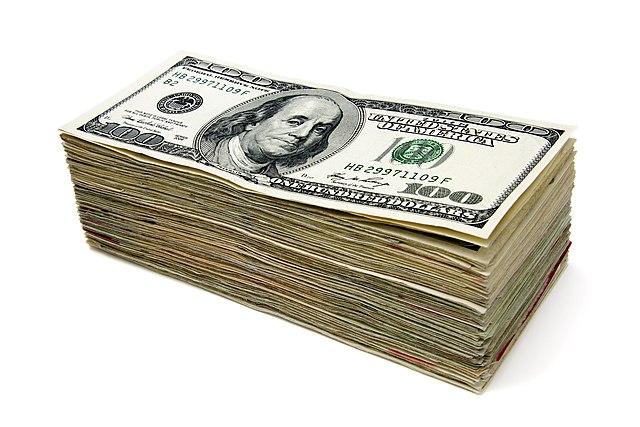
[Photo: wikimedia; attribution: emergencydentistsusa.com/price]

What’s wrong with this picture? To borrow from Elizabeth Barrett Browning, “let me count the ways.”

Influence. It’s not clear that America ever had what Abraham Lincoln wished for at Gettysburg in 1863: a “government of the people, by the people, for the people.” Early Federalists were fond of the line, “Those who own the country ought to govern it.” We still have what those Federalists wanted: a “government of the people, by the wealthy, for the wealthy.”

Doubt it? Go back and re-read the numbers.

Everyone can cast one vote. Everyone does not have the same political influence. As Molly Ivins titled one of her books, “You Got to Dance with Them What Brung You.”

Investment. For some anonymous big donors their political contribution is an investment, not a gift. It can return more than buying stocks. I once calculated the return as 1000 or 2000 to one. Give a million dollars, get back a billion – in subsidies, contracts, tariffs, tax breaks, cut rates on drilling or grazing on public lands, or approved mergers.

Time. To put fundraising in perspective, a U.S. senator would have to raise $9343, every day, 365 days a year, for six years, to amass this year’s $25 million average campaign cost. For House members it’s $4528 a day for two years. That’s half, or more, of every day. No wonder they don’t have time to read, let alone write, legislation.

In addition to their own campaign, they’re expected to raise money for their party’s leadership and committee chairpersons – thereby further transferring political influence and power away from the individual Senate and House members.

So what can we do? There’s no shortage of suggestions. Here are examples – some used in other countries.
  • Public funding; from government, or via voters’ vouchers.
  • Term limits. When terms are expiring incumbents don’t need money.
  • Reject Citizens United. Corporations aren’t “persons;” dollars aren’t “speech.”
  • Outlaw dark money. If an organization’s money ultimately reaches candidates all its donors should be identified.
  • Limit weeks of campaigning.
And, because half of all campaign contributions pay for media and fundraising:
  • Require that TV stations, licensed to serve “the public interest,” provide free time to candidates.
  • Prohibit, or limit the number of, political TV commercials.
  • Require candidates using attack ads to pay for attached reply ads from the candidate attacked.
Anyone want “government for the people”? Let’s get to work.
_______________
Nicholas Johnson, a former FCC commissioner, has worked in political campaigns since 1952. Contact mailbox@nicholasjohnson.org

SOURCES
Mother’s milk. Gary Hooser, “The Mother’s Milk of Politics,” The Garden Island (Hawaii), Aug. 7, 2019, https://www.thegardenisland.com/2019/08/07/opinion/the-mothers-milk-of-politics/ (“Jesse Unruh . . . is credited with coining the phrase ….”)

Emily’s list. “Our History,” Emily’s List, https://www.emilyslist.org/pages/entry/our-history (“Early money is like yeast, it makes the dough rise.”)

$9 billion. “See how campaign money is being spent ahead of midterms,” PBS, Oct 17, 2022, https://www.pbs.org/newshour/show/see-how-campaign-money-is-being-spent-ahead-of-midterms (“You go back to 2018, [total spending was] $5.7 billion. … this year? … OpenSecrets says more than $9.3 billion ….”)

Donors. “Donor Demographics” [donors as percentage of U.S. population], Open Secrets, https://www.opensecrets.org/elections-overview/donor-demographics

“Who Are the Biggest Donors? Open Secrets, https://www.opensecrets.org/elections-overview/biggest-donors

(Top Individual Contributors: All Federal Contributions, 2021-2022 (rounded; top five) George Soros $128 million (Democrats) Richard Uihlein $81 million (Republicans) Kenneth C. Griffin $69 million (Republicans) Jeffrey S. & Janine Yass $47 (Republicans) Timothy Mellon $40 million (Republicans) $10,000 (Democrats) Total $365 million

E. B. Browning. Elizabeth Barrett Browning, “How Do I Love Thee?” (Sonnet 43), Poets.org, https://poets.org/poem/how-do-i-love-thee-sonnet-43 (“How do I love thee? Let me count the ways. I love thee to the depth and breadth and height My soul can reach …”)

Gettysburg Address. Abraham Lincoln, Gettysburg Address, Nov. 19,1863, https://www.loc.gov/resource/rbpe.24404500/?st=text (“… we here highly resolve that these dead shall not have died in vain, that this nation, under God, shall have a new birth of freedom, and that government of the people, by the people, for the people, shall not perish from the earth.”)

Those who own the country. Search Google Books with “Adams” AND “those who own the country” Numerous sources. Attributed to John Jay and Samuel Adams. Including, Gilbert John Clark, Life Sketches, Thoughts, Facts and Facetia/e of Eminent Lawyers (1895), vol. 1, p. 46, quoting from, John Adams Diary, 1774, p. 79, “’Those who own the country ought to govern it,’ was a favorite maxim with Mr. Jay.”

Molly Ivins. Molly Ivins, “You Got to Dance with Them What Brung You,” 1999, https://www.amazon.com/You-Dance-Them-What-Brung/dp/0679754873

Political “Investments.” Nicholas Johnson, “Campaigns: You Pay $4 or $4000,” Des Moines Register, July 21, 1996, p. 2C, https://www.nicholasjohnson.org/rcntpubl/campaign.html (“Why would anyone contribute so much money? The answer first came to me during President Nixon's Administration. Milk producers wanted a higher support price. The Department of Agriculture could find no justification. The producers gave Nixon $200,000. Shortly thereafter we all started paying $400 million more for our milk. The math isn't too hard: $400 million divided by $200,000 means the milk producers got a 2000-to-one return on that campaign contribution. What a "return on investment"!”)

“Campaign finance in the United States,” Wikipedia, https://en.wikipedia.org/wiki/Campaign_finance_in_the_United_States (“Campaign finance in the United States is the financing of electoral campaigns at the federal, state, and local levels. In 2020, nearly $14 billion was spent on federal election campaigns in the United States -- "making it the most expensive campaign in U.S. history",[1] "more than double" what was spent in the 2016 election.[2] Critics complain that following a number of Supreme Court decisions -- Citizens United v. FEC (2010) in particular -- the "very wealthy" are now allowed to spend unlimited amounts on campaigns (through "Super PACs"), and to prevent voters from knowing who’s trying to influence them (contributing "dark money" that masks their identity).[3] Consequently, as of at least 2022, critics (such as the Brennan Center for Justice) allege "big money dominates U.S. political campaigns to a degree not seen in decades" and is "drowning out the voices of ordinary Americans."[3]) (“More than one billion dollars of Dark money was donated in 2020.[50]”) (“No major party nominee turned down government funds for the general election from 1976, when the program was launched, until Barack Obama did so in 2008.[71] Obama again declined government funds for the 2012 campaign, as did Republican nominee Mitt Romney, setting up the first election since the program's launch in which neither major party nominee accepted federal funding.[72] Nor did either Donald Trump or Hillary Clinton accept federal funding for the 2016 general election.[73]”) (“Impact of contributions A 2016 experimental study in the American Journal of Political Science found that politicians made themselves more available for meetings with individuals when they believed that the individuals had donated to their campaign.[85] A 2011 study found that "even after controlling for past contracts and other factors, companies that contributed more money to federal candidates subsequently received more contracts."[86] A 2016 study in the Journal of Politics found that industries overseen by committees decreased their contributions to congresspeople who recently departed from the committees and that they immediately increase their contributions to new members of the committees, which is "evidence that corporations and business PACs use donations to acquire immediate access and favor—suggesting they at least anticipate that the donations will influence policy."[87]) (“A 2012 study by Lynda Powell examined "subtle and not-so-subtle ways in which money buys influence" in state legislatures "from setting a party's agenda, to keeping bills off the floor, to adding earmarks and crafting key language in legislation", rather than the roll call to vote yes or no on particular legislation.[90] She found that political money "carries more weight" in states with "more highly compensated legislators, larger chambers, and more professionalized leadership structures", where the "majority party's advantage is tightly contested and whose legislators are more likely to hold hopes of running for higher office";[90] less weight where legislatures have term limits and voters are more highly educated.[90][91]”)

Expenditures. “Top Spending Candidate Committees 2022 Cycle,” Expenditures, Open Secrets, https://www.opensecrets.org/campaign-expenditures (Top five Senate committees (rounded): Warnock $76 million; Mark Kelly $73 million, Val Demings $68 million, Fetterman $52 million, and Tim Ryan $45 million; Total $314 million. 6 years = 2190 days. $76 million/2190 = $34,703

David Knowles, “U.S. Senate seat now costs $10.5 million to win, on average, while US House seat costs, $1.7 million, new analysis of FEC data shows,” New York Daily News, March 11, 2013, https://www.nydailynews.com/news/politics/cost-u-s-senate-seat-10-5-million-article-1.1285491

Average cost. “Average Price of Victory,” Karl Evers-Hillstrom, “State of Money in Politics: The price of victory is steep,” Open Secrets, Feb. 19, 2019, https://www.opensecrets.org/news/2019/02/state-of-money-in-politics-the-price-of-victory-is-steep/ (“[In 2018] Victorious Senate candidates spent an average of $15.7 million, while the average winning House candidate shelled out just over $2 million on average.” See third “Source” cite. Total costs this year ($9.3 billion), vs. costs in 2018 ($5.7 billion), is a 163% increase. 163% of $15.7 million is $25.6 million; 163% of $2 million is $3.26 million. Daily costs. 6 years=2740 days. 25.6 million/2740=$9,343 2 years=720 days. 3.26 million/720=$4528

What can we do?

The examples/selections of proposals are my own, from reading, conversations, and experience over the years. I make no claim to being the first to think of any of them (except perhaps the last). What follows are random selections of material touching on these ideas.

General

Electoral Reform, Wikipedia, https://en.wikipedia.org/wiki/Electoral_reform (includes “4. Electoral reform by Country” for 17 countries)

Google search: “reforms to cut the high costs of American elections”

Column’s proposals.

Public funding: government or vouchers.

“Public financing of campaigns,” Campaign Finance in the United States,” Wikipedia, https://en.wikipedia.org/wiki/Campaign_finance_in_the_United_States#Public_financing_of_campaigns (“Massachusetts … taxpayers are allowed to contribute $1 to the statewide election fund by checking a box on their annual income taxes.” “Seattle voters approved the Democracy voucher program in 2015, which gives city residents four $25 vouchers to donate to participating candidates.[99] Vouchers have been proposed in other cities and states as a means to diversify the donor pool, help more candidates run for office, and boost political engagement.”)

Term limits. When their term is expiring incumbents don’t need money.

Dan Greenberg, “Term Limits: The Only Way to Clean Up Congress,” The Heritage Foundation, Aug. 10, 1994, https://www.heritage.org/political-process/report/term-limits-the-only-way-clean-congress (“[T]erm limits … are supported by large majorities of most American demographic groups; they are opposed primarily by incumbent politicians and the special interest groups which depend on them.”)

Reject Citizens United.

Corporations aren’t “persons;” dollars aren’t “speech.” “Campaign Finance Reform Amendment,” Wikipedia, https://en.wikipedia.org/wiki/Campaign_finance_reform_amendment

“We the People Amendment,” Campaign finance reform amendment, Wikipedia, https://en.wikipedia.org/wiki/Campaign_finance_reform_amendment#We_the_People_Amendment (“Section 2. Federal, State and local government shall regulate, limit, or prohibit contributions and expenditures, including a candidate’s own contributions and expenditures, to ensure that all citizens, regardless of their economic status, have access to the political process, and that no person gains, as a result of that person’s money, substantially more access or ability to influence in any way the election of any candidate for public office or any ballot measure.”)

Dark money.

“Dark money” exception,” “Campaign Finance in the United States,” Wikipedia, https://en.wikipedia.org/wiki/Campaign_finance_in_the_United_States#"Dark_money2_exception (“A major loophole to disclosure requirements is "dark money," so named because while the recipient knows the identity of those giving them money, the public knows neither the identity of the campaigns, candidates nor other entities receiving the money, nor the amounts raised and spent, as these are exempt from disclosure requirements.”)

Limit weeks of campaigning.

Danielle Kurtzleben, “Why Are U.S. Elections So Much Longer Than Other Countries'?” National Public Radio, Oct. 21, 2015, https://www.npr.org/sections/itsallpolitics/2015/10/21/450238156/canadas-11-week-campaign-reminds-us-that-american-elections-are-much-longer (Japan 12 days; France 2 weeks; Canada 78 days; Argentina 60 days; U.K. 139 days; Mexico 147 days;

Require that TV stations, licensed to serve “the public interest,” provide candidates free time.

Danielle Kurtzleben, ibid, “Big Money in Politics,” (“ … in some countries, like Japan, candidates each get equal, free, ad space”).

Prohibit, or limit the number of, political TV commercials.

Danielle Kurtzleben, ibid, “Big Money in Politics,” (“A candidate can't keep advertising for a year and a half, for example, without millions of dollars at his or her disposal. The U.S. system essentially requires candidates to raise millions of dollars to even mount a serious run.” “Brazil, the U.K. and Japan, among many others, simply don't allow candidates to purchase TV ads (but that doesn't mean zero ads — in some countries, like Japan, candidates each get equal, free, ad space).”)

Require political attack ads to pay for an attached reply ad from the candidate attacked.

By “attached ad” is meant that a reply to the attack would immediately follow the attack. Many variables are possible. The station (or social media source) could provide that the station would provide the time to the person attacked without charge (as the FCC required with its “personal attack” rule). It would be an equal opportunity to immediately reach the audience exposed to the attack (a variance on the “equal opportunity” rule). And it would provide a different view on a “controversial issue of public importance” (as required by the “fairness doctrine”).

So while this idea has no specific antecedent its underlying concept was the basis for analogous FCC rules (dates indicating when they were abolished): the “equal opportunity,” “fairness doctrine” (1987) and “personal attack” (2000) rules. (For the “equal opportunity” rule, see “Equal-Time Rule,” Wikipedia, https://en.wikipedia.org/wiki/Equal-time_rule .)

Overly simplified but adequate for our purposes, they all recognized the power of mass media, and the “public interest” requirement in stations’ licenses. “Equal opportunity” provided that if a station gave free time to one candidate, they were obliged to provide an “equal opportunity” to reach its audience to all other candidates for that office.

The “fairness doctrine” required two things: stations must provide some programming dealing with “controversial issues of public importance,” and, in doing so, provide a representation of the range of viewpoints on that issue.

The “Personal Attack Rule, https://en.wikipedia.org/wiki/Personal_attack_rule “The personal attack rule was invoked whenever ‘an attack is made upon the honesty, character, integrity, or like personal qualities of an identified person or group’ during broadcast or original cable TV programming while discussing ‘controversial issues of public importance.’[1] After such an attack, within a week the broadcast station or cable provider responsible for the programming was required to give the person or group attacked the following: notification and identification of the cablecast; a script, tape or accurate summary of the attack; and an offer of a reasonable opportunity to respond over the cable facilities.[1]”

# # #