Tuesday, December 17, 2013

Judge Leon: NSA Surveillance Unconstitutional

December 17, 2013, 3:00 p.m., with December 27, 2013, 5:00 p.m., update regarding ACLU v. Clapper

UPDATE: Today [Dec. 27] another U.S. District Court's decision (ACLU v. Clapper) is being described as contrary to the District Court decision that prompted this original blog essay (Klayman v. Obama). (See the bottom of this blog essay for citations and links.)

To characterize these two opinions as being opposite, or in conflict, with regard to the Fourth Amendment and the Supreme Court's decision in Smith v. Maryland, 442 U.S. 735 (1979)(discussed in the original blog essay, below), is in my opinion to fail to grasp the significance of the sub-head on that blog essay ("When Difference of Degree Becomes Difference of Kind"). (On the other hand, if their respective U.S. Court of Appeals both affirm, or both reverse, these lower court opinions, there will then be a sufficient "conflict in the circuits" to give the Supreme Court that justification for taking the cases, if it wishes, given the conflict in their ultimate outcomes.)

Both judges agree that what the NSA is doing implicates the Fourth Amendment. They agree on the wording of the Fourth Amendment. They both agree that they need to deal with the Smith case. They both agree regarding what the facts were in Smith. They both agree as to the "holding" of Smith. They both agree that it is the Supreme Court, not U.S. District Court judges, that should be deciding whether to overrule Supreme Court opinions or not (Judge Pauley expressly; Judge Leon we can assume). Where they disagree is whether the facts and holding of Smith control the outcome of the facts before those courts in Klayman (Judge Leon) and Clapper (Judge Pauley).

Judge Pauley's sketchy and conclusory Fourth Amendment discussion is primarily limited to portions of pp. 42-44 in his 54-page opinion. He argues, in effect, that "telephone meta data (1979)" is the same as "telephone meta data (2013)," 34 years and a technological and surveillance revolution later.

Judge Leon noted the Supreme Court's struggling with the impact of technology on Fourth Amendment rights. As I described Judge Leon's analysis, below, "[in] U.S. v. Jones (2012), . . . the Supreme Court distinguished the facts of that case (using a GPS device to trace Jones' movements for a month, which it found violated his "reasonable expectations of privacy") from U.S. v. Knotts (1983) (an earlier case in which the use of lesser technology, for a shorter time, was found acceptable)."

"Aha," Judge Pauley seems to have said to himself with regard to Jones, before writing in response to Judge Leon: "But the Supreme Court did not overrule Smith." To which he adds, quoting from another Supreme Court decision, "[T]he Court of Appeals should . . . leave[e] to th[e Supreme] Court the prerogative of overruling its own decisions."

Of course, both of these assertions are irrelevant if no court is engaged in "overruling" anything.

What Judge Pauley fails to note is (1) as I asked and then answered, below, "Has Judge Leon 'overruled' Smith? Not really. He has neither the power nor the need to do so. He is simply saying 'the surveillance program now before me is so different from a simple pen register that Smith is of little value in assessing whether the Bulk Telephony Metadata Program constitutes a Fourth Amendment search . . ..,'" and (2) that the Supreme Court may have been using the same analysis in U.S. v. Jones as Judge Leon was using in Klayman. That is, the Court's failure to overrule Smith in Jones could mean either of two things: (a) it could have, as Judge Pauley believes, failed to overrule Smith because it believed it was both still good law and was controlling of facts such as those before the District Courts in Klayman and Clapper, or (b) it could have applied Judge Leon's reasoning, and failed to overrule Smith because there was no valid reason to apply Smith's 1979 "apples" to Jones's 2013 "oranges." The holding of Smith, limited as it must be to its facts, is simply irrelevant in addressing the vastly different facts before the courts in Klayman and Clapper. I believe that (b) is the far more likely explanation.

Much appellate court practice, and the writing of appellate court opinions, turns on "distinguishing" cases -- as first year law students soon discover. Both Smith and Knotts can remain good law -- in situations involving no more than the limited facts they presented -- without applying them to cases involving the very different facts in Klayman and Clapper. That does not mean that they have been "overruled." They have simply been limited to their facts; they have been "distinguished."

It may very well be that Judge Pauley also could have found Smith inapplicable to the facts in Clapper and still reached the same conclusion. But he did not.
__________

Here's what some others are saying:

Editorial, "This Week, Mass Surveillance Wins,"
New York Times, Dec. 28, 2013
(excerpted highlights)

"Has the . . . mass collection of . . . phone records [helped] prevent terrorist attacks?

No, according to . . . a panel of legal and intelligence experts . . ..

Judge William Pauley III . . . came to the opposite conclusion . . . in a deeply troubling decision . . ..

Judge Pauley . . . disregards the concerns central to the presidential panel’s report and [Judge Leon's] ruling . . ..

Judge Leon found the Smith decision . . . inapplicable to a daily, indiscriminate sweep of hundreds of millions of phone records. Judge Pauley . . . said its logic still applied.

Judge Pauley’s opinion is perplexing in its near-total acceptance of the claim by the government that it almost always acts in accordance with the law . . . that shows an alarming lack of skepticism . . . in light of the testimony of James Clapper Jr., . . . who falsely [said] the N.S.A. was not collecting any [data on] millions of Americans.

It is also incorrect to say, as Judge Pauley does, that there is “no evidence” that the government has used the phone data for anything other than terrorism investigations. An inspector general . . . revealed at least a dozen instances in which government employees used the databases for personal purposes."
__________

"[T]his decision . . . misinterprets the relevant statutes, understates the privacy implications of the government’s surveillance and misapplies a narrow and outdated precedent to read away core constitutional protections."

-- Jameel Jaffer, an ACLU lawyer (quoted here).
__________

What follows, below, is what I wrote Dec. 17 regarding Judge Leon's Klayman decison:
__________

When Difference of Degree Becomes Difference of Kind
Wolfgang Schmidt, a one-time lieutenant colonel in the former East German secret police and security/spy agency has said of our NSA, "'You know, for us, this would have been a dream come true.' . . . [H]is department was limited to tapping 40 phones at a time, he recalled. . . . He finds breathtaking the idea that the U.S. government receives daily reports on the cellphone usage of millions of Americans and can monitor the Internet traffic of millions more. 'So much information, on so many people,' he said." Matthew Schofield, "Memories of Stasi color Germans’ view of U.S. surveillance programs," McClatchy Washington Bureau, June 26, 2013.

He makes an important point: "a difference to be a difference has to make a difference." A difference of degree may be a difference that makes no difference. A difference of kind does make a difference. . . .

When the Stasi's wiretapping ability went from one wiretap to 40, that was a difference. It made a difference. But not that much difference. You clandestinely listen in on one person's conversations, you listen in on 40. But when the NSA goes from a constitutional presumption of one search warrant at a time, for one person at a time, with probable cause, approved by a reviewing judge, to a general search warrant that entitles them to spy on every American simultaneously, just because they have the technology that makes it possible, that is a difference that makes an enormous difference.

-- "Surveillance: Differences of Degree and of Kind," July 3, 2013
Takeaway: Thirty-four years ago the Supreme Court said it was OK for law enforcement to get one person's phone records over a short time without using a search warrant (Smith v. Maryland); Federal Judge Leon rules that times and technology have changed enough that Smith no longer justifies NSA's sweeping, constant collection of all Americans' phone records.

At least one federal district judge has now declared the National Security Agency's (NSA's) surveillance of our cell phone usage ("metadata") to be a violation of our Constitutional, Fourth Amendment rights (Klayman v. Obama).

Since The Guardian broke the Snowden revelations earlier this year, there have been a number of essays in this blog regarding the issues. [For links to the opinion, related stories, and prior blog essays, see the bottom of this blog essay.]

Let's start withe the language of the Fourth Amendment: "The right of the people to be secure in their persons, houses, papers, and effects, against unreasonable searches and seizures, shall not be violated, and no Warrants shall issue, but upon probable cause, supported by Oath or affirmation, and particularly describing the place to be searched, and the persons or things to be seized." U.S. Const. amend. IV. It was a response, in part, to the British use of so-called "general search warrants."
[G]eneral search warrants authorized the British to search whomever they wished, wherever they wished, whenever they wished, for whatever they wished, with or without any reasonable basis for suspicion of wrongdoing. No specific search warrant. No identified person or place. No "oath or affirmation" of the "probable cause." . . .

[T]he NSA’s surveillance of the American people today is the electronic equivalent of one of the grievances that drove our founding fathers to the revolution we commemorate every July 4th -– those British “general search warrants.”

The NSA is engaged in the unreasonable search of all of us, without even a suspicion we have done anything wrong, let alone probable cause, without specifying where they will look or what they are looking for. And so it is that, 224 years later, an ever-increasing number of Americans -– now nearly 50% -- again believe that government surveillance has gone too far, notwithstanding the threats of terrorism.
"The Future of Surveillance and How to Stop It," August 4, 2013.
A prohibition on "unreasonable searches" requires not one, but two, findings: (1) that the search was unreasonable, but also (2) that there was, in fact, a "search." [Moreover, the person complaining must have had both (a) an "expectation of privacy," and (b) one that most people would consider to have been "reasonable."]

For example, . . . Most people would not expect that which they have left in plain sight from the street would be legally protected from being seen by passersby. And if they did have such an expectation, most people would not consider that expectation to have been reasonable.

So far, OK. But we're left with a couple of problems. (1) In a world of ubiquitous surveillance video cameras, mail covers, collection of all phone call meta-data, and comparable intrusions on privacy does a "reasonable expectation of privacy" provide us any protection? (2) The courts have said that when you give information to a third party, such as a bank, phone company, or Internet service provider, you thereby lose any expectation of privacy.

This is the legal argument of the businesses that are collecting information about our lives, and the government agencies that then retrieve the information from them (information that the government might not have been able to acquire constitutionally without their involvement).

It is my opinion that both problems (ubiquitous surveillance and third-party transactions) require rethinking in this high tech age. [1] If you hold information you consider to be private, and you turn it over to a newspaper reporter (who makes no promise of protecting your privacy), you can't really complain when it ends up in the local paper. [2] On the other hand, we do protect the privacy of information you hand over to your doctor, lawyer, or cleric. [3] [T]here needs to be a third category these days. The information you necessarily have to provide a credit card company, for example, may not be entitled to the protection accorded information you give your doctor. But neither, in my opinion, should it be accorded no more protection than what you hand over to a newspaper reporter, neighbor, or colleague. I believe there is, in fact, a reasonableness in demanding a level of trust in our relationships, business or otherwise, that are necessities in our economy -- such as banking and phones. We need these services. We are not gratuitously handing them private information; it is a necessity that we do so in order for them to provide the service. It is given to them for a specific and limited purpose.
"Surveillance: Differences of Degree and of Kind," July 3, 2013.

The Supreme Court needs to rethink the Fourth Amendment's protection of our privacy in a post-cyber world. The mere fact that today's technology means that no American can have a "reasonable expectation of privacy" anywhere, at any time, requires that standard -- and its deadly presumption regarding records shared with third parties -- be discarded.
"Law's Losing Race With Technology," June 7, 2013.

It's always reassuring to have one's instincts and intuition proved correct. As expose after expose hit the media earlier this year, it seemed to me that what the NSA was doing was a violation of both the letter and the spirit of the Fourth Amendment. It was troublesome that those charged with congressional oversight of the NSA, and those within the Obama Administration, of all people, thought -- or at least were saying -- that there was something wrong with the analysis that I, and others, had put forward.

Now there is at least one federal judge who thinks we got it right. There will be more federal judges -- and ultimately Supreme Court justices -- to express their own views on the issues. Undoubtedly, some will disagree with Judge Leon. But his analysis is a strong beginning.

His opinion runs 68 double-spaced pages with 71 substantive footnotes. Klayman v. Obama, ___ F.Supp.3d ___ (D.D.C. 2013), http://s3.documentcloud.org/documents/901810/klaymanvobama215.pdf [Judge Richard J. Leon, Dec. 16, 2013].

The plaintiffs sought a preliminary injunction prohibiting the NSA's collection of their phone metadata, relying on an Administrative Procedure Act (APA) remedy and the violation of their constitutional rights under the Fourth Amendment. The judge concludes they have the requisite "standing" to proceed as parties, that Congress has precluded his jurisdiction to address their APA claim, but that it has not precluded his jurisdiction to consider their constitutional claim, for which they have met the threshold requirements justifying a preliminary injunction, which he grants -- what non-lawyers would describe as in effect telling the NSA to "stop it." Judge Leon then adds, "However, in view of the significant national security interests at stake in this case and the novelty of the constitutional issues, I will stay my order pending appeal." So, on the one hand, the plaintiffs won; on the other hand, they will not enjoy what they have won until the case has weaved its way through an appeal to the U.S. Court of Appeals for the D.C. Circuit -- and possibly the United States Supreme Court.

A discussion of these issues, and the FISA law and procedures, consume the first 43 pages of the opinion.

At that point, under the heading, "The Collection and Analysis of Telephony Metadata Constitutes a Search," is where the constitutional analysis begins -- one that accords with the earlier analysis of myself and others.

Here's some brief background. The Fourth Amendment prohibits the government from engaging in "unreasonable searches," thereby logically requiring two findings: (1) that there was a "search," and (2) that it was "unreasonable." The Supreme Court once gave the Fourth Amendment something of a anti-trespass interpretation, as it only keeps Americans "secure in their persons, houses, papers, and effects." (Tapping a defendant's phone, without a warrant, while at a distance from his property, was found not to violate the Fourth Amendment, Olmstead v. U.S. (1928).) By 1967, in Katz v. U.S., the Court held that "the Fourth Amendment protects people, not places" (in that instance a person inside a public phone booth). Justice Harlan, in concurring, wrote that "there is a twofold requirement, first that a person have exhibited an actual (subjective) expectation of privacy and, second, that the expectation be one that society is prepared to recognize as 'reasonable'" (the source of the "reasonable expectation of privacy" standard).

The problem, in the context of NSA collection of every American's mobile phone metadata, is that the Court has also held that once someone knowingly provides information to a third party, they can no longer claim a "reasonable expectation of privacy" with regard to that information. This was found to apply to the information bank customers give to their banks regarding their checking accounts, U.S. v. Miller (1976), and more to the point in this Klayman case, the information telephone customers provide their carriers (what was then the monopolist AT&T) regarding the phone numbers they call, or from which they receive calls. Smith v. Maryland (1979).

As I wrote this past June, contrasting the 1970s with 2013,
Today the combination of electronics, digitization, the Internet, computers and telecommunication result in your sharing a large portion of your "papers" with others. Neither librarians nor store owners used to keep records of what books or other merchandise you examined. Today you share a record of every search with Google, a record of every product you examine on a company's Web site, your Kindle book library with Amazon, your music choices with iTunes. You've shared your email and text messages with some company, your photos with Picasa and Facebook, your videos with YouTube, your documents with Dropbox or some other firm that offers you real estate in their "cloud." In addition to your bank, "your" financial records are held by your credit card companies, airlines, rental car companies, hotels, and many local merchants.
"Law's Losing Race With Technology," June 7, 2013.

And that is essentially what Judge Leon had to say about the Smith case.
When do present-day circumstances -- the evolutions in the Government's surveillance capabilities, citizens' phone habits, and the relationship between the NSA and telecom companies -- become so thoroughly unlike those considered by the Supreme Court thirty-four years ago that a precedent like Smith simply does not apply?
Klayman, pp. 43-45. He then responds to his own question, "The answer, unfortunately for the Government, is now." p. 45.

Has the Supreme Court ever made this kind of technological distinction before? He finds an example in U.S. v. Jones (2012), in which the Supreme Court distinguished the facts of that case (using a GPS device to trace Jones' movements for a month, which it found violated his "reasonable expectations of privacy") from U.S. v. Knotts (1983) (an earlier case in which the use of lesser technology for a shorter time was found acceptable). pp. 45-46.

Smith involved law enforcement using "pen register" and "trap and trace" techniques that collect limited data (numbers called, or calling), from one phone, during a limited time. What the NSA is doing involves more data (e.g., length of call, and possibly cell phone locations), from every telephone in America (and beyond), continuously (with daily updates), which it stores for five years, and can search in ways undreamed of when Smith was decided (1979).

Has Judge Leon "overruled" Smith? Not really. He has neither the power nor the need to do so. He is simply saying "the surveillance program now before me is so different from a simple pen register that Smith is of little value in assessing whether the Bulk Telephony Metadata Program constitutes a Fourth Amendment search. . . . I believe that . . . [it] almost certainly does violate a reasonable expectation of privacy. . . . Count the phones at the bus stop, in a restaurant, or around the table at a work meeting or any given occasion. Thirty-four years ago, none of those phones would have been there. Thirty-four years ago, city streets were lined with pay phones. Thirty-four years ago, when people wanted to send 'text messages,' they wrote letters and attached postage stamps." pp. 47, 52.

The tidal wave that's swept over us during this Century's technological tsunami has changed everything from family relations to foreign relations, from the way we do business to the way we teach school, from the nature of crime to the nature of war. The necessary response from lawyers and legislators has been lagging far behind what is needed. That is the context -- and the contrast -- in which Judge Leon's Klayman decision takes on its powerful and encouraging significance.

_______________

LINKS TO OPINION AND RELATED STORIES

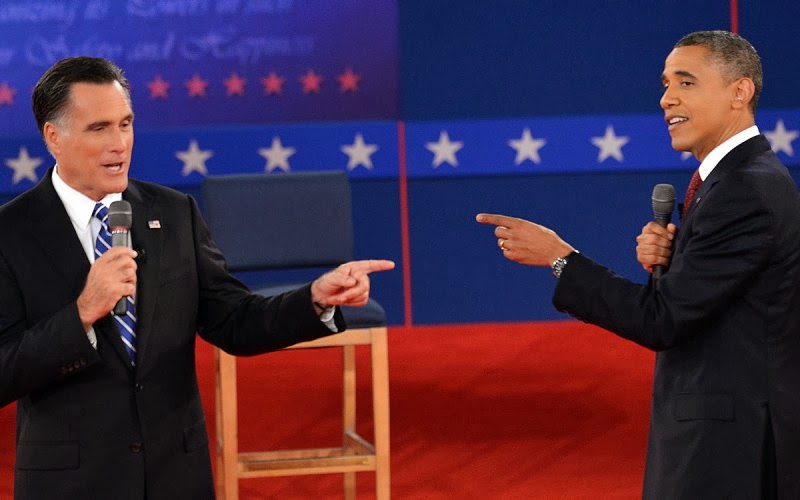
Klayman v. Obama, ___ F.Supp.3d ___ (D.D.C. 2013), http://s3.documentcloud.org/documents/901810/klaymanvobama215.pdf [Judge Richard J. Leon, Dec. 16, 2013]. Charlie Savage, "Judge Questions Legality of N.S.A. Phone Records," New York Times, Dec. 17, 2013, p. A1. [Photo credit: Jim Lo Scalzo/European Pressphoto Agency/New York Times]

And see, Sheryl Gay Stolberg, "‘Passionate’ Judge Has Record of Wrestling With Thorny Issues, and the U.S. Government," New York Times, Dec. 17, 2013, p. A22; and Michael D. Shear, "Score One for the Legal Thorn in Government’s Side; Larry Klayman, Plaintiff in N.S.A. Case, Savors Victory," New York Times, Dec. 17, 2013.

Since The Guardian broke the Snowden revelations earlier this year, there have been a number of essays in this blog regarding the issues. See, e.g., "Lavabit Confronts 'Complicit or Close?' Levison Closes," August 9, 2013; "A Simple Matter to Drag People Along," August 6, 2013; "The Future of Surveillance and How to Stop It," August 4, 2013; "Surveillance: Differences of Degree and of Kind," July 3, 2013; "Shooting the Messenger; Should Government Be Able to Keep Its Abuses Secret?," June 11, 2013; "From Zazi to Stasi; Trusting a Government That Doesn't Trust You," June 9, 2013; "Law's Losing Race With Technology," June 7, 2013.

[Cites/links for the Dec. 27/28 Update:] Today [Dec. 27] the U.S. District Court for the Southern District of N.Y.'s decision in ACLU v. Clapper, ___ F.Supp.3d ___ (S.D.N.Y. 2013), http://www.nysd.uscourts.gov/cases/show.php?db=special&id=364 [Judge William H. Pauley, Dec. 27, 2013], is being perceived as contrary to Klayman, the District Court decision that prompted this original blog essay. Adam Liptak and Michael S. Schmidt, "Judge Upholds N.S.A.’s Bulk Collection of Data on Calls," New York Times, Dec. 28, 2013, p. A1 ("the latest contribution to an extraordinary debate among courts and a presidential review group about how to balance security and privacy in the era of big data").

Klayman v. Obama, ___ F.Supp.3d ___ (D.D.C. 2013), http://s3.documentcloud.org/documents/901810/klaymanvobama215.pdf [Judge Richard J. Leon, Dec. 16, 2013]. Charlie Savage, "Judge Questions Legality of N.S.A. Phone Records," New York Times, Dec. 17, 2013, p. A1.
# # #

Tuesday, December 10, 2013

Gas Tax Critics: A Response

December 10, 2013, 9:38 a.m.

What's the Alternative?

In two blog essays and one newspaper column I have advocated that we get on with the business of tending to our deteriorating roads and bridges -- and that we continue to use the gasoline tax as a way of funding the projects. "Paying By The Mile Is A Terrible Idea," Sept. 25, 2013; Nicholas Johnson, "Think Long and Hard Before Diluting the Gasoline Tax," Iowa City Press-Citizen, Dec. 5, 2013, p. A7; "Gasoline Tax Is Our Friend," Dec. 5, 2013.

There are, of course, those who disagree with this approach. Sometimes I have responded, online when the comments are made in response to a newspaper's online article, or as appended remarks to the three items linked above. Because I continue to believe these are important issues, and those who seek to enter into a dialogue are entitled to some kind of response, I have reproduced, and added to, my responses in this new blog essay.

I'll begin with a Letter to the Editor in this morning's [Dec. 10] Press-Citizen regarding my Dec. 5 Press-Citizen column, linked above.

Taxpayers Aren't Getting Enough Bang for Their Buck
Steve Hufferd, Iowa City
Iowa City Press-Citizen, Dec. 10, 2013, p. A7

On Dec. 5, while advocating an increase in gasoline taxes, Nicholas Johnson makes the typical liberal error in assuming that increasing taxes will cure all the ills in the infrastructure. He would, I'm sure, say the same regarding taxes to fund education even while taxes spent on education has accelerated even while academic performance per student has plummeted.

We conservatives have no problem with taxes per se. The problem we have is with the plethora of irresponsible abuses of the public coffers. Where is the evidence that the gasoline taxes collected over the past half century has been spent wisely? A bit of transparency would be appreciated and might have a positive effect on the public resistance to tax increases. Of course, transparency could also work against any prospect of tax increases. With the public trust of government officials reaching new lows, it's not the best of times for politicians to be saying, "trust me with an increase in tax dollars."

Tax payers do not feel they are getting sufficient "bang for the buck." There are ways of getting big jobs done with very little. It's called management. The best example of the lack of it has been the current launching of Obamacare.

_______________

Steve Hufferd might be surprised to find the degree to which I agree with him -- as explained in these italicized comments, below:

I don't think that "increasing taxes will cure all the ills in the infrastructure [or] education." I don't recall ever saying that "the gasoline taxes [have] been spent wisely." (As a local school board member I often made the point in meetings, and newspaper columns, that some reforms both cost less and produce better results. As Hufferd puts it, "there are ways of getting big jobs done with very little.")

As a public official, and as a one-time administrative law professor, I have advocated more, not less, transparency in government.

I agree that "trust of government officials [is] reaching new lows" and that "trust me" no longer works.

I certainly share his commitment to better "management" -- and have ever since my term as U.S. Maritime Administrator during the mid-1960s (and throughout my term as a school board member). During President Lyndon Johnson's Administration we actually had a "War on Waste" program that saved taxpayers billions of dollars. (My contribution was working to reduce maritime subsidies.) Johnson symbolized the program by walking around the White House turning off needless lights -- thereby earning the nickname of "Lightbulb Lyndon." (I agree with Hufferd's criticism, and have said, that the rollout of Healthcare.gov was a classic example of poor management and oversight. "Exclusive: Insider Explains Healthcare.gov Fiasco; From 'Integration Testing' to 'Full End-to-End Testing,'" Nov. 2, 2013.)

So where do we part company?

(1) We have transportation needs. Unsafe bridges and deteriorating roads need to be fixed.

(2) There are limited options. (a) Continued crumble. We could continue to let the roads and bridges crumble, and build more detours around them. (b) Private ownership. We could sell them off to for-profit corporations -- with the tolls for driving far exceeding any gasoline taxes. (c) Different taxes. We could keep the roads public, but use different taxes: sales, property, or income -- shifting the entire burden away from the "user fee" and on to everyone. (d) Gas tax. We could continue to pay with the user fee called the gasoline tax -- hopefully, while applying Hufferd's and my focus on triage and "do we really need it," innovative cost-cutting, sound management, oversight, and increased transparency.

(3) Gas tax preference. Of these options, my preference is (d), Gas tax -- for reasons laid out in the Press-Citizen column, "Think Long and Hard Before Diluting the Gasoline Tax," Dec. 5. (Admittedly, non-drivers also benefit from our road network; thus, while I would not advocate some modest funding from income tax revenue, it would be difficult to argue persuasively against it.)

(4) We're all at fault. No institution (or individual) is free of the kind of inefficiencies, waste and abuses Hufferd and I would like to remedy -- whether corporations, the military, schools and universities, hospitals, non-profit organizations, religious institutions -- even political parties and their candidates' campaigns. It is misplaced to suggest that most of the fault, when it comes to government, falls on liberals or conservatives or libertarians or greens. Some are more willing to overlook waste in the military (billions of dollars in Iraq and Afghanistan that can't be accounted for); others less likely to come down on popular social programs. Corporate executives of companies dependent upon government contracts may complain about taxes, while spending millions on lobbyists and campaign contributions to get special tax breaks and other special interest benefits in return. (I've run numbers on the "return on investment" from campaign contributions. It's between 1000-to-one and 2000-to-one; give one million, get back one billion -- in the form of such things as contracts, tax breaks, antitrust exemptions, tariffs and other price supports.)

Local constituents, and their elected officials who campaign on reducing taxes, are among the first to squeal when a local defense contractor may lose a lucrative contract because the weapons system it's profiting from isn't wanted by the Pentagon, or just doesn't work.

So I don't think it is accurate, fair, or constructive to try to address these problems by demonizing one political party, or political movement, over another. On that Hufferd and I really do disagree.

Of course we don't want to pay for "bridges to nowhere" (a one-time Republican proposal), and we do want to have efficient and effective management of such necessary maintence projects as we may have, selected under rational systems of priority. Having said that, we're still left with the issue of how to pay for them. For the reasons I've outlined, I continue to believe the gasoline tax is the best way to do it.


Here are some additional criticisms -- and my responses.

The first two comments, below, appear on the Patch reference to the Sept. 25, 2013, blog essay, referenced immediately above. The next four were comments on the Editorial, "Gas Tax Increase StillBest Option Left Standing," Iowa City Press-Citizen, Dec. 1, 2013.

My responses, in italics, follow each.

Johnny Johnson December 03, 2013 at 05:46 PM Hey why not? Energy prices consume a far greater share of income from middle class than the rich. Make those working fools cough up more and skip lunch to pay for it.

Johnny Johnson (no relation) is, of course, correct: as a percentage of their income, the poor and middle class pay more for gasoline (and its tax) than the rich. (And this disparity is exacerbated by the poor often having to rely on older, low gas mileage cars in less good condition, and possibly longer commutes.) But this could also be said about everything else in the marketplace (e.g., food, clothing, automobiles, housing, fines for speeding) -- with the exception of various discounts offered to "seniors" and very young children (categories not directly related to income) and public subsidies for food and housing for the poor. In my opinion, the most effective and easily administered solutions are to raise the minimum wage to "living wage" levels in the private sector, and get closer to full-employment policies by making the government the employer of last resort in the public sector -- rather than to single out the gasoline tax as a single item. -- N.J.

Brian December 04, 2013 at 07:16 PM The State needs to cut costs, not raise revenue. Do the inefficiencies bother anyone else? Look at how many times I-80 has been redone Between Dodge Street & Coral Ridge last 10 years. What about the insane waste of money to replace the barrier between East & West with a "stained faux rock face". That was 1,000,000/mile. Just the labor to haul the existing barrier away required over 100 semi tractor trailers. Did anyone notice the stain faded in ONE WEEK? It wasn't UV stable. The State should be able to fund projects with existing gas tax.

Here again, Brian may be right (I'm not familiar with his facts). Everything possible should be done by those managing projects -- whether private sector or public sector -- to do jobs as efficiently and effectively as possible, at the lowest cost consistent with the necessary quality. Clearly, this is not a problem limited to public projects -- think about the BP Gulf oil rig disaster, the Massey Coal Mine disaster, the millions of cars and other products (including food) that must be recalled. But if we are going to continue to have a highway network that is smooth and safe we are going to have to continue to spend money on it. Trying to insure that money is spent as efficiently as possible is an essential goal; cancelling all highway projects because some are unwise or wasteful is not an option. -- N.J.

[I was one of those who commented on the Press-Citizen's editorial:] Nicholas Johnson · Top Commenter No one questions the need for roads and bridges in sufficiently good condition that cars and trucks can move safely and at reasonable speeds. Few question that public construction, maintenance and funding is preferable to for-profit corporate ownership and operation. The only remaining issue is what is the best formula for raising sufficient revenue -- and most fairly allocating the burden among Americans. As today's editorial explains, the gasoline tax wins that one hands down. For even more discussion of the reasons why, along with additional benefits of this approach, see "Paying By The Mile Is A Terrible Idea; The Gasoline Tax Is Our Friend," http://fromdc2iowa.blogspot.com/2013/09/paying-by-mile-is-terrible-idea.html December 2 at 7:49am

Mike Thayer · Follow · Top Commenter · Works at Coralville Courier This is intellectually lazy thinking by the PC. It's easy to say, "Raise taxes." But the REAL answer is finding areas in other state government spending where $215 million can be cut and re-allocated to roads/infrastructure. December 2 at 8:49am

Here again, I agree that everything possible should be done to evaluate taxpayer-funded federal, state, county, and city projects. Are they worth doing at all? What's the benefit-cost analysis? Those that have public support, still make sense, and that return multiples of what they cost should probably receive more money than they presently get. Some are probably funded at a more or less appropriate level. Those that have outlived their usefulness should be investigated further to see if they should be closed out. To put the cost of highway maintenance on all Iowa taxpayers -- rather than just those who drive and buy gas -- is, of course, an option, and one that some people in addition to Mike Thayer are advocating. For the reasons laid out in the column that begins this blog essay, I believe the multiple benefits and rationale for funding roads from a gasoline tax is a better option. -- N.J.

Lynn Griebahn Jr. · Top Commenter · University of Iowa Yes! someone needs to be the adult here, democrats NEVER think about the waste in spending, December 2 at 11:21am

As a wise wag once put it, "'Always' and 'never' are two words we should always remember never to use." Some Democrats and Republicans seem to care more about wise use of public money than other Democrats and Republicans -- a bloated defense budget, earmarks and tax breaks for special interests. Members of both parties seem somewhat reluctant to specify which specific programs they would eliminate. Indeed, they are so fond of suggesting that the elimination of "waste, fraud and abuse" will solve our budget challenges (when of course, however desirable, that's not the magic solution) that it's always seemed to me they think and talk about "waste" (in general) rather than "projects value" (in particular) far more than they should. -- N.J.

Michael Hoback · Top Commenter The feds are also considering raising their gas tax using the same plea as Iowa. The DOT has used the same claim of shortfalls, every legislative session for at least the twenty years I have been paying attention. The fact is that if you gave them every tax dollar in the state they would still want more. December 4 at 10:45am

On the assumption this is true, it is a call for oversight and better management -- something I certainly support. The more we can conduct a triage among potential road building and repair projects by engineers on the basis of rational analysis and professional judgment, and the less we can rely on politicians choosing projects on the basis of contractors' campaign contributions and short term construction jobs for their constituents, the better. -- N.J.

The following comment was posted to the online version of my Dec. 5 Press-Citizen column:

Michael Hoback · Top Commenter
Your opinion sounds very reasonable but bitter experience demonstrates that increased taxes only fuels bigger government. December 6 at 3:18pm

My response would be similar to many of those above. See, e.g., my numbered paragraphs (1) through (4) in the response to Steve Hufferd's Letter, at the top of this blog essay, and to Mr. Hoback's other comment, immediately above this one.

_______________

And my son, Sherman, has sent the following comment regarding this blog essay by email:

If you do a follow-up you might touch on 2 related topics:

1) Tolls and HOT lanes (aka "Lexus Lanes").

2) Gas tax refunds/credits for poor and working class folks, as well as those who must drive lower mileage vehicles and/or long distances out of necessity.

WRT #1 -- tolls and Lexus lanes are grossly regressive and, I would say, un-American. Since when do we segregate users of public infrastructure into the "haves" and "have-nots"? Our parks, libraries, and schools are available for everyone to use and enjoy. The same used to be true of our public roads and Interstate highway system. Not any more. Now it's 'pay up or shut up'.

Charging an extra fee or toll to use certain lanes on a public road -- particularly an exorbitant per mile 'HOT lane' charge that is admittedly _designed_ to keep out the 'riff-raff' (aka the 99%) -- is outrageous. Our highways are not some exclusive private dinner club. They should be open for ALL to use. Ordinary folks who cannot afford to pay the fees should not have to sit in traffic for hours and breathe exhaust fumes while the wealthy speed past them in their German luxury sedans. If the infrastructure is inadequate it should be improved. HOT/Lexus lanes are an elitist band-aid, and one that takes pressure off of legislators to actually _do_ something about roads with inadequate capacity. If the rich & powerful can buy their way out of traffic jams then they'll be happy and not press for road improvements.

OT/Lexus lanes are the equivalent of having two (2) sections in public libraries and/or schools. One section of the library for the well-healed who can afford to pay a user fee with shiny new computers and an extensive collection of books, comfy chairs, plenty of staff, etc, and the other just a bare-bones barely adequate room with old slow computers and maybe some box fans instead of A/C in the summer. Or a school split into two sections -- one with some classrooms that have a new computer for every kid, a teacher for every 10 students, and an indoor olympic size swimming pool vs. another section with classes of 30+ and some old textbooks on the other side of the building -- for the unwashed masses, the kids from poor and working class families.

Tolls and Lexus lanes are completely unacceptable. They are immoral and should be eliminated. Raise the gas tax instead.

2) Of course, even the motor fuel tax is regressive. Some people _must_ drive long distances. They aren't out joy riding, they have no choice. Out here in the D.C./Baltimore area (and most other major metro areas) people do not usually choose to live 30-50 miles from where they work -- it is the only way they can afford to live. People do not always have the money to buy a new (or used) car that gets 40 mpg. Maybe a relative gave them an old sedan that gets 18-20 mpg and they can barely afford the maintenance on it. Many farmers and ranchers must drive big pickup trucks and have no choice but to drive long distances. The same with construction workers, etc. You get the idea. It is not right to punish them for situations which are beyond their control.

Everything being equal -- income, required driving distance, vehicles needed -- then this would be easier. If no one really had to drive at all, or, say, no more than 10 miles per day, and everyone could afford an electric car, hybrid, or ultra-high mileage car that would suit their needs, then slamming them with a big fat fuel tax for driving a full-size crew cab dually pickup truck with a huge V-8 gas-sucking engine -- 'just because', for the "image" -- would make perfect sense.

Unfortunately it's not that simple.

Perhaps the gas tax should be set up like our income tax system (only simpler). The IRS recognizes that $50k/year is not the same from one person to the next. Some people have legitimate business expenses that are deductable for good reason. For example, it would not be fair to tax an independent cab driver on the entire amount he/she earns (their gross income), because they have to pay for fuel, maint., repairs, and license fees out of that. Likewise, it does not seem fair to a) have a flat tax (which the gas tax kinda is) and b) not allow any deductions for lower income folks and those who absolutely must drive long distances and/or lower mileage vehicles.

I rest my case. ;-)

_______________

This morning [Dec. 11] I discovered this Baltimore Sun editorial on the subject. It's not critical of the gas tax, quite the contrary. But I thought it sufficiently well reasoned to be worth adding here:

Editorial, “The Toll On America; With the nation's transportation network ailing, raising the federal gas tax for the first time in 20 years is the best available remedy,”
Baltimore Sun, Dec. 5, 2013; The Gazette, Dec. 11, 2013, p. A6.

Ah, to be in the U.S. economy of 1990s, a decade when the gross domestic product grew by about one-third and unemployment dropped from 7.5 percent to 4 percent. In 1993, the federal government raised the tax on gasoline to 18.4 cents per gallon, an increase of more than 30 percent from the previous year, and business boomed.

Since then, the cost of a gallon of unleaded gasoline has more than doubled, yet the per-gallon federal excise tax has remained unchanged. States have raised their fuel taxes to keep up as best they can with local transportation needs, but the federal government's source of revenue has stagnated, a problem worsened by the fact that people are driving less and using more fuel efficient vehicles.

The result? The Highway Trust Fund has run dry, and the nation's transportation infrastructure has suffered. To simply keep up with basic needs, Congress has been forced to supplement it with billions of general tax dollars — money that might have otherwise been used to pay down the debt, offset sequestration cuts or fund other myriad priorities.

In the House this week, a bill was introduced that would raise the tax by 15 cents per gallon. That would, more or less, allow the tax to at least keep up with inflation (falling a bit short as a percentage of fuel costs). It has been endorsed by AAA, and it's a safe bet that many in the business community, in the labor unions and local government would like to see it approved as well. Reducing congestion and keeping up the transportation network is vital to the economy.

Yet it's also safe to assume the bill has absolutely no chance in the GOP-controlled chamber. So inviolate is their no-tax pledge that conservatives would rather see the nation's economy wither than be caught raising a tax that is so obviously in need of updating.

This is a classic case of cutting off one's nose to spite one's face. Critics can point to transportation dollars that have been wasted, allegedly, on projects that are under-used or built too elaborately or required their contractors to pay their workers a living wage. But collectively, such waste (and we use that term loosely since many of these complaints are misplaced) is negligible, even microscopic, compared to the enormous transportation needs.

According to the American Society of Civil Engineers, the U.S. needs to invest about $2.7 trillion in transportation and other infrastructure by 2020 if the nation is to remain globally competitive. Yet the federal trust fund has become so depleted that experts say it won't be able to meet existing obligations in 2015, let alone take on new projects.

To leave the next generation a pot-hole strewn, overcrowded and unworkable transportation system would be as disastrous and as economically crippling as any budget deficit. And, as history has demonstrated, raising fuel taxes does not kill jobs. Indeed, most industrialized nations tax fossil fuels at a much higher rate.

One can argue that in the future, the U.S. must gravitate toward a system of financing transportation that is not so dependent on gas taxes, perhaps one that taxes by miles traveled instead of fuel consumed. As a recent U.S. Public Interest Group report notes, Americans are driving less and depending on public transportation more — yet we don't have the resources to accommodate this transition.

It's also reasonable to look for more public-private partnerships and other creative ways to finance airports, ports, highways, trains, light rail and other modes of travel in the future. But that is not nearly enough. The bottom line is that the country is already falling behind, and realistically, raising the federal gas tax must be part of the equation.

Would raising the tax also increase the cost of fuel? Absolutely, but that's not necessarily a bad thing. As studies have shown, getting stuck in traffic is even more costly, and Americans are doing a lot of that these days. As a recent Texas A&M Transportation Institute study found, congestion is already costing the average American an extra $818 per year. As distasteful as raising gasoline costs may sound, it's a lot better than the alternative of neglecting the roads, bridges and rails — or expecting some other miracle to come along.

_______________

Thursday, December 05, 2013

Gasoline Tax Is Our Friend

December 5, 2013, 7:30 a.m. (And see --> "Gas Tax Critics: A Response," Dec. 10, 2013 <--.)

Think Long and Hard Before Diluting the Gasoline Tax
Nicholas Johnson
Iowa City Press-Citizen
December 5, 2013, p. A7

As children, we used to sing "London Bridge Is Falling Down." That was fantasy. We'd never heard of a bridge falling down.

Now we have.

Why won't Gov. Branstad advocate an increased gas tax?

No one questions the need for safe, smooth roads and bridges.

Few question public ownership and maintenance. It sure beats private ownership by profit-maximizing corporations.

The only remaining issue? How to pay for it? As an earlier [Dec. 2] Press-Citizen editorial explained, the gasoline tax wins that one hands down.

We'll either pay for roads and bridges or we won't have them. But for a gasoline tax to pick up the tab, it must take account of inflation and current needs.

Politicians who run and vote against "government," encourage the notion taxes are evil. Taxes are just another way to buy stuff we need - like roads. Taxes are often the most efficient and equitable way to pay.

Proposed alternatives, such as the mileage tax or using other State funds, are little more than a shell and pea game to enrich the oil and automobile industries.

The gas tax is a "user fee." The more you drive, the more gasoline you buy, the more tax you pay, and the more you contribute to the maintenance of the roads you use.

There are many reasons why the gasoline tax is not creating enough revenue. Mostly it's the failure to adjust for inflation.

But it's also a good news, bad news story. The good news: the price of gas (with its tax) stimulates (1) higher gas mileage cars and trucks, (2) hybrids, and (3) electric vehicles (along with some other alternatives) -- all of which use less gas per mile than cars when the tax was last set.

As a result, we are both emitting fewer greenhouse gases, and less dependent on foreign oil.

The bad news: the less gas we use, the less gas tax revenue, the less money we have for roads and bridges.

So why not abandon, or supplement, the gas tax? Because doing so reduces the marketplace incentives for better gas-mileage vehicles. Raising the tax increases those incentives.

For example, paying tax by the mile (instead of by the gallon) there's no tax incentive not to drive a spiffy Hummer (some models get 9 mpg in city) or inefficient old vehicles. You'll still pay the mileage fee, and more per mile for gas, but no additional gas tax.

Grim reality: we'll either pay for our paved roads or go back to driving on the dirt roads of my youth. Road maintenance costs are more than before. One way or another we're going to pay. That's not the issue. Increasing gas taxes is not an additional outlay that could have been avoided; it's just the best way of paying for it.

My proposal?

Continue to fund road and bridge construction and maintenance with gasoline taxes. Raise the tax rate to whatever's necessary.

Give the more efficient, alternatively-fueled vehicles the gas tax advantages of better gas mileage. Provide what's needed by any new, socially beneficial technology when trying to change culturally embedded habits (such as battery recharging stations for electrics). This is similar to the boost we gave everything from the railroads to the Internet during their early years.

Once the alternative vehicles industries are profitable enough, design any one of a number of possible approaches for collecting a road user fee from them as well.

But, please, think long and hard before abandoning, or diluting, the gasoline tax. Let's not wake up to discover that, "You don't know what you've got until it's gone."
_______________
Nicholas Johnson teaches at the University of Iowa College of Law and maintains www.nicholasjohnson.org and FromDC2Iowa.blogspot.com.

# # #

Note: For an earlier, lengthier, and slightly different take on this subject, see "Paying By The Mile Is A Terrible Idea," September 25, 2013. For the positions of critics of this position see below.

# # #

There are, of course, those who disagree with this approach. The first two comments, below, appear on the Patch reference to the Sept. 25, 2013, blog essay, referenced immediately above. The next four were comments on the Editorial, "Gas Tax Increase StillBest Option Left Standing," Iowa City Press-Citizen, Dec. 1, 2013.

My responses, in italics, follow each.

Johnny Johnson December 03, 2013 at 05:46 PM Hey why not? Energy prices consume a far greater share of income from middle class than the rich. Make those working fools cough up more and skip lunch to pay for it.

Johnny Johnson (no relation) is, of course, correct: as a percentage of their income, the poor and middle class pay more for gasoline (and its tax) than the rich. (And this disparity is exacerbated by the poor often having to rely on older, low gas mileage cars in less good condition, and possibly longer commutes.) But this could also be said about everything else in the marketplace (e.g., food, clothing, automobiles, housing, fines for speeding) -- with the exception of various discounts offered to "seniors" and very young children (categories not directly related to income) and public subsidies for food and housing for the poor. In my opinion, the most effective and easily administered solutions are to raise the minimum wage to "living wage" levels in the private sector, and get closer to full-employment policies by making the government the employer of last resort in the public sector -- rather than to single out the gasoline tax as a single item. -- N.J.

Brian December 04, 2013 at 07:16 PM The State needs to cut costs, not raise revenue. Do the inefficiencies bother anyone else? Look at how many times I-80 has been redone Between Dodge Street & Coral Ridge last 10 years. What about the insane waste of money to replace the barrier between East & West with a "stained faux rock face". That was 1,000,000/mile. Just the labor to haul the existing barrier away required over 100 semi tractor trailers. Did anyone notice the stain faded in ONE WEEK? It wasn't UV stable. The State should be able to fund projects with existing gas tax.

Here again, Brian may be right (I'm not familiar with his facts). Everything possible should be done by those managing projects -- whether private sector or public sector -- to do jobs as efficiently and effectively as possible, at the lowest cost consistent with the necessary quality. Clearly, this is not a problem limited to public projects -- think about the BP Gulf oil rig disaster, the Massey Coal Mine disaster, the millions of cars and other products (including food) that must be recalled. But if we are going to continue to have a highway network that is smooth and safe we are going to have to continue to spend money on it. Trying to insure that money is spent as efficiently as possible is an essential goal; cancelling all highway projects because some are unwise or wasteful is not an option. -- N.J.

[I was one of those who commented on the Press-Citizen's editorial:] Nicholas Johnson · Top Commenter No one questions the need for roads and bridges in sufficiently good condition that cars and trucks can move safely and at reasonable speeds. Few question that public construction, maintenance and funding is preferable to for-profit corporate ownership and operation. The only remaining issue is what is the best formula for raising sufficient revenue -- and most fairly allocating the burden among Americans. As today's editorial explains, the gasoline tax wins that one hands down. For even more discussion of the reasons why, along with additional benefits of this approach, see "Paying By The Mile Is A Terrible Idea; The Gasoline Tax Is Our Friend," http://fromdc2iowa.blogspot.com/2013/09/paying-by-mile-is-terrible-idea.html December 2 at 7:49am

Mike Thayer · Follow · Top Commenter · Works at Coralville Courier This is intellectually lazy thinking by the PC. It's easy to say, "Raise taxes." But the REAL answer is finding areas in other state government spending where $215 million can be cut and re-allocated to roads/infrastructure. December 2 at 8:49am

Here again, I agree that everything possible should be done to evaluate taxpayer-funded federal, state, county, and city projects. Are they worth doing at all? What's the benefit-cost analysis? Those that have public support, still make sense, and that return multiples of what they cost should probably receive more money than they presently get. Some are probably funded at a more or less appropriate level. Those that have outlived their usefulness should be investigated further to see if they should be closed out. To put the cost of highway maintenance on all Iowa taxpayers -- rather than just those who drive and buy gas -- is, of course, an option, and one that some people in addition to Mike Thayer are advocating. For the reasons laid out in the column that begins this blog essay, I believe the multiple benefits and rationale for funding roads from a gasoline tax is a better option. -- N.J.

Lynn Griebahn Jr. · Top Commenter · University of Iowa Yes! someone needs to be the adult here, democrats NEVER think about the waste in spending, December 2 at 11:21am

As a wise wag once put it, "'Always' and 'never' are two words we should always remember never to use." Some Democrats and Republicans seem to care more about wise use of public money than other Democrats and Republicans -- a bloated defense budget, earmarks and tax breaks for special interests. Members of both parties seem somewhat reluctant to specify which specific programs they would eliminate. Indeed, they are so fond of suggesting that the elimination of "waste, fraud and abuse" will solve our budget challenges (when of course, however desirable, that's not the magic solution) that it's always seemed to me they think and talk about "waste" (in general) rather than "projects value" (in particular) far more than they should. -- N.J.

Michael Hoback · Top Commenter The feds are also considering raising their gas tax using the same plea as Iowa. The DOT has used the same claim of shortfalls, every legislative session for at least the twenty years I have been paying attention. The fact is that if you gave them every tax dollar in the state they would still want more. December 4 at 10:45am

On the assumption this is true, it is a call for oversight and better management -- something I certainly support. The more we can conduct a triage among potential road building and repair projects by engineers on the basis of rational analysis and professional judgment, and the less we can rely on politicians choosing projects on the basis of contractors' campaign contributions and short term construction jobs for their constituents, the better. -- N.J.

The following comment was posted to the online version of my Dec. 5 Press-Citizen column:

Michael Hoback · Top Commenter
Your opinion sounds very reasonable but bitter experience demonstrates that increased taxes only fuels bigger government. December 6 at 3:18pm

And this letter to the editor strikes a similar theme:

Taxpayers Aren't Getting Enough Bang for Their Buck
Steve Hufferd, Iowa City
Iowa City Press-Citizen, Dec. 10, 2013, p. A7

On Dec. 5, while advocating an increase in gasoline taxes, Nicholas Johnson makes the typical liberal error in assuming that increasing taxes will cure all the ills in the infrastructure. He would, I'm sure, say the same regarding taxes to fund education even while taxes spent on education has accelerated even while academic performance per student has plummeted.

We conservatives have no problem with taxes per se. The problem we have is with the plethora of irresponsible abuses of the public coffers. Where is the evidence that the gasoline taxes collected over the past half century has been spent wisely? A bit of transparency would be appreciated and might have a positive effect on the public resistance to tax increases. Of course, transparency could also work against any prospect of tax increases. With the public trust of government officials reaching new lows, it's not the best of times for politicians to be saying, "trust me with an increase in tax dollars."

Tax payers do not feel they are getting sufficient "bang for the buck." There are ways of getting big jobs done with very little. It's called management. The best example of the lack of it has been the current launching of Obamacare.

Steve Hufferd might be surprised to find the degree to which I agree with him.

I don't think that "increasing taxes will cure all the ills in the infrastructure [or] education." I don't recall ever saying that "the gasoline taxes [have] been spent wisely." (As a local school board member I often made the point in meetings, and newspaper columns, that some reforms both cost less and produce better results. As Hufferd puts it, "there are ways of getting big jobs done with very little.")

As a public official, and as a one-time administrative law professor, I have advocated more, not less, transparency in government.

I agree that "trust of government officials [is] reaching new lows" and that "trust me" no longer works.

I certainly share his commitment to better "management" -- and have ever since my term as U.S. Maritime Administrator during the mid-1960s (and throughout my term as a school board member). During President Lyndon Johnson's Administration we actually had a "War on Waste" program that saved taxpayers billions of dollars. (My contribution was working to reduce maritime subsidies.) Johnson symbolized the program by walking around the White House turning off needless lights -- thereby earning the nickname of "Lightbulb Lyndon." (I agree with Hufferd's criticism, and have said, that the rollout of Healthcare.gov was a classic example of poor management and oversight.)

So where do we part company?

(1) We have transportation needs. Unsafe bridges and deteriorating roads need to be fixed.

(2) There are limited options. (a) Continued crumble. We could continue to let the roads and bridges crumble, and build more detours around them. (b) Private ownership. We could sell them off to for-profit corporations -- with the tolls for driving far exceeding any gasoline taxes. (c) Different taxes. We could keep the roads public, but use different taxes: sales, property, or income -- shifting the entire burden away from the "user fee" and on to everyone. (d) Gas tax. We could continue to pay with the user fee called the gasoline tax -- hopefully, while applying Hufferd's and my focus on triage and "do we really need it," innovative cost-cutting, sound management, oversight, and increased transparency.

(3) Gas tax preference. Of these options, my preference is (d), Gas tax -- for reasons laid out in the Press-Citizen column, "Gasoline Tax Is Our Friend," Dec. 5. (Admittedly, non-drivers also benefit from our road network; thus, while I would not advocate some modest funding from income tax revenue, it would be difficult to argue persuasively against it.)

(4) We're all at fault. No institution (or individual) is free of the kind of inefficencies, waste and abuses Hufferd and I would like to remedy -- whether corporations, the military, schools and universities, hospitals, non-profit organizations, or religious institutions. It is misplaced to suggest that most of the fault, when it comes to government, falls on liberals or conservatives or libertarians or greens. Some are more willing to overlook waste in the military (billions of dollars in Iraq and Afghanistan that can't be accounted for); others less likely to come down on popular social programs. Corporate executives of companies dependent upon government contracts may complain about taxes, while spending millions on lobbyists and campaign contributions to get special tax breaks and other special interest benefits in return. (I've run numbers on the "return on investment" from campaign contributions. It's between 1000-to-one and 2000-to-one; give one million, get back one billion -- in the form of such things as contracts, tax breaks, antitrust exemptions, tariffs and other price supports.)

Elected officials who campaign on reducing taxes -- and their local constituents -- are among the first to squeal when a local defense contractor may lose a lucrative contract because the weapons system it's profiting from isn't wanted by the Pentagon, or just doesn't work.

So I don't think it is accurate, fair, or constructive to try to address these problems by demonizing one political party, or political movement, over another. On that Hufferd and I really do disagree.

Of course we don't want to pay for "bridges to nowhere" (a one-time Republican proposal), and we do want to have efficient and effective management of such necessary maintence projects as we may have, selected under rational systems of priority. Having said that, we're still left with the issue of how to pay for them. For the reasons I've outlined, I continue to believe the gasoline tax is the best way to do it.

# # #

And my son, Sherman, has sent the following comment regarding this blog essay by email:

If you do a follow-up you might touch on 2 related topics:

1) Tolls and HOT lanes (aka "Lexus Lanes").

2) Gas tax refunds/credits for poor and working class folks, as well as those who must drive lower mileage vehicles and/or long distances out of necessity.

WRT #1 -- tolls and Lexus lanes are grossly regressive and, I would say, un-American. Since when do we segregate users of public infrastructure into the "haves" and "have-nots"? Our parks, libraries, and schools are available for everyone to use and enjoy. The same used to be true of our public roads and Interstate highway system. Not any more. Now it's 'pay up or shut up'.

Charging an extra fee or toll to use certain lanes on a public road -- particularly an exorbitant per mile 'HOT lane' charge that is admittedly _designed_ to keep out the 'riff-raff' (aka the 99%) -- is outrageous. Our highways are not some exclusive private dinner club. They should be open for ALL to use. Ordinary folks who cannot afford to pay the fees should not have to sit in traffic for hours and breathe exhaust fumes while the wealthy speed past them in their German luxury sedans. If the infrastructure is inadequate it should be improved. HOT/Lexus lanes are an elitist band-aid, and one that takes pressure off of legislators to actually _do_ something about roads with inadequate capacity. If the rich & powerful can buy their way out of traffic jams then they'll be happy and not press for road improvements.

OT/Lexus lanes are the equivalent of having two (2) sections in public libraries and/or schools. One section of the library for the well-healed who can afford to pay a user fee with shiny new computers and an extensive collection of books, comfy chairs, plenty of staff, etc, and the other just a bare-bones barely adequate room with old slow computers and maybe some box fans instead of A/C in the summer. Or a school split into two sections -- one with some classrooms that have a new computer for every kid, a teacher for every 10 students, and an indoor olympic size swimming pool vs. another section with classes of 30+ and some old textbooks on the other side of the building -- for the unwashed masses, the kids from poor and working class families.

Tolls and Lexus lanes are completely unacceptable. They are immoral and should be eliminated. Raise the gas tax instead.

2) Of course, even the motor fuel tax is regressive. Some people _must_ drive long distances. They aren't out joy riding, they have no choice. Out here in the D.C./Baltimore area (and most other major metro areas) people do not usually choose to live 30-50 miles from where they work -- it is the only way they can afford to live. People do not always have the money to buy a new (or used) car that gets 40 mpg. Maybe a relative gave them an old sedan that gets 18-20 mpg and they can barely afford the maintenance on it. Many farmers and ranchers must drive big pickup trucks and have no choice but to drive long distances. The same with construction workers, etc. You get the idea. It is not right to punish them for situations which are beyond their control.

Everything being equal -- income, required driving distance, vehicles needed -- then this would be easier. If no one really had to drive at all, or, say, no more than 10 miles per day, and everyone could afford an electric car, hybrid, or ultra-high mileage car that would suit their needs, then slamming them with a big fat fuel tax for driving a full-size crew cab dually pickup truck with a huge V-8 gas-sucking engine -- 'just because', for the "image" -- would make perfect sense.

Unfortunately it's not that simple.

Perhaps the gas tax should be set up like our income tax system (only simpler). The IRS recognizes that $50k/year is not the same from one person to the next. Some people have legitimate business expenses that are deductable for good reason. For example, it would not be fair to tax an independent cab driver on the entire amount he/she earns (their gross income), because they have to pay for fuel, maint., repairs, and license fees out of that. Likewise, it does not seem fair to a) have a flat tax (which the gas tax kinda is) and b) not allow any deductions for lower income folks and those who absolutely must drive long distances and/or lower mileage vehicles.

I rest my case. ;-)

_______________

Wednesday, December 04, 2013

Janet's 'Coming of Age in Chore Boots'

December 4, 2013, 11:15 a.m.

Janet Schlapkohl's Latest Super Hit

"Coming of Age in Chore Boots" is a definite must-see, fantastic performance. Fortunately for you, if you're reading this before December 8th and you act quickly, you may still have an opportunity to see it at Iowa City's Riverside Theater. Here's the basic info:
Remaining Show Dates

Thurs/Fri/Sat/Sun Dec 5 - 8
All Thurs-Sat shows, 7:30PM; Sunday shows at 2:00PM

Tickets
319-338-7672 or in person at the theatre, 213 N. Gilbert St, Iowa City, Mon-Fri, 12p-4p; or one hour before each show.
Pricing
Adult Fri-Sun, $30 (For under 30 years old/over 60 years old, $27)
Adult Thursday, $25 (same price for all adults)
All Youth (18 and under), $15
Student Rush (any remaining tickets 20 mins before show time), $15
For group discounts of 10 or more call 319-338-7672
What the Theater Critics Say

I'm no theater reviewer. Rob Cline is. Rob Cline, "Review: One-Woman Show Urges You to 'Pay Attention,'" The Gazette, Dec. 3, 2013, p. A9. As evidence, Cline notes approvingly the contributions of the director, Tim Budd, Arthur Virnig's set, and Drew Bielinski's lighting -- a touch I would have overlooked. [And the next day, Dec. 5, Emma McClatchey did a great job of capturing the person that is Janet Schlapkohl and her one-woman play that is "Coming of Age in Chore Boots" in a well-deserved, front page, Daily Iowan, "80 Hours" section spread. Emma McClatchey, "One Farm Girl's Story," The Daily Iowan, "80 Hours," Dec. 5, 2013, pp. B1, 3.]

Other portions of his review ring true with what I came away with after her Saturday night [Nov. 30] performance:
Janet Schlapkohl connects her personal story with key events, ranging from the local to the international, in her one-woman show, “Coming of Age in Chore Boots” [which] is heartwarming and humorous, while addressing serious issues including the plight of young men sent to Vietnam and the farm crisis of the 1980s . . . highlight[ing] how the wider world can intrude on one’s individual story, even if one isn’t attending to much beyond one’s own sphere. . . .

The highlight of the first act is an extended sequence in which Schlapkohl interweaves her story of serving as a bat girl for the high school softball team with reflections on the Vietnam conflict . . . artfully contrast[ing] the battlefield of sport with the very real battlefields young soldiers encountered. It’s a beautifully written sequence that Schlapkohl performs with an appealing earnestness that nevertheless calls to the fore the high cost of war on scales both large and small. . . .

Schlapkohl had the capacity audience laughing with her portrayal of all four characters (including herself) at a monthly meeting of farm wives–a group into which she herself did not comfortably fit. Her depiction of preparations for and attendance at a department party after she and her husband returned to school was also quite funny. In between these moments, she delivered the somber story of the loss of the farm she and her husband had struggled to keep going. . . .

The show is dotted with humorously employed song clips that emphasize key moments. The device is handled well, and never detracts from Schlapkohl’s own storytelling, which is, by and large, exceptional.

The Trailer

Here is a brief YouTube trailer with Janet's description of the play.


Riverside Theatre's Comments

Here's Riverside Theater's description of the play, and Janet Schlapkohl:
Janet Schlapkohl, writer, director and frequent Walking the Wire performer shares her memories of growing up in the Midwest. Stories both hilarious and poignant emerge—from the local characters of the Wapsi Women’s Club, back-to-the-landers and early Lamaze advocates, to Vietnam and the farm crisis. A world premiere.

Janet Schlapkohl received her M.F.A. in Playwriting from the University of Iowa. She also has an M.S. in Education from the University of Iowa and a B.S. in Biology with minors in English, Chemistry, and Education from Iowa State University. She is the founder of Combined Efforts Theatre, director of Country Camp, LLC and the recipient of the Isabelle Turner Human Rights Award, the Richard Maibaum Award, and the Finkbine Award for Human Rights. She is an Adjunct Professor at the University of Iowa.

Her plays have been produced in New York City, Los Angeles, Colorado, and across Iowa. She has performed her monologues and one woman shows at Riverside Theatre in Iowa City and at the Looby Theatre in Nashville. She has also worked as a Director, a Dramaturge, a Scenic Artist, and a Costume Designer.
Corporate Art vs. Local Artists

So my comments are less those of the theater critics and more in the nature of a hymn to the members of Iowa City's creative community in general and this woman in particular.

One of the consequences of corporate control of art and entertainment is the creation of profit-maximizing celebrity -- the stars of TV and film, top earning music groups and graphic artists, the publicized athletes. The publisher, Alfred Knopf, used to publish worthy writers' first novels, knowing he'd lose money on them. Today's major media are primarily interested in authors whose well-advertised books can sell millions of copies, and actors whose films will gross well over $100 million.

This system has served us in some ways, and it certainly has served the CEOs and shareholders of our media conglomerates ("'All the gold in California'/Is in a bank in the middle of Beverly Hills/In somebody else's name"). But it has also created a false linkage between profit and talent, and in so doing has diminished the credit of those who have every bit of the raw talent (and sometimes more) than the celebrities but none of their publicity (or income).

Janet Schlapkohl

Virtually every form of artistic creativity can be found within the population of Eastern Iowa and Iowa City -- graphic arts and sculpture, film making and television, pottery and jewelry, writing and music of all kinds, photography, and more.

And Janet Schlapkohl is a major force in that creative community.

"Coming of Age in Chore Boots," is only the latest example of her work. It's certainly as good or better than much of the off-Broadway theater I've seen in New York over the years, even though you probably won't read about it in the New York Times or see her featured on CBS' "60 Minutes."

Janet is one of our own. As a former special education teacher at City High, she saw how beneficial theater performance could be for her students, and by 2002 had created "Combined Efforts Theater" -- "Iowa’s only Theatre Company with a mission to purposefully include actors with and without disabilities." Since then Combined Efforts has continued to grow, with ever-larger audiences, appreciative parents and actors, its own Section 501(3)(c) tax status, sprouting Men's Choir and Dance Troupes, and most recently the recipient of a Kennedy Center (Washington, D.C.) contract to teach a play writing class to local-area students, including those with disabilities. Along the way, she managed to pick up a masters in education and an MFA in play writing, while running a summer camp, helping with grandchildren, and managing a farm with her veterinarian husband, Dave.

Ever since, as a small boy, I read a books about Thomas Jefferson and Winston Churchill that emphasized the wide range of their talents and accomplishments (Churchill, the book said, had once built a brick wall), I have been fascinated by such people. Locally, the former UI president, David Skorton (now president at Cornell University), was such a person. An MD who continued his practice and research, he was abundantly qualified to hold the positions he did in the Colleges of Medicine and Engineering, as well as the Department of Computer Science. He was an accomplished performer on the saxophone and flute (having worked in Chicago as a professional jazz and R&B musician), hosted a radio program about jazz, and served on the Cedar Rapids Symphony Orchestra Board of Directors -- all while functioning as a major university president. Most amazing to me was his practice of personally answering all of his email each day. (I'm currently 250 emails behind.) I could go on with more, but you get the idea.

This is one of the many qualities that I admire in Janet. "Coming of Age in Chore Boots" displays a small range of her vast and various abilities. For starters, she researched and wrote the play -- one I would like to read sometime, if she would let me. It's also really good writing. Moreover, knowing her, I would not be surprised if she had more than a little to say about everything from the set design to the lighting, blocking, directing and costumes.

Once on stage, she not only displays her ability as an accomplished actor, but does her share of singing and dancing, moving gracefully around the stage, and keeping us laughing -- along with, as we say, "playing all the parts," complete with accents and rapid costume changes.

And don't forget, this is a "one-woman show." Have you ever tried to memorize anything longer than a sentence or paragraph or two? Have you ever had to learn your lines in a play? With other actors to work off of, and an occasional line, it's possible to memorize and get through it. But all alone? And throughout a two-act play for an hour or two? (Our Actors Equity son, Jason Grubbe, did a one-man, 90-minute-no-intermission show about Shakespeare's last day.) How anybody can do this is so far beyond my imagination, let alone ability, that I just sit there in awe when it happens.

And how does she manage to turn out those plays?

President Kennedy told a story about his experience as a senator, dealing with Senator Warren Magnuson, from the state of Washington. He said Maggie (as he was called) would go down into the well of the Senate chamber, where he would mumble something. Kennedy would later ask what he'd said, and "Maggie would reply, 'Oh, nothing,' and the next think you'd know the Grand Coulee Dam was built."

You ask Janet, "What are you doing?" "Oh, nothing," she says; "I should start working on the summer play" (a reference to the ". . . At the County Fair" series). You see her three or four days later and she hands you a 60-page script. And it's good! It reflects considerable research. And equally amazing, when additional youngsters come along who'd like to participate, it's almost instantaneously revised, and they are written into the script with a part to play.

"Coming of Age in Chore Boots" and "The Iowa Story"

So what's so special about her "Coming of Age in Chore Boots"?

"Let me count the ways."

I've already noted that it's delightful entertainment -- funny, poignant -- a wonderful evening in the theater; a great story, well acted, with music. But that would be true of other plays she's written.

This one really is her story, her farm experiences, her "chore boots." And she's really captured it.

For anyone my age, anyone who experienced an Iowa family farm during any time between the 1930s and 1950s, "Chore Boots" is a wonderful, warm walk down memory lane. I am so thankful for being born when I was, and being exposed to life on my uncle's farm during the 1930s and '40s.

It's always seemed to me there probably wasn't that much difference between Iowa family farm life in the 1930s and the 1830s -- windmills and pumps for water, outhouses and a pot under the bed instead of indoor plumbing, a kitchen stove to heat the house in winter, root cellars, literal "horse power" to pull the wagons instead of tractors, corn picked by hand, manure spreaders instead of commercial fertilizers, kerosene lanterns for light, a hand cranked milk separator. It was what we called "mixed agriculture" -- oats and alfalfa for the animals, which included horses, cattle, hogs, sheep, chickens, milk cows, and the occasional goat. Gardens provided most of the fruit and vegetables, fresh during the growing season and canned for the winter months. There were real chores -- and the boots to go with them. Kids who grew up on those farms learned how to work, rising early to do chores before breakfast and heading off to school on foot or school bus.

Janet has captured this with hundreds of references, what folks were talking about and how they expressed it, acting it out, telling the story.

It's a story that every Iowan should hear and know, and perhaps especially the young, who have only seen farms from a car window while speeding along an Interstate, and assume farmers have always farmed multiple sections of land, in nothing but corn and beans, with GPS-navigated tractors costing $100-500,000.

Janet Schlapkohl's "Coming of Age in Chore Boots" is the most delightful way I can imagine of hearing that story.

# # #

Saturday, November 23, 2013

Libertarianism As Process

November 23, 2013, 9:20 p.m.

In the Excellent Society


"An excellent plumber is infinitely more admirable than an incompetent philosopher. The Society which scorns excellence in plumbing because plumbing is a humble activity and tolerates shoddiness in philosophy because it is an exalted activity will have neither good plumbing nor good philosophy. Neither its pipes nor its theories will hold water. . . . The tone and fiber of our society depend upon a pervasive and almost universal striving for good performance."

-- John W. Gardner, Excellence (1961), pp. 86, 132


The Goal
When Libertarians assert that the government should not forbid the sale of large sugar drinks, or foods with trans fats, or riding motorcycles without helmets -- because it interferes with what our Declaration of Independence refers to as individuals' "liberty and the pursuit of happiness" -- is there something wrong with their position? If so, what is it, and how would you articulate their error?

Is there some way that the values they hold -- indeed, all of us hold to some lesser or greater degree -- can be more deliberately incorporated into our public policy process, without necessarily adopting their position, or proposal hook, line and sinker on every given issue? These are the questions to which this blog essay attempts to find, if not the answer, at least some progress towards one.

Like many Americans, I find myself in agreement with a number of Libertarian positions -- especially their opposition to TIFs and other forms of corporatism (i.e., government transferring taxpayers' money to for profit, private businesses). It's that latter position, often seen in these blog essays, that causes some to believe I must be a Libertarian.

I'm not (in the sense of a formal, voting member of today's Libertarian Party), but I have often struggled with the questions with which this blog essay begins.

Now, thanks in part to one of my exploratory policy conversations with Jim Leach, my thinking has advanced a bit.

Here's the story.

Nouns, Verbs and Process

Buckminster Fuller (1895-1983) was a popular icon of the 1960s and '70s, whom his numerous followers referred to as "Bucky." He was, among a great many things, an architect (geodesic dome popularizer), author (30 books), and creative thinker on many topics. We occasionally shared the platform as speakers at the same gatherings.

Among his books was one with the title I Seem To Be a Verb (1970). As he explained it, "I don't know what I am. I know that I am not a category. I am not a thing — a noun. I seem to be a verb, an evolutionary process — an integral function of the universe."

I mention this because, like Bucky Fuller deciding he was a verb, I have finally come to the view that Libertarianism can most usefully be thought of as a process, or rather as having a legitimate and significant role in the policy formulation process, rather than a set of platform planks and "positions" on issues.

What's "Libertarian"?

"Libertarian" has become, in most common usage, a reference to a political party, now boasting the third largest membership after the Republicans and Democrats. By that definition it is relatively new, formed in 1971 and with its first presidential candidate in 1972. It is also, of course, a political philosophy with an American history prior to today's political party, origins around the late 1700s, and some claiming threads going back to the Greeks and even Lao-Tzu, in the 6th Century B.C.

Most Americans would find at least something with which they agree in the beliefs and positions of those who identify themselves as Libertarians. You can find Libertarians who are almost as anti-war as the Quakers, yet as strong for gun rights as the National Rifle Association; more conservative than most Republicans on fiscal matters, and yet more liberal than most Democrats when it comes to personal freedoms, such as gay rights and use of drugs.

But it was a recent column from the Heritage Foundation attacking the regulation of trans fats that got me struggling once again with the intellectual challenge of how to either utilize or respond to the Libertarian position on such issues. (Daren Bakst, "FDA's Proposed Trans Fat Ban is a Power Grab to Control Lives," The Heritage Foundation, Nov. 18, 2013; in The Gazette as, Daren Bakst, "FDA's Trans-Fat Power Grab," The Gazette, Nov. 21, 2013, p. A5.) What is the answer to those who refer to government regulation of personal life choices as the creation of a "nanny state"?

The Motorcycle Helmet Dilemma:
Wherein I Argue With Myself and Discover That
"I Can't Win, I Can't Break Even, and I Can't Get Out of the Game"

The motorcycle helmet dilemma has been the example most often used when thinking about the question, or discussing it with others.

There is probably as much diversity among libertarians' views on various subjects as there are for those of conservatives, or liberals. But it's a reasonable guess than a great many Libertarians would put the motorcycle helmet issue this way: "If someone wants to ride with no helmet, it is no business of the state. As long as they are doing no harm to anyone else, are fully informed, and know the risks, it's their life to live as they choose."

Previously, I have imagined myself being backed into an analytical corner.

First, I would say to myself -- or whomever else might be within earshot -- "they are doing harm to others, economic harm. If they are ever in an accident without a helmet, unless they have health insurance, or are independently wealthy, the rest of us -- hospitals' patients (and shareholders of for-profit hospitals), health insurance premium payers, taxpayers -- are going to be picking up some share of their initial medical bills. And if they are brain injured, or paralyzed for life, hundreds of thousands beyond that. The response: OK, but to get to the core of this,let's assume, hypothetically, that the motorcyclist posts a bond adequate to cover all costs.

Second, "Now what is your objection?" comes the real or imagined next question. I respond with something about the way the law permits plaintiffs to calculate damages in wrongful death cases -- namely, what they might have expected to receive from the decedent over the course of his or her lifetime had he or she not been killed as a result of actions by the defendant. To this the response is similar: "OK, so hypothetically assume the motorcyclist must take out a life insurance policy, too, with an initial value equal to the plaintiff's share of the decedent's future earnings." (Its value might decline over time, so long as the insured lives and the future plaintiff has received ongoing economic benefit from him or her. At any given point in time its value would roughly equal the anticipated economic benefits from then until the actuarially determined estimated year of death.)

This simply produces the same response: "OK, so now what is your objection?"

This process could probably continue, but at some point you've run out of potential economic losses, all of which have been covered in advance (at least hypothetically). You're in a corner. You're back where you started: "If someone wants to ride with no helmet, it is no business of the state. As long as they are doing no harm to anyone else, are fully informed, and know the risks, it's their life to live as they choose."

Continuing to travel further on down the wrong road doesn't make it the right road. So let's start over.

Of all the people who would not respond well to demands that they follow a particular procedure for making policy decisions, I can imagine that Libertarians might be at the top of that list.

This is Not About Libertarians; It's About the Rest of Us:
Libertarianism as Process in the Balancing of Values

So I'm not talking to or about Libertarians. I'm talking to the rest of us. And I'm suggesting that we do not need to approach Libertarianism as a body of predetermined platform planks and specific policy positions, binary yes-or-no decisions as a result of which Libertarians either "win" or "lose."

What if we viewed Libertarianism as part of a process, as a set of values that, though not decisive, not only can be, but should be, a legitimate part of the policy formulation process?

Are there analogies, or precedents, for this approach? Try the U.S. Constitution's Bill of Rights.

The Fourth Amendment is currently in the news as we receive revelation after revelation regarding the NSA's "searches" of Americans. The Amendment recognizes "The right of the people to be secure in their persons, houses, papers, and effects." But it also recognizes that some government searches may be justified. It expressly limits its prohibition to "unreasonable searches and seizures." Thus, "privacy" is identified as a value to be constitutionally protected, certainly to be considered as a part of the decision making process, but only up to the point where a governmental search may be "reasonable."

Similarly, the Eighth Amendment is unqualified in its prohibition of "cruel and unusual punishments." But when it addresses bail and fines it, like the Fourth, once again calls for a balancing: "Excessive bail shall not be required, nor excessive fines imposed . . .."

In the case of the First Amendment, the language is absolute: "Congress shall make no law . . . abridging the freedom of speech, or of the press . . .." Indeed, Justice Hugo Black read it as such, asking his colleagues the equivalent in his day of the current line, "What part of 'No' don't you understand?"

But in the case of the First Amendment, notwithstanding the "no," a majority of the Supreme Court justices has interpreted the language to require a balancing of the values associated with free speech (e.g., as a prerequisite for a self-governing democracy, a force to check abuses of power in and out of government, a process more likely to produce "truth," among others). Congress has been upheld by the Court in numerous cases in which Congress has made a law "abridging the freedom of speech."

Companies are legally required to reveal to potential customers the ingredients in their food products (labeling laws), and to potential shareholders the truth about their company (their stock prospectus). You are prohibited by law from telling jokes around an airport security checkpoint. The Copyright Law limits what you can do with others' writing. Courts can punish for speech found to be defamatory, obscene, or inciting to "imminent lawless action."

What I am suggesting is that we approach the principles and values of Libertarianism -- not the "positions" and fixed positions of Libertarians, or the platform of the Libertarian Party and its candidates, but their principles and values -- into our decision, and policy making, processes.

The fact is that my hypotheticals, in which the citizen who takes risks pays up front for the potential economic costs of doing so, are just that: hypothetical. There is a negative impact on our nation's economy from our risky behavior, the accidents and illnesses we bring on ourselves -- driving drunk or without seat belts, excessive use of alcohol and what I call the lesser drugs, tobacco, overweight and poor nutrition, failure to exercise, and, yes, riding motorcycles when not wearing helmets (and comparably risky activities).

Citizens' and Government's Legitimate Interests Beyond Economic Costs

But even if all those economic costs were nonexistent, whether hypothetically or actually, there is another value of legitimate interest to the American people and their democratically elected government. As I quoted John W. Gardner as saying, at the beginning of this blog essay, "The tone and fiber of our society depend upon a pervasive and almost universal striving for good performance."

America's greatest potential asset is performance at levels of excellence by each of its 227 million citizens (over 21) 365 days each year. It is in the best interest of each of us, interests that go beyond mere cost saving, that the government do all it can to ensure that all 227 million come as close to that ideal as possible -- for the good of all, as well as for the good of those individuals. That is why, even after the costs are covered, there is yet one more reason why it is appropriate for the government to concern itself with our self-destructive behavior -- because an excellent society requires a striving for excellence, as John Gardner reminds us, by its plumbers as well as its philosophers.

The point of "Libertarianism as Process" is that it is equally important to weigh heavily the benefits of incorporating into our public policy decisions the values of individuals' freedom, personal choices, and individuality. (To some extent this is, today, the product of the warring lobbyists, with their generous campaign contributions, fighting each other for the votes of House and Senate members. The difference is that I would like to substitute rational analysis, fairness, and incorporation of Libertarian values -- to whatever extent possible -- for raw political and economic power.)

The Radical and the Reasonable

And how might that be done? The way we often do it -- which requires, however, that we recognize the difference between the radical and the reasonable.

The radical positions regarding motorcycle helmets are, on the one hand, simply banning any manufacture or sale of motorcycles, and, on the other, imposing no safety regulations whatsoever. Permitting motorcycles, while requiring the riders wear helmets is, in reality, a middle position, a compromise, a balancing of values. That's not, alone, enough to say it should be the policy. That's not my point. Positioning oneself along this continuum from banning to no government involvement involves personal judgment. People will differ. It is only an example of how one might incorporate Libertarian values along with the state's legitimate interest in maintaining the productivity of its citizens who are motorcyclists.

Another example would be the policy regarding cigarette consumption. Again, the radical extremes would be, on the one hand, to simply ban the sale of any tobacco products, and, on the other, to make no efforts of any kind to limit the adverse health effects of tobacco use (including the 400,000 tobacco-related deaths a year). We have done neither. Cigarettes can be manufactured and sold. Smokers can continue to buy them. Some examples of the compromises have been to limit where they can smoke (as, in part, a response to evidence of harm to non-smokers from second hand smoke), to forbid tobacco sales to minors, the creation of smoking cessation programs, and the imposition of price increases to discourage young people from starting down the path to nicotine addiction.

A more local and recent example would be the Iowa City City Council's approach to the consequences of alcohol abuse by those legally forbidden to buy, possess, or consume alcohol (those under 21). The extremes would be to forbid their entry at any time into businesses whose sole purpose is to profit from the sale of alcohol, on the one hand, or, on the other, to permit their entry 24/7. The Council's balancing of values is a compromise that permits underage individuals to be in bars 20 out of every 24 hours a day, but requires they leave the bars between 10:00 p.m. and 2:00 a.m. See, "Underage Drinking As Human Right? I Don't Think So; Why Bar Owners, Students, Should Embrace Iowa City's 21 Law," Oct. 16, 2013.

And that's what I mean by "Libertarianism As Process."

# # #

Sunday, November 17, 2013

Why Politics Make Us Stupid

November 17, 2013, 11:20 a.m.
Yes, Liberals, This Means You, Too

It turns out that the half-jocular line, "My mind is made up, don't confuse me with the facts," is worth more reflection than we may have realized.

Yale Professor of Law and Psychology, Dan Kahan, heads that school's Cultural Cognition Project, a national group of academic researchers who study how one's political or other group affiliations and opinions can alter an individual's perceptions of relevant data concerning, say, climate change or gun control. Nicole Ng, "Kahan Responds to Media Storm," Yale Daily News, Oct. 29, 2013.

This first came to my attention as a result of one of my many informative BBC program podcasts, this one from the program "More or Less: Behind the Stats" ("Numbers are used in every area of public debate. But are they always reliable? Tim and the More or Less team try to make sense of the statistics which surround us.").

This episode, titled "Does politics make us get our sums wrong?" was a exploration of Dan Kahan's research.

Kahan didn't take the easy way out, which would have been to choose a random or representative sampling of subjects from across our socio-economic-educational classes. Instead, he choose those with outstanding mathematical ("numeracy") skills. As he explains it, "We did tests and found that people who are more science literate and better able to make sense out of scientific data tended to be more polarized along cultural lines on issues like climate change or guns or nuclear power, not less. That’s not what you would expect if the problem were that people had a deficit in rationality — in that case, the people who are the most science comprehending among those different groups would be converging on their views consistent with the best evidence."

He began with an exercise that was political-value-neutral: two skin creams, one of which smelled like strawberries, the other like bananas. He told the participants that the strawberry cream was tested on 300 subjects, 200 of whom saw improvement in their rash, and 100 of whom did not. The banana cream was tested on a smaller group; it produced only 80 whose skin improved and 20 whose skin did not. Virtually all of those with high numeracy skills got the correct answer to the question, "Which was the better skin cream?" (If you're having trouble with this one, although 200 got improvement from the strawberry version, and only 80 from the banana, 200 out of 300 (200 plus the 100) is 66.6%, whereas 80 out of 100 (80 plus the 20) is 80%.)

On the other hand, when the exercise involved statistics regarding a politically loaded issue, such as gun control, the numeracy-gifted subjects came up with remarkably different rates of success. The subjects were divided into two groups, those who believe that crime rates come down when more people have guns, and those who believe that crime rates come down when there are bans on gun ownership. Both tended to respond according to their beliefs.

Let's assume, hypothetically, that the statistics again involved the 200-100 and 80-20 splits: out of, say, 100 cities 80 would have seen crime rates decline, and 20 would have seen no change.

When the correct answer supported the view of those who believed that more guns mean less crime, this high numeracy group scored about as well as they had on the skin cream exercise. However, when it did not, when the results seemed to show that gun bans did a better job of reducing crime, the percentage of those who came up with the correct answer dropped to as low as 35%.

I hasten to add, those who thought that banning guns would reduce crime produced exactly the same results. When the "correct" answer conflicted with their ideological opinion, only 35% of them came up with it.

We've seen reports of surveys that involve the provisions of a supposed legislative proposal. When Democrats are told that the provisions are in a bill from President Obama, the percentages that think it's a good idea are far higher than if they're told it comes from the Tea Party Republicans in the House. Republicans' responses show a similar disparity depending on the provisions' sponsor -- even though the specific provisions are precisely the same in all four tests. [Photo credit: Stan Honda / AFP-Getty Images.]

But Professor Kahan has now provided us with some scientific data that helps to explain how this happens. It turns out that the power of our predispositions is such that they can, even for the most mathematically gifted, scientific and data-driven among us, block out their ability to do simple math.

Oh yes, some liberals have read Kahan's data as supporting their assumption that conservatives are more stupid than liberals. Alas, not only are the liberals wrong about that, they have simply provided more evidence in support of his findings!

"My mind is made up, don't confuse me with the facts"? Ah, if only that were possible. Apparently, once our minds are made up it's highly unlikely that anything, including persuasive facts, will ever confuse us.

Saturday, November 02, 2013

Exclusive: Insider Explains Healthcare.gov Fiasco

November 2, 2013, 4:00 p.m.

From 'Integration Testing' to 'Full End-to-End Testing'

Unless you've spent the last month in a cave with your mountain-dwelling guru, you're aware of the fiasco in the Obama Administration's roll out of the Web page that was supposed to provide the gateway for Americans' path to near-universal health insurance. [Cartoon credit: Steve Sack, Minneapolis Star-Tribune, Oct. 23, 2013.]

It's been hard to get the details on how such a thing could happen -- especially when Obamacare ("The Affordable Care Act") has been the one major accomplishment and showpiece of President Obama's Administration.

Of course, a part of the cause may have been CMS' [U.S. Centers for Medicare and Medicaid Services] failure to fully investigate the record of their prime contractor:
Canadian provincial health officials last year fired the parent company of CGI Federal, the prime contractor for the problem-plagued Obamacare health exchange websites . . . after the firm missed three years of deadlines and failed to deliver the province’s flagship online medical registry. . . . The CMS officials refused to say if federal officials knew of its parent company’s IT failure in Canada when awarding the six contracts.
Richard Pollock, "Canadian officials fired IT firm behind troubled Obamacare website," Washington Examiner, Oct. 10, 2013.

There is project management software appropriate to this task. It is called the PERT ("planning, evaluation, review technique") system, something used and developed in part by the Polaris submarine project as I observed it in the 1960s. Polaris required the ability to manage a project involving tens of thousands of sub-contractors under an extremely tight schedule. Surely PERT could have helped, with or without a failed CGI Federal.

Thus, the Healthcare.gov scenario has been a dramatic case study in both (1) the consequences of a failure to understand some basic principles of Management 101, and (2) how not to roll out a massive, new, and complex bit of software.

Although I did some computer programming in the simplistic Basic language over 30 years ago, since then I've limited myself to some easily mastered DOS and html commands and left the real programming to others. But I've experienced enough to agree with the observation of the head of a university's computer science department when told there were over 100 million lines of code in President Reagan's "Star Wars" program: "I've never seen a computer program that was more than three lines long that ran the first time it was tried."

So I asked a very reliable source whether I could share with you some professional insights which they have provided. This source, in no way affiliated with the Healthcare.gov effort, has so many years' experience in the business, in a variety of contexts, that to help to maintain his or her anonymity I have substituted "nn" in the following at the spot where they reveal that number. I found what was sent to be helpfully informative, and it's shared here in the hope and expectation you will find it so as well.

# # #

I've been closely following the developments in the healthcare.gov debacle. I'm not a politician nor a healthcare expert, so I really can't comment on whether the Affordable Care Act will achieve its goals or fatally undermine the American Dream. That sort of pontification I leave to Democrats and Republicans, respectively.

What I am, though, is a veteran software engineer with nn years of experience dealing with large projects in both the public and private sector.

Point blank: we have been lied to, and we are being lied to, about the future of the healthcare.gov site.

I could write five thousand words on precisely how many deceits are on display. I'll try to keep it under a few hundred and just focus on the one whopper of a lie that I believe even non-programmers can understand.

The contractors who originally delivered healthcare.gov advised the White House that full end-to-end integration testing had not been completed -- and, in fact, had not even started until a few days before the October 1 rollout. That's a technical term, "full end-to-end integration testing," so let me explain what we mean by that. Integration testing means "we're putting the pieces together to see if they work well." End-to-end integration testing means "we're putting *all* the pieces together to see if they work well." And finally, full end-to-end integration testing means, "we're putting *all* the pieces together and testing them exhaustively to ensure they work well."

To put things in terms of cars: when the team building the tires meets with the team building the hubcaps and the team building the rims and the team building the axles, and they make sure the tires fit on the axles and the hubcaps look nice, that's integration testing. When all the teams come together to assemble a complete car, that's end-to-end integration testing. And when they put a test driver behind the wheel and send the car out for a five hundred mile drive at the local track, that's full end-to-end integration testing.

Any engineer will tell you that full end-to-end integration testing is a headache and a half. Things always go wrong, and they're never the things you expect. As a result, full end-to-end integration testing takes a long time -- oftentimes measured in months.

Would you buy a car if the vendor said, "We only started test laps at the track a couple of days ago and it had some serious problems we haven't been able to fix"?

Of course not. But that's exactly what happened with healthcare.gov when it rolled out on October 1.

Secretary Sebelius has been publicly humiliated over the defects in healthcare.gov. She and the President have promised the website will be fixed and will be reliable no later than December 1.

My question is, where will she find the time to do full end-to-end integration testing? Even if all the changes to the healthcare.gov infrastructure are completed November 1, that still leaves only a month for testing to make sure the site works. The contractors who originally developed healthcare.gov were adamant that testing it properly would require months. From my own experience, I am inclined to think four months of testing is about the minimum required.

I'm not a politician and I'm not a healthcare expert -- but I'm a very good software engineer.

The system needs at least four months of testing and it's not going to get it. That means that, come December 1, the best we can hope for is that we will be delivered a new healthcare.gov site which will not have received any significant testing. Rather than being able to point to a record of successful tests, we will instead be asked to take Secretary Sebelius at her word. "Trust me! It works fine now."

Software that has not been thoroughly tested, or has not passed its thorough testing, is fundamentally incomplete.

Healthcare.gov will be fundamentally incomplete on December 1.

There's simply not enough time for it to be tested, and that means there's not enough time for it to be completed.

# # #