Showing posts with label Michelle Obama. Show all posts

Wednesday, January 23, 2013

At Last, Action

January 23, 2013, 10:50 a.m.

Obama as National Community-Organizer-in-Chief

"You and I, as citizens, have the power to set this country’s course. You and I, as citizens, have the obligation to shape the debates of our time -- not only with the votes we cast, but with the voices we lift in defense of our most ancient values and enduring ideals."

President Barack Obama, Second Inaugural Address, January 21, 2103, whitehouse.gov [Photo credit: multiple sources]
As an FCC commissioner, I discovered what I called "the vector analysis of administrative decision making." Figure out the directions from which pressure is being applied to an administrative agency, and the force of those pressures, and you can pretty much predict where that agency's decision will end up.

Congress is subject to a similar analysis. It differs from agencies only in the force of the pressure, with special interests' millions in campaign contributions and thousands of lobbyists. But the principle is the same: without countervailing pressure from other directions, and a pressure of similar force, it is fairly obvious the special interests will get what they want (or, more often, be able to prevent what they don't want).

As I've written elsewhere,
The anecdote is told of President Franklin Roosevelt telling advocates of progressive ideas, in effect, “I agree with you. Now you go out there and make me do it” – at least with Frances Perkins (Social Security) and A. Philip Randolph (civil rights legislation), and probably many more. His point, of course, was a variant of the old adage, “When the people will lead their leaders will follow.” It’s very difficult to pass legislation over the opposition of the special interests without overwhelming popular awareness, involvement and support.
Nicholas Johnson, "'The Answer' in 2008," Are We There Yet? Reflections on Politics in America (2008), pp. 160, 162.

On April 22, 2007, I had the opportunity to put a question to then-candidate Obama at an event in Iowa City. It was a process question. It was not a "what are you going to promise us you will do?" question, but rather a "and how are you going to get it done?" question.

Obama's response was, "Nick, I've been a community organizer."

Like many Americans' responses to Senator Obama's statements in 2007-08, I may have gone too far in breathing into that answer what I wanted to hear. I had visited with Saul Alinsky, whom even Bill Buckley recognized as "very close to being an organizational genius." I had gone through training at Heather Booth's Midwest Academy -- familiar to Obama.

I went away from that conversation with my personal vision of a President Barack Obama as America's "national community-organizer-in-chief." Yes, yes, I thought. He understands the distinction between legislative proposals and legislative enactments; he has had the experience; he knows how to do it. He has already created and utilized in his presidential campaign the technology to expand the process from a single neighborhood to an entire nation. "Yes, we can."

Like so many hopes for change, it didn't quite work out that way.

Now, in his second term, following those two sentences from his inaugural address quoted at the top of this blog entry, it looks like he may be prepared to draw on that prior experience as a community organizer, and the wisdom of President Franklin Roosevelt's approach to change, and apply a little vector analysis to the congressional legislative process.

If you want to join in the effort to "go out there and make him do it," here at last is your chance:

Jon Carson, "Welcome to Organizing for Action," January 20, 2013,

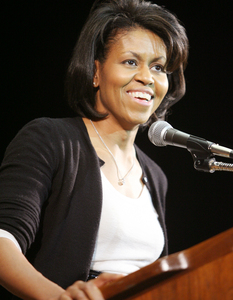
along with a little encouragement from Michelle Obama:


# # #

Tuesday, August 26, 2008

Ted, TED, Michelle and City Owned Hotels

August 26, 2008, 1:00 p.m.

Currently Most Popular Blog Entries

"Jails: 'Overcrowding' Not the Issue," August 21, 2008.
"It's Biden -- for 'Experience'?" August 23, 2008.
"How to Build an Indoor Rain Forest," July 10, 2008.
"Random Thoughts on Law School Rankings," April 29, 2008.
"UI Sexual Assault Update" is now embodied in, and being updated as, a Web page, "University of Iowa Sexual Assault Controversy -- 2007-08," July 19-present; although the original blog entry (July 19-August 9) has not been removed,"UI Sexual Assault Update," July 19-August 9. Both remain among "most popular."
"Abolish Bar Exams?" August 22, 2008.
"Solving Illegal Behavior Problems by Making It Legal," August 20, 2008.
"Earthpark: 'Pretty Quiet Phase; No Timetable to Speak of,'" August 14, 2008.

And see, Database Index of 500-plus blog entries

Speeches

Well, Senator Ted Kennedy and Michelle Obama clearly stole the show last evening.

There was a pre-convention question as to whether Kennedy's condition would prevent his even attending the convention or, if he made it to Denver whether he would be able to muster more than a wave to the delegates. Well, he did more, much more, and his speech -- that he would even give one, not to mention its content -- was a moving experience not only for those in attendance but for all who've known and worked with him over the years and were among the 50 million watching on television. Adam Nagourney, "Kennedy Adds Spark; Obama's Wife Praises Values," New York Times, August 26, 2008 ("a triumphant appearance that evoked 50 years of party history").

In my new book, Are We There Yet? Reflections on Politics in America, I say of Michelle Obama, "now that's one woman I really do want in the White House." My suspicion is that she's probably brighter (i.e., in intelligence, knowledge, analytical ability) than her husband -- and is at a minimum his equal. And she can clearly be more straight forward and courageous than he -- which is a reason I suspect why we've heard less from her during the past few weeks.
Although I first visited with Senator Obama during his trip to Iowa City on April 12, 2007, his wife was not with him at the time. She first came crashing through to my consciousness when watching her performance at UCLA, February 3, 2008. What I then blogged was that "I found [her speech] one of the most impressive and moving campaign speeches about a candidate I've ever heard . . .." Nicholas Johnson, "I'm Voting for Michelle" in "Obama: Inspiring AND Polls Say Strongest Candidate," February 4, 2008. In any event, she fully carried on in the same tradition last evening at the Convention -- that is, to extent that anyone could while at what the Times described as being "the center of a multimedia charm offensive that may be the most closely managed spousal rollout in presidential campaign history." Which see, for what is perhaps a more balanced journalistic assessment of her speech, role and evolution in the campaign. Jodi Kantor, "Michelle Obama, Reluctant No More," New York Times, August 25, 2008 (with a link to a video of her speech).

And Speaking of Speaking . . .

. . . one of the many wonderful things about the Web/Internet is the serendipitous experience of coming upon a new site that causes you to say, "Wow."

In the course of looking at a Web site/blog this morning, generalpaper.wordpress.com, from which a blog entry of mine is linked (Nicholas Johnson, "Copyright, Fair Use, Blogging & Other Items," July 13, 2007) I scrolled around the rest of the site and discovered to my delight a Web site called Ted.com.

Here's what the site says about itself:

TED stands for Technology, Entertainment, Design. It started out (in 1984) as a conference bringing together people from those three worlds. Since then its scope has become ever broader.

The annual conference now brings together the world's most fascinating thinkers and doers, who are challenged to give the talk of their lives (in 18 minutes).

This site makes the best talks and performances from TED available to the public, for free. More than 200 talks from our archive are now available, with more added each week. These videos are released under a Creative Commons license, so they can be freely shared and reposted.
To give you some notion of the economic value of this gift, while "membership" in TED is free, attendance at the annual Long Beach conferences, near as I can figure out, runs about $6000 per attendee.

The operation is "owned by The Sapling Foundation, a private nonprofit foundation [that] was established in 1996 by Chris Anderson, who was at that time a magazine publishing entrepreneur."

To give you an idea of the nearly 300 talks available to you for free, here is one I clicked on from the generalpaper site this morning, Barry Schwartz, “The Paradox of Choice,” TED, July 2005.Obviously, I can't speak for any of the others (except for Malcolm Gladwell's "What We Can Learn from Spaghetti Sauce," February 2004, which was the other one that I linked to from generalpaper). While Schwartz' thesis is in no sense identical, it is certainly consistent with the "IFD disease" described in "Chapter I: Verbal Cocoons" of Wendell Johnson's People in Quandaries (Harper, 1946).

You either like this kind of thing or you don't. I do. You may not. Anyhow, I found it reminiscent of what we do with the International Leadership Forum, also out of southern California, in LaJolla, with which I've been associated since the mid-1980s, and decided to bookmark TED.

The Reality of "Economic Development"

For those who share this blogger's interest (some would say "obsession") with "what works" and what doesn't with economic development in general, and tourist attractions in particular, and the propriety and efficacy of governments putting taxpayer money on the bottom line of for-profit corporations, The Gazette's editorial this morning, Editorial, "Exploring the Hotel Options," The Gazette, August 26, 2008, p. A4, is well worth a read both for its factual content and its opinion/suggestions. Prompted by Cedar Rapids' troubles with the Crowne Plaza Five Seasons Hotel and its franchise agreement with the City, it not only describes that intricate relationship, but the way that Coralville and Dubuque have also put their cities' governments (and their taxpayers' money) sort of half-way into the hotel business.

Yesterday, Jeff Brady's "Morning Edition" piece reinforced another assertion of mine in this department: that local promoters, enthusiasts, cheerleaders and their consultants often exaggerate the profits to be made from an attraction or event (e.g. the Democratic National Convention in Denver right now, an Olympics or Superbowl venue) by as much as ten times. That turns out to be precisely the multiplier Brady's "experts" chose to describe this phenomenon. Jeff Brady, "The Business Outside The Denver Convention," Morning Edition/NPR, August 25, 2008, 3 min. 38 sec. ("Organizers of the Democratic National Convention in Denver say it will pump as much as $160 million into the local economy. Experts say the total will be more like $16 million. Businesses in the Mile High City are optimistic, though some are slashing prices to make sure the convention isn't a bust for them." That's the text on the Web page; transcripts of the entire piece are available for a fee; the audio is available for free. The interviewed expert points out that the predictions often (1) fail to distinguish between gross revenue and profit, and (2) ignore the fact that much-to-all of both end up being shipped out of town to the corporate headquarters of, say, the hotel chains that are operating the local hotels at inflated room rates and full occupancy.)

# # #

Wednesday, May 07, 2008

The Party's Over, It's Time to Call it a Day

March 7, 2008, 7:00 a.m.

It's Over: Senator Obama Wins Nomination

Michelle Obama and friend celebrate North Carolina win. [Photo credit: Washington Post.]

"Obama won North Carolina by 56 percent to 42 percent, and his popular-vote margin there -- about 230,000 votes -- wiped out the gains Clinton had made with her decisive victory in Pennsylvania two weeks ago." Dan Balz and Shailagh Murray, "Obama Is Decisive Winner in N.C.; Clinton Ekes Out Victory in Indiana; Former First Lady Vows to Continue Despite a Widening Delegate Gap," Washington Post, May 7, 2008, p. A1.

And here are the Washington Post's numbers from Indiana, as of 6:24 a.m.:

With 99% of the vote reported, Senator Clinton had 50.89% and Senator Obama 49.11% (638,274 to 615,862, for a total of 1,254,136 votes cast).

Here's to Hillary Clinton:

The Party's Over
The party's over
It's time to call it a day
They've burst your pretty balloon
And taken the moon away
It's time to wind up the masquerade
Just make your mind up the piper must be paid

The party's over
The candles flicker and dim
You danced and dreamed through the night
It seemed to be right just being with him
Now you must wake up, all dreams must end
Take off your makeup, the party's over
It's all over, my friend
So Why Do I Say "The Party's Over"?

Why is the party over?

That's, in part, a double-edged play on words.

If Senator Clinton, with the help of right-wing Republicans, keeps up the effort to destroy Senator Obama the party that's over will be the Democratic Party. See Nicholas Johnson, "Primary Thoughts: Gingham Dogs & Calico Cats," March 6, 2008.

It's the "party" that is her party, her dream of the nomination, that "must end." It's the results from North Carolina and Indiana that have "burst your pretty balloon/And taken the moon away." "It's time to wind up the masquerade;" "Take off your makeup, the party's over."

All of which is a lead-in to, as Bill Clinton might put it, "What the meaning of 'win' is." See, e.g., Nicholas Johnson, "The Meaning of 'Win,'" February 6, 7, 9, 2008; Nicholas Johnson, "It's the Electoral College, Stupid!" April 22, 2008.

Who "won" Indiana? If Senator Obama gets 50.89% of the vote in Indiana on November 4, it would be accurate to say that he "won" and Senator McCain "lost" Indiana. Why? Because he would get all 11 of Indiana's electoral votes; the election is "winner take all." A primary is not. The prize is delegates and they are allocated proportionately. Many still refer to Senator Clinton having "won" Texas. But when all the votes were in from the primary and caucuses Senator Obama actually "won" more delegates than she did. In the most immediately preceding primary, in Guam, Obama got more popular votes and thus "won" Guam by that analysis -- but in fact they split the 4 delegates 2 and 2.

As the Washington Post reports, "At stake yesterday were 187 pledged delegates -- 115 in North Carolina and 72 in Indiana. That made yesterday the third-biggest day of the long nomination battle in terms of delegates, but more important, it was the last big day on the calendar." I don't know if the 72 Indiana delegates will end up being split 36-36, but it shouldn't vary by more than one from that -- meaning that nobody really "won" Indiana, and it's both misleading and kind of silly to say that Senator Clinton "won."

Nor did Senator Obama "win" North Carolina. What he did do was to win a good many more delegates from North Carolina than Senator Clinton. But he sure didn't get all 115.

[Again from The Post, "An additional 217 pledged delegates remain to be chosen in the final six contests between now and June 3: primaries in West Virginia, Kentucky, Oregon, Puerto Rico, Montana and South Dakota. Obama entered the day with 1,745 delegates to Clinton's 1,608, according to an Associated Press tally. Included in that count are superdelegates -- elected officials and party leaders who are automatically granted a vote at the Democratic National Convention in Denver. Among those superdelegates, Clinton led Obama 270 to 255."]

The only real "win" is in November. Moreover, for those who care about who becomes the next president -- and, in that sense, which party "wins" -- it's almost irrelevant how Senators Clinton and Obama come out when they run against each other. That's not how the results are determined in the election.

For example, it makes little difference how white women. over 50, without college degrees, earning less than $50,000 divide their votes between Clinton and Obama in a primary. The question is, how will they divide their votes between Obama and McCain next November? Given that choice they may well vote their economic interests and go with Obama. Or, they may join the ranks of the "bitter" (to use the word hung around Obama's neck) and sit it out. That's the issue, the question.

The election will turn on how the Democrats' candidate runs against the Republicans' candidate. If you want to take a guess at that now there's not much to go on in polls showing match-ups between Clinton and McCain and Obama and McCain. Each, and sometimes both, win against McCain -- sometimes; they also lose sometimes.

Electoral College votes. Finally, it's not the national, popular vote split between the Democrat and Republican candidate November 4 that matters, it's the electoral vote. I've earlier made a effort at predicting those results (Clinton vs. McCain and Obama vs. McCain). See, Nicholas Johnson, "Electoral College" in "Process: Parental Leave & Project Vote Smart," May 1, 3, 2008.

Media and spin. There is, of course, another contest that goes on in parallel with the delgate hunt, and that is the game of "expectations," the ebb and flow of the chattering classes' preferences, the false charges and spin. Most immediately, the question was whether Senator Obama -- knocked off his high ground with the media focus on his absence of a flag lapel pin (notwithstanding the fact that neither McCain nor Clinton have one either), his use of the word "bitter" regarding disaffected Americans, and the words of his Pastor (from which Obama had repeatedly and forcefully distanced himself) -- could continue to function as a candidate and actually continue to gain delegates. So, delegates aside, the returns from Indiana and North Carolina were such that he "won" this contest as well.

But however you slice it, Senator Clinton's "party's over." She cannot possibly catch Obama in elected delegates (or popular votes; not that they should matter) between now and June 3. The last 100-plus super delegates to declare their preference went 10:1 for Obama -- nor is there any reason to believe that margin will change, or that he will not soon surpass her in super delegates as well.

Finish the remaining handful of primaries; but after last evening it's now long past time for the Party to begin the process of closing ranks and preparing for November.

# # #

Wednesday, April 16, 2008

Golden Rules & Revolutions: A Series - V

April 16, 2008, 6:15 a.m.

Today is the fifth in a series, "Golden Rules & Revolutions." Here are the prior entries:

I - Income Disparity & Revolution
, April 12, 2008
. "Series Introduction," "Increasing income disparity, despair. . .," ". . . and Revolution"

II - Golden Rules & Fascism, April 13, 2008
. "The Golden Rule," "Fascism"

III - Money and Lobbyists in Politics: Washington, April 14, 2008

IV - Presidential Candidates and Lobbyists: McCain, April 15, 2008

# # #

Presidential Candidates and Lobbyists: Clinton

Part I of this series noted not just the gap in income between the rich and the poor, but the fact that this gap is continuing to grow ever wider, and that history -- as well as the daily news -- provides ample warning that this condition often produces revolution.

Part II began the exploration of the forces that may be shaping these potentially dangerous conditions -- including the ties between business and government eerily reminiscent of the early stages of what we used to call "fascism."

Part III took us to Washington for some general descriptions of how the system works, what campaign contributors get for their money, the role of lobbyists, and a columnist's description of one case study.

Part IV dealt with how the role of lobbyists extends beyond their manipulation of government into the pre-governing phase: presidential campaigns -- beginning with Senator John McCain.

Part V examines Senator Hillary Clinton's campaign from this perspective -- and tries to figure out who is the biggest "elitist."
_______________

Given the $2.79 billion that the special interests spend on lobbyists, as discussed in Part III, and the the millions and billions of dollars the special interests "invest" in "campaign contributions" (in state legislatures as well as Congress, and among the best investments these businesses ever make), it comes as no surprise that both lobbyists and campaign contributions also play a major role in the way we select our president.

Part IV noted that Senator John McCain was among the best in the U.S. Senate on these issues, and yet even he finds himself surrounded with lobbyists when he meets with his campaign staff.

And just as Part IV started with him because he was featured that evening [April 15] on Chris Matthews' MSNBC College Tour, so Part V is devoted to Senator Hillary Clinton today [April 16] because she and Senator Obama will be in an ABC-sponsored and televised debate this evening from Philadelphia, starting at 8:00 p.m. Eastern. (Check your local cable listings to confirm details.)
_______________

The Web site, Open Secrets, is a real service to an informed democracy. It provides the information a voter needs to evaluate the role of money in politics -- for everyone who cares enough to ask.

One of the things it reveals is who, among all the 22 presidential candidates -- Republicans and Democrats -- has raised the most money from a variety of special interest groups.

One of those 22 candidates was at the top of the list for each of these six special interest categories:

"Finance/Insurance/Real Estate" $18,187,699
"Lawyers & Lobbyists" $15,709,152
"Health" $4,494,032
"Construction" $2,122,098
"Defense" $307,425
"Labor" $198,733

And which of the 22 candidates was that? Who was chanting "We're Number One!" "We're Number One!"? None other than Senator Hillary Clinton.

Senator Clinton, who's finally made public income tax returns revealing she and her husband reported $109 million in taxable income since leaving office, who's wealthy enough to loan her own campaign $5,000,000; Senator Clinton, who's referring to a young working couple from South Chicago that has just paid off college loans as "elitist."

(Even her husband acknowledges their elite status: "At a performance at a union hall in Coatesville earlier on Tuesday [April 15], Bill Clinton said that he and his wife were now in the top one-tenth of one percent of taxpayers." Jill Abramson, "Michelle Obama on Elitism," New York Times: The Caucus, April 15, 2008, 8:08 p.m.)

I thought Michelle Obama -- now that's one woman I really do want in the White House -- handled it well:

Michelle Obama, appearing at Haverford College, gave a strong response to criticism that her husband’s remarks at a San Francisco fund-raising event were elitist.

“There’s a lot of people talking about elitism and all of that,” she told a gathering of students and townspeople on Tuesday, alluding to controversial remarks that Senator Barack Obama made at a San Francisco fund-raiser. “Yeah, I went to Princeton and Harvard, but the lens through which I see the world is the lens that I grew up with. I am the product of a working-class upbringing. I grew up on the South Side of Chicago in a working-class community.”

Then, referring to her husband’s student loans, she added sarcastically: “Now when is the last time you’ve seen a president of the United States who just paid off his loan debt? But, again, maybe I’m out of touch.”

Rebutting critics who called her husband’s remarks about economic bitterness out of touch, Mrs. Obama asked the crowd, “Am I telling you something that you don’t know? Am I in touch?”

She also stressed that her husband, raised by a young single mother, “didn’t grow up with a silver spoon in his mouth.”
Jill Abramson, "Michelle Obama on Elitism," New York Times: The Caucus, April 15, 2008, 8:08 p.m. [Photo credit: Philadelphia Daily News.]

And providing a plug for public schools, The Hotline reports, "'I want people to know when they look at me, to be clear that they see what an investment in public education can look like,' she said to a standing ovation." "Out of Touch?" National Journal: The Hotline/On Call, April 15, 2008.

Moreover, the pattern of Senator Clinton's ties to big money exists as well with regard to contributions from unaffiliated individuals.

"More than 442,000 people contributed to the [Obama] campaign in March, with more than 218,000 of them giving for the first time. The average contribution in March was $96; the total number of contributors to date comes to 1,276,000."
Michael Luo, "Obama Raises More Than $40 Million in March," New York Times: The Caucus, April 3, 2008, 10:42 a.m.

One would expect that Senator Obama, with an historically mind boggling number of contributors and total contributions, would be leading the pack in all categories of donors. But, no. An examination of the numbers shows something even more impressive and revealing about Senator Clinton.

So let's use the Open Secrets' data and compare.

Senator Obama has had 1.3 million donors averaging $96 dollars each. Those contributing less than $200 have provided 40% of Senator Obama's campaign funds. Donors in the under $200 class have provided only 23% of Senator Clinton's totals.

But those who maxed out with a $4600 contribution provided a mere 6% of Senator Obama's money, while providing the source of 24% of Senator Clinton's.

So he's the elitist and she's not? I don't think so.

Senator Hillary Clinton has defended lobbyists in general and her taking money from their clients' PACs in particular.

"GEORGE STEPHANOPOULOS: How about this point, though, that Senator Edwards raises? He says the fact that you're taking money from lobbyists symbolizes that you're part of the status quo, part of the failed politics of Washington.

CLINTON: . . . [T]here is this artificial distinction that people are trying to make. Don't take money from lobbyists, but take money from the people who employ and hire lobbyists and give them their marching orders. . . . [I]t's the people who employ the lobbyists who are behind all the money in American politics." "Transcript: he Democratic Debate: George Stephanopoulos Moderates Democratic Debate on a Special Edition of 'This Week,'" ABC News, August 19, 2007. (There are more precise, and defensive, statements, but this was the easiest to find with a quick search.)

The issue was back in the news in early April because it was discovered that she has the same problem of lobbyists in her campaign that was discussed in Part IV with regard to Senator McCain.

Although, in her case, the problem was, if anything, much worse.

One story that was especially embarrassing involved her "top advisor" Mark Penn.

"Mr. Penn had been working for a presidential primary candidate [Senator Clinton] opposed to the trade deal with Colombia, while also running a public relations firm hired by the Colombian government to promote it." Eric Lipton and Steven R. Weisman, "Wide Net Cast by Lobby for Colombia Trade Pact," New York Times, April 8, 2008. (Also "Howard Wolfson, Mrs. Clinton’s campaign communications director, was a partner at . . . the Glover Park Group, the fast-growing firm set up by former White House aides [that also] lobbied on behalf of the deal.")

It's one thing to use lobbyists to run your campaign -- a campaign funded by special interests and wealthy donors -- but it's quite another if those lobbyists are using their connections (as a staffer) with a potential future president to impress clients for whom the lobbyist is pushing a position supposedly opposed by the candidate for whom they are working.

Already charged with supporting (or remaining mostly silent) about NAFTA at the time while now claiming she opposed it then and now, the Clinton "support-opposition" to the Colombia trade deal is not limited to her lobbyist-staffers.

Bill Clinton voiced "support" for a controversial Colombia free-trade pact . . . and he accepted $800,000 in speaking fees from a group boosting the agreement, it was revealed yesterday.

The news came just two days after Sen. Hillary Rodham Clinton pushed her chief strategist, Mark Penn, from his post after he embarrassed the campaign by consulting with Colombia government officials over the trade deal.

In June 2005, Bill Clinton, who holds enormous sway as an adviser to his wife, was quoted . . . as publicly backing the trade pact at an appearance with Colombia President Alvaro Uribe.

"I will raise your point when you return to the United States," Clinton said . . .. "I am in favor of the free-trade agreement . . .."

The same month, Bill Clinton reaped the six-figure windfall from the Colombia-based development group Gold Service International -- a booster of the trade agreement -- for four speeches. . . .

Bill Clinton has had other meetings with Uribe since the speaking tour, including one at the Clinton home in Chappaqua with mining tycoon Frank Giustra, a donor to the former president's philanthropic foundation whose loan of his high-end jet to Bill has raised eyebrows.

According to The Wall Street Journal, Bill Clinton hosted a "philanthropic event" with Uribe - the purpose of which was to introduce Uribe to Giustra, who was interested in Colombian oil.
Maggie Haberman, "Trader Bill's 800G in Colombia Gold," New York Post, April 9, 2008.

Now I used to be a public lecturer, represented by a firm the New York Times once described as "the Tiffany of the lecture bureaus," the Leigh Bureau. So I know something about lecture fees -- though I was never the beneficiary of the current inflated fees for the top of the celebrity pack. (The University of Iowa paid Bill Clinton $50,000 for a lecture, and more recently paid Karl Rove $40,000.)

But what I do know is that when you are paid $800,000 for four lectures your benefactor is not paying lecture fees, they're trying to put an acceptable face on the purchase of something else.

It seems to me there are four points here in these two stories:

(1) Senator Clinton is in bed with lobbyists, including her husband, who are handsomely paid by the Colombian government to do whatever is necessary to get a trade deal passed that is opposed by American labor unions but will be favorable to U.S. and Columbian businesses,
(2) while she is trying to campaign for workers' support on grounds she opposes the deal, and, most significantly,
(3) that none of them see anything unusual or inappropriate about these relationships -- until they are brought to light by the media,
(4) illustrated by the fact that she represents she has, in effect, fired Mark Penn when in fact all she has done is to change his title and allow him to remain on two payrolls.
Business Week, one business of which is knowing each week which political candidates best represent its readers' corporate interests, told it all in this excerpt from its headline: "Clinton is pumping up the populist rhetoric . . . but as her record and contributions show, she's no enemy of Corporate America." Here are some excerpts from the story:

But while Clinton's talk is tough . . . her record and support base indicate she's hardly an enemy of American business interests. Some of the biggest names on Wall Street . . . have publicly endorsed Clinton. She has more maxed-out, executive-level donors than either Obama or Senator John McCain (R-Ariz.) and has pulled in $3.9 million from donors associated with the health-care industry, more than any other candidate. Donors affiliated with Goldman Sachs (GS) are her top contributors. . . .

In its most recent analysis of Senate voting records, the Chamber of Commerce gave Clinton a 67% favorable rating, compared with just 55% for Obama. (McCain rated 80% favorable.) Many business leaders recall the success of the economy of the late 1990s during Bill Clinton's Presidency . . ..

Wall Street is fairly comfortable with Clinton. "[She] has been a New York senator for seven years, and New York is the financial capital of the U.S. and the world," says Roger Altman, senior Clinton economic adviser and co-founder of Evercore Partners (EVR), an investment and advisory company in New York. "CEOs and other business leaders have had the chance to work with her [at] very close quarters. If you ask leaders of the financial community if there's anything to be afraid of, 80% or more would say no."

Indeed, some industries would gain considerably if Clinton were elected. Her "Economic Blueprint" calls for the creation of a $50 billion Strategic Energy Fund to support alternative energy industries. "With her record and proposals, there is great visibility in terms of what you get with Hillary Clinton," says Bryan Sherbacow, 39, chief operating officer of Charleston (S.C.)-based Ethanex Energy, an ethanol producer. . . . Sherbacow and his wife have maxed out on donations to Clinton, contributing $2,300 each for the primaries. . . .

Whether the nominee is Clinton or Obama, voters can expect the Democratic candidate to cater its economic message to its audience. "Any Democratic candidate for President walks a fine line between policy approaches that will strengthen the middle class and at same time retain good and credible working relationship with business," says Altman. "It's always a complex dynamic."

Moira Herbst, "Is Hillary Clinton Good for Business? Trailing Obama, Clinton is pumping up the populist rhetoric in Ohio and Texas. But as her record and contributions show, she's no enemy of Corporate America,"
Business Week, February 28, 2008.

It seems pretty clear what we'll be getting during another Clinton presidency with, as Mitt Romney said, "Bill Clinton "roaming around in the White House with nothing to do." See Katharine Q. Seelye, "Fewer Want Bill Clinton Back in the White House," New York Times: The Caucus, February 3, 2008, 3:32 p.m.

And you may want to agree with former President Calvin Coolidge that this is appropriate, that as he said, "the business of America is business." You may want a president who is financially supported by, comfortable with, and indebted to, the Wall Street "Finance/Insurance/Real Estate" interests -- those who play a disproportionate role in running the country anyway. If so, as she once said, "I'm your girl."


Otherwise, you might want to look around and see if there is an alternative.

# # #

Monday, February 04, 2008

Obama: Inspiring AND Polls Say Strongest Candidate

February 4, 2008, 12:40 p.m.

I'm Voting for Michelle

There was a really extraordinary event in Los Angeles yesterday that I just happened to catch by accident as I was scanning the channels.

Although Barack Obama was not there, the event was billed by C-SPAN as "Obama for President Rally at UCLA (February 3, 2008)." Today it is available from the C-SPAN.org site under "Recent Programs." If when you check that site it is no longer listed there, through the miracle of C-SPAN and its Archival collection you can watch it on small screen RealPlayer at your leisure.

It was remarkable by many measures -- the size of the crowd, the presence (and Obama endorsements) from Caroline Kennedy, Oprah, Stevie Wonder, and Maria Shriver.

I wasn't able to watch all of the event that runs over an hour (1:23:45). What I did see, and that I found one of the most impressive and moving campaign speeches about a candidate I've ever heard, were the remarks of Barack Obama's wife, Michelle.

If you'd like to watch her presentation, you can slide the control in RealPlayer to 23:50, where she begins and listen through to 57:07 where she introduces the surprise "added starter," Maria Shriver (who is, of course, the wife of California's Republican Governor Arnold Schwarzenegger, who has endorsed Senator John McCain).

Listening to Michelle Obama's speech provides even more insight into why the polls this morning are revealing what they do.

My support of Obama is not based on polls, or who stands the best chance of winning in November. It's not often that my political choices end up as winners -- which is not surprising since they have never been selected for that reason.

But in this case -- at least at this time, and I'm fully aware, to paraphrase the song, "Oh, it's a long, long time from February to November" -- for the benefit of those who do put much more emphasis on ability to win than I do, it appears that Obama also happens to have a great many advantages over Senator Hillary Clinton from that perspective as well.

NPR reported this morning ["Morning Edition," Feb. 4] and makes available from its Web site a poll it commissioned from Greenberg Quinlan Rosner Research, conducted January 29-31, 2008, published February 4, 2008, of 1000 likely voters.

It includes such things as the trends on approval ratings for the president and Congress, issues thought most important by voters, and so forth. But here's what it reveals about Obama and Clinton.

Given a choice between Clinton and McCain, Clinton loses: 48% to 45%. Among Democrats, 9% prefer McCain over Clinton (only 5% of Republicans prefer Clinton over McCain). Among independents McCain has a 26 point spread: 58% go with McCain, and 32% with Clinton.

When the choice is between Obama and McCain, this poll shows the result to be a statistical dead heat: 48% McCain, 47% Obama (although other polls, which also show Clinton losing to McCain, show Obama with a slight edge over McCain -- or in the case of yesterday's Zogby poll, below, a rapid rise in support for Obama over Clinton).

Obama pulls 48% of the independents (compared to Clinton's 32%), a tie with McCain, who also gets 48%. Among Republicans 13% say they'll vote for Obama (compared with Clinton's 5%); although 18% of Democrats would vote for McCain if the choice is Obama (compared with Clinton's more favorable loss of 9%).

If Romney were the Republicans' nominee, Clinton would win by 5 points (49-44%) but Obama would win by over twice that (53-41%).

When all voters are asked how their opinions have changed during the primary contests, 59% are "somewhat" or "much" less willing to support Clinton than they were before (to 38% "somewhat" or "much" more willing to support her) -- a drop of 21 percentage points. For Obama, it is 52% more willing> and 42% less willing -- a 10 point gain compared to Clinton's 21 point loss.

(For the Republicans, McCain gains 6 points, Romney (like Clinton) has a 22 point loss.)

The daily tracking poll run by Zogby for C-SPAN and Reuters, is even more favorable for Obama this morning [Feb. 4]:

Pollster John Zogby: "A very big single day for Obama in California (49%-32% over Clinton) and Missouri (49%-39% single day). In California, Obama has widened his lead in the north and pulled ahead in the south. He leads among Democrats and Independents, liberals and moderates, men (by 21 points),among whites, and African Americans. He holds big leads among voters who say Iraq and immigration are their top concerns. Clinton holds a big lead among Hispanics (though Obama has made some inroads), women, voters over 65, and has pulled ahead among those citing the economy. "In Missouri, Obama leads two to one in the St. Louis region, and has solid leads with independents, voters under 50, and African Americans. He also leads among Missouri women."
It looks like we finally have a race where one can vote with their head and their heart and still have a real shot at having gone with a winner.

In politics, it just doesn't get any better than that.

# # #